
Cottony cushion scale
Pulvinaria tenuivalvata
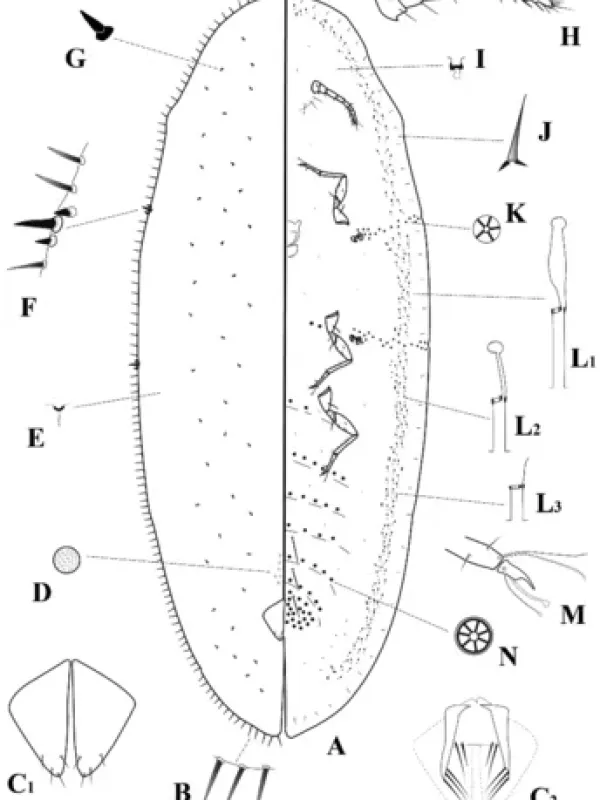
Description
How to identify
The cottony cushion scale, scientifically known as Pulvinaria tenuivalvata, belongs to the Coccidae family of scale insects. Adult females possess an oval, slightly convex body that flattens significantly during the egg-laying phase.
The most prominent identification feature is the development of a large, white, cotton-like ovisac (egg sac) that protrudes from the posterior end of the female, serving as a protective shield for the eggs.
Females are largely sessile and typically attach themselves firmly to the undersides of leaves or along stems. Their coloration ranges from yellowish-brown to dark brown, aiding in camouflage.
Males are rarely observed; they are winged and capable of active flight, though their role in the reproduction cycle is limited compared to the sedentary females.
Newly hatched larvae, often referred to as crawlers, are tiny, pale, and highly mobile, equipped with specialized mouthparts for piercing and sucking plant sap.
What it damages
This pest primarily attacks cotton crops, although it exhibits polyphagous behavior, allowing it to infest a wide variety of ornamental and agricultural host plants.
By constantly extracting sap, the pest drains the plant of essential nutrients, leading to stunted growth, leaf deformation, and premature leaf drop, which diminishes yield significantly.
Large colonies can cause severe physiological stress to the host, as the redirected energy towards the parasite limits the plant's capacity to produce high-quality fiber or fruit.
The mechanical damage to the tissues caused by feeding often provides entry points for secondary bacterial and fungal infections, further compromising the plant's health.
In high-density infestations, the sheer number of scales can cause significant branch dieback and overall decline in the vigor of the affected plants.
When it appears
The activity of the cottony cushion scale is highly dependent on climate, with peak population growth occurring during warm, stable weather conditions throughout the summer.
The insect typically completes multiple generations within a single growing season, which allows its population to expand rapidly if left unchecked.
Overwintering usually occurs in the larval stage or as fertilized adult females, sheltering in bark crevices or the root zones of host plants to survive colder periods.
As temperatures rise in the spring, the overwintering larvae emerge and begin to migrate toward fresh succulent growth to establish new infestation sites.
The peak period of damage typically coincides with mid-to-late summer, when all stages of the life cycle may be present simultaneously on the host plants.
Signs of infestation
The most distinct sign of an infestation is the appearance of white, fluffy, cottony masses on stems, leaf undersides, or along the main veins of the foliage.
The presence of honeydew, a sticky excretion produced by the scales, is a major indicator of their activity and often attracts ants, which tend to protect the colonies.
Sooty mold, a black fungus, frequently grows on the honeydew deposits on the leaves, which inhibits photosynthesis and gives the plant a blighted appearance.
- White, cotton-like egg sacs attached to stems or leaves.
- Sticky honeydew residue on foliage.
- Black sooty mold covering the leaf surfaces.
- Yellowing, curling, and premature shedding of leaves.
- Heightened ant activity on the plant surfaces.
Infested plants usually display a chlorotic and generally unthrifty appearance, indicating that the sap extraction is severely impacting their metabolic processes.
Control measures
Controlling the cottony cushion scale requires an integrated pest management approach that combines cultural, biological, and chemical control strategies.
Cultural practices, such as removing infested plant debris and controlling weeds that act as alternative hosts, are crucial for breaking the life cycle of the pest.
Biological control utilizing natural predators like ladybird beetles and parasitic wasps is often highly effective and recommended for sustainable agricultural ecosystems.
When chemical intervention is necessary, systemic insecticides are the preferred choice, as they are translocated within the plant to target the sap-sucking stages effectively.
Timing the application to coincide with the crawler stage is vital, as this is the most vulnerable phase of the insect's life cycle before it settles and produces the protective waxy covering.
Taxonomy
- Latin name
- Pulvinaria tenuivalvata
- Order
- Hemiptera (bugs, aphids, leafhoppers)
- Family
- Coccidae
- EPPO code
- PULVTE
Discussion
No discussions yet — be the first.