
Cottony scale
Pulvinaria
Description
How to identify
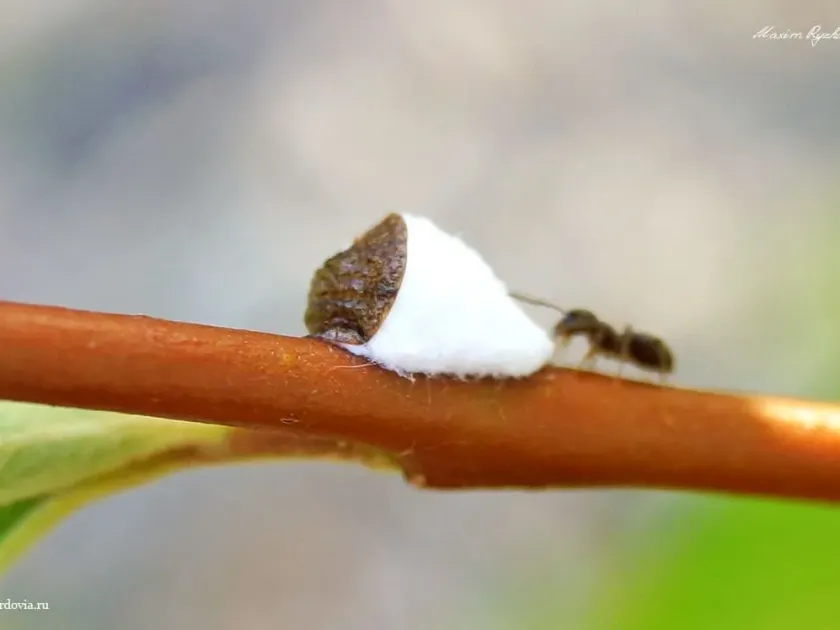
The cottony scale (genus Pulvinaria) belongs to the Coccidae family. These insects are best known for the distinct, white, cotton-like ovisac (egg sac) produced by adult females during the reproductive phase.
Adult females have an oval or convex body, typically brown or yellowish-brown in color. Males are rarely observed as reproduction occurs primarily through parthenogenesis within the genus.
The first instar nymphs, known as crawlers, are tiny, flat, and highly mobile. They move across plant surfaces to locate suitable areas to settle and begin feeding on plant sap.
Unlike armored scale insects, Pulvinaria species do not have a separate, removable shell. Their protective covering is actually a hardened, sclerotized dorsal part of their own body.
Identifying these pests involves examining the shape and position of the white egg sacs on the host plant, as well as the specific morphological traits of the adult female's integument.
What it damages
Cottony scales attack a wide variety of plants, including fruit trees like peaches and plums, citrus trees, grapevines, as well as ornamental shrubs like hydrangea, viburnum, and euonymus.
They are sap-sucking pests that fix themselves to the undersides of leaves or along succulent stems. By extracting plant fluids, they cause general decline and stunted growth.
The feeding process results in chlorosis, leaf deformation, and premature leaf drop. In heavy infestations, the plant loses significant vigor, leading to reduced flower and fruit production.
These insects excrete large amounts of honeydew, a sticky substance that coats the leaves. This honeydew serves as a substrate for sooty mold, a fungus that covers leaves in black soot, hindering photosynthesis.
In nurseries and gardens, high populations can be lethal to young or sensitive plants, as the constant drain of nutrients prevents the plant from developing sufficient resistance to environmental stress.
When it appears
Most species in the Pulvinaria genus complete one generation per year, though in warmer climates or indoor environments, life cycles may overlap, leading to multiple generations.
They typically overwinter as second-instar nymphs sheltered in bark crevices, near buds, or in other protected areas on the plant. As temperatures rise in spring, they relocate to feed.
The peak activity phase occurs in late spring and early summer when females mature and begin secreting the white ovisacs. This is the most visible stage of the insect’s lifecycle.
The emergence of crawlers from the egg sacs is generally staggered. This makes timing insecticide applications a significant challenge, as multiple treatments may be necessary to target all active nymphs.
By autumn, the nymphs settle into their overwintering sites, entering a state of dormancy to survive the winter months, making the late autumn and early spring key times for observation.
Signs of infestation
The most obvious symptom is the presence of white, cottony, fluffy masses on the undersides of leaves or on stems, which are clearly visible once the females reach maturity.
Sticky residue on foliage, known as honeydew, is a strong indicator of scale insect presence. If you notice a glossy, tacky surface on leaves, it is a sign that sap-sucking insects are active.
Sooty mold growth, which appears as a black, dusty coating on leaves and twigs, usually follows the presence of honeydew-producing pests like the cottony scale.
Stunted growth or wilting of new shoots despite adequate irrigation is a red flag. The plant may appear generally unthrifty, losing its natural green color and foliage density over time.
If you inspect the bark or woody stems, you may see brown, bump-like structures that remain stationary. These are the adult females anchored in place, feeding on the tree's vascular system.
Control measures
Pruning is the first line of defense; removing heavily infested branches during the dormant season helps reduce the population significantly before the next growth cycle begins.
Scrubbing or cleaning the bark of larger trees can help remove overwintering nymphs, limiting the number of individuals that successfully reach the foliage in spring.
Chemical control is most effective during the crawler stage. Systemic insecticides can be applied when nymphs are active and feeding, ensuring the chemical reaches the insect through the plant's sap.
Biological control, including the introduction of predatory beetles and parasitic wasps, can be highly effective in reducing Pulvinaria numbers in larger garden or orchard settings.
Always inspect new plant material carefully before bringing it into the landscape, as the cottony scale is easily transported on nursery stock and can quickly establish itself in a new location.
Taxonomy
- Latin name
- Pulvinaria
- Order
- Hemiptera (bugs, aphids, leafhoppers)
- Family
- Coccidae
- EPPO code
- PULVSP
Discussion
No discussions yet — be the first.