
Sunflower moth
Ptocheuusa paupella
Description
How to identify
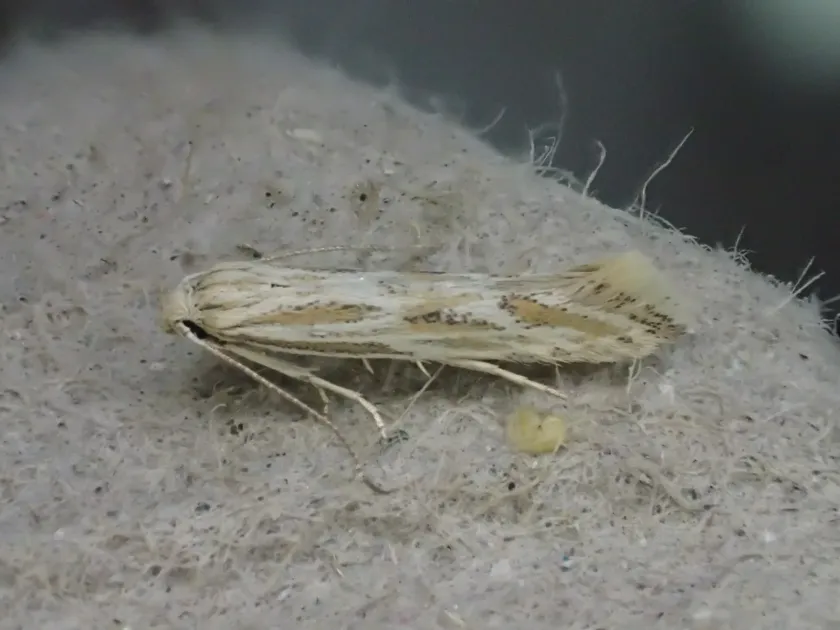
The sunflower moth (Ptocheuusa paupella) belongs to the Gelechiidae family. It is a small moth identified by the characteristic notch on the hindwings, typical for this taxonomic group.
The adult insect has a wingspan of approximately 10–12 mm. Its coloration is generally cryptic, blending into the surrounding vegetation, which makes it difficult to detect during daylight hours.
What it damages
The primary host plant for this species is the sunflower (Helianthus annuus). Larvae feed on the florets and the developing seeds within the sunflower head.
Feeding activity often causes direct yield losses and can lead to secondary fungal infections of the damaged heads. The impact is most significant during the seed formation stage.
When it appears
The flight period of adult moths coincides with the flowering stage of sunflowers. Females lay eggs on the heads, ensuring the larvae have immediate access to food upon hatching.
The life cycle typically includes one or two generations per season, depending on the climatic conditions. Pupation generally occurs in the soil or protected debris near the host plants.
Signs of infestation
Infestation is marked by the presence of silken webbing covering parts of the sunflower head. This webbing entangles the florets and seed husks as the larvae feed.
Dark frass, resembling small pellets, is visible among the webbed florets. In severe cases, the sunflower head may show signs of decay or localized necrosis due to larval damage.
Control measures
Integrated pest management strategies start with deep plowing after harvest to destroy the overwintering pupae hidden in the soil and residues.
Crop rotation is essential to prevent the buildup of pest populations in the same fields over consecutive years, reducing the risk of early-season infestation.
Monitoring the flight of adult moths using pheromone or light traps helps in timing insecticide applications accurately to target the most vulnerable stages.
Applying registered insecticides during the peak of the moth's flight or early larval stages is recommended to effectively mitigate potential crop damage.
Taxonomy
- Latin name
- Ptocheuusa paupella
- Order
- Lepidoptera (butterflies)
- Family
- Gelechiidae
- EPPO code
- PTUUPA
Discussion
No discussions yet — be the first.