
Ptilona
Ptilona
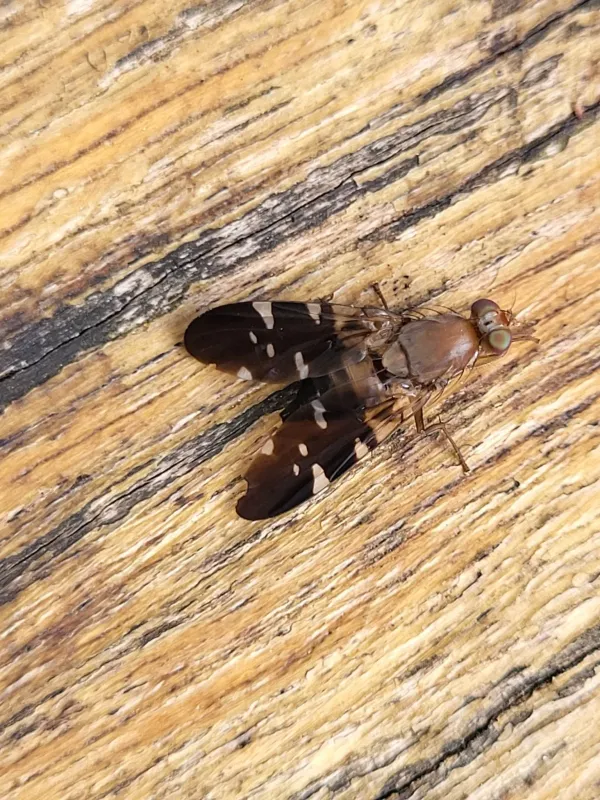
Description
How to identify
Ptilona belongs to the Tephritidae family, which is part of the order Diptera. These are small flies characterized by distinctive patterns on their wings, which is a hallmark feature for most members of this family.
The appearance of adults is marked by high specialization, allowing the insects to blend effectively into the surface of their host plants. The body is typically compact, and the development of larvae occurs hidden within plant tissues.
The systematics of this genus require careful examination of morphological traits, including wing venation and male genital structure. In field conditions, identification is often difficult due to similarities with other closely related species of fruit flies.
What it damages
Ptilona primarily affects wild and cultivated plant species from specific botanical families. The larvae are specialized phytophages that feed on the internal parts of fruits, inflorescences, or seeds.
The damage caused involves the total or partial loss of marketability of the produce, as well as a reduction in seed material quality. During mass outbreaks, the pest can destroy a significant portion of the harvest in the affected area.
When it appears
The insect's life cycle is closely linked to the phenology of its host plants. During the growing season, adults emerge for feeding, mating, and subsequent oviposition, targeting the most vulnerable developmental stages of the crops.
The overwintering stage is usually represented by a puparium, which remains in the soil or within dry plant stems. With the onset of consistent warmth, pupation and emergence occur, coinciding with the flowering period of the primary hosts.
Signs of infestation
The first sign of infestation is the appearance of tiny holes on the surface of damaged organs, through which larvae exit the fruit to pupate. Premature wilting or deformation of the affected inflorescences is also characteristic.
Inside the tissues, one can find tunnels filled with larval excrement, which often leads to the development of secondary rot processes. When inspecting fruit with a magnifying glass, small entry points left by the female during egg-laying are sometimes visible.
Control measures
The primary method of control is an agrotechnical complex aimed at destroying post-harvest residues where puparia may persist. Deep autumn plowing helps to reduce the population of the overwintering generation of the pest.
- Utilizing crop rotation to interrupt the developmental cycle.
- Timely harvesting before the larvae exit the fruit.
- Application of biological insecticides during the period of active adult flight.
- Elimination of wild reservoirs of the pest surrounding the fields.
Taxonomy
- Latin name
- Ptilona
- Order
- Diptera (flies)
- Family
- Tephritidae
- EPPO code
- PTIOSP
Discussion
No discussions yet — be the first.