
Drain fly
Psychoda
Description
How to identify
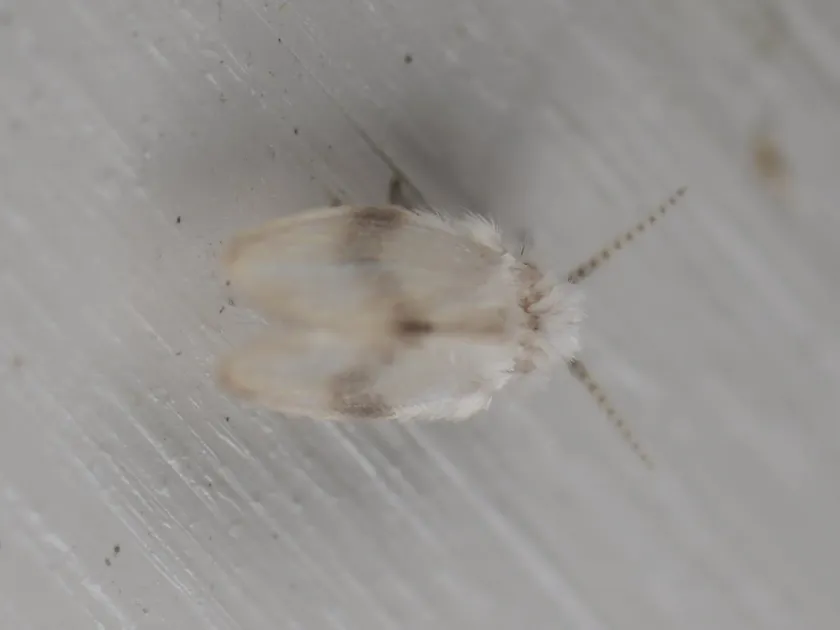
Drain flies (family Psychodidae, genus Psychoda) are small, moth-like insects with fuzzy wings that appear to be covered in tiny hairs, giving them a distinct appearance.
The adults are typically 2 to 3 millimeters long, with a greyish or brownish coloration that allows them to blend in with moist soil or decomposing organic matter.
Larvae are worm-like, legless, and possess a well-defined dark head capsule, often found inhabiting the damp, organic-rich upper layers of potting soil.
These flies have a characteristic jerky, hopping flight pattern and are most active in low-light conditions, often found resting on leaves or moist surfaces.
Their life cycle is rapid; under warm greenhouse conditions, eggs can hatch and develop into adults in as little as two weeks, leading to quick population growth.
What it damages
While often viewed as nuisance pests, in high densities, drain fly larvae can cause significant damage to the root systems of ornamental and nursery crops.
By feeding on decaying roots and surrounding organic matter, they disrupt the plant's ability to uptake water and nutrients, leading to stunted growth.
Heavy infestations of these larvae can lead to root necrosis, which creates entry points for secondary fungal pathogens such as Pythium or Fusarium species.
Infested plants often display symptoms of chlorosis, wilting, and poor vitality, as the damaged root system fails to sustain the plant's metabolic demands.
In greenhouse operations, an outbreak can lead to significant economic loss due to reduced plant quality and increased susceptibility to diseases.
When it appears
Drain flies are opportunistic and can infest indoor spaces or greenhouses at any time of the year provided moisture requirements are met.
Peak populations are most frequently observed during winter and early spring when indoor heating is active and moisture management becomes difficult.
Poorly ventilated areas with stagnant water or consistently wet soil provide the perfect breeding ground for successive generations of this pest.
Changes in temperature and humidity, especially during the transition between seasons, can trigger increased breeding activity if sanitation is neglected.
Continuous presence of water in drainage systems or standing water in trays acts as a year-round catalyst for the reproduction of Psychoda.
Signs of infestation
The primary visual sign of an infestation is the presence of small, fuzzy flies flying in erratic patterns around plant pots, especially during watering.
Careful inspection of the soil surface may reveal small, dark larvae moving through damp organic debris or near drainage holes.
A persistent, musty or earthy smell emanating from the potting mix is often an indicator of the organic decomposition favored by the larvae.
Plants affected by larval feeding will show symptoms of drought stress, such as drooping leaves, despite the soil being moist to the touch.
- Adult flies hovering around plants.
- Visible larvae in the upper soil layer.
- Stunted plant growth and pale foliage.
- Musty odors from the growing medium.
Control measures
Effective management begins with strict irrigation control; allowing the top few centimeters of soil to dry out between waterings disrupts the larval habitat.
Sanitation is critical; regularly cleaning drainage trays, removing debris from under benches, and ensuring good air circulation reduces breeding sites.
Yellow sticky traps are highly effective for monitoring adult populations and reducing their numbers through consistent trapping in infested zones.
For severe infestations, drenching the soil with targeted insecticides or using biological agents like entomopathogenic nematodes can eliminate larvae.
Ensuring proper substrate drainage and removing stagnant water from greenhouse equipment are the most reliable long-term preventative measures.
Taxonomy
- Latin name
- Psychoda
- Order
- Diptera (flies)
- Family
- Psychodidae
- EPPO code
- PSYCSP
Discussion
No discussions yet — be the first.