
Common bagworm
Psyche casta
Description
How to identify
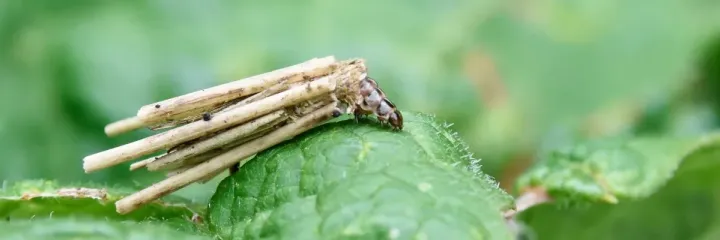
The Common bagworm (Psyche casta) is a species of moth belonging to the family Psychidae. It is widely known for the unique behavior of its larvae, which construct portable cases or "bags" for protection.
These bags are crafted from bits of leaves, twigs, grass, and silk, providing a camouflaged shelter that allows the larvae to remain hidden from predators while feeding.
Adult males are winged and capable of flying to locate mates. In contrast, females are wingless, possess a grub-like appearance, and typically spend their entire adult lives within or near their protective cases.
The development cycle of the insect follows a complete metamorphosis, including egg, larva, pupa, and adult stages. This species is often found in woodlands, meadows, and gardens across temperate regions.
Understanding their life cycle is crucial for effective management, as the protective bag makes the larvae highly resistant to external environmental factors and many standard pest control methods.
What it damages
The Common bagworm is a generalist feeder (polyphage) that can infest a variety of deciduous trees, shrubs, and even some herbaceous plants, causing noticeable foliage damage.
Larvae feed by grazing on the leaf surface and eating leaf edges, which reduces the photosynthetic capacity of the plant and can lead to thinning of the crown.
While an occasional larva may not cause significant harm, high population densities can cause severe defoliation, particularly in young saplings or ornamental nursery stock.
Persistent feeding leads to stunted growth, reduced vigor, and increased susceptibility of the plant to secondary environmental stresses or diseases.
In extreme cases, persistent heavy infestation may lead to the death of small branches or even the entire plant if the foliage loss remains unmanaged for several seasons.
When it appears
The Common bagworm typically completes one generation per year, spending the winter in the larval stage hidden safely inside the protective silk-and-debris bag.
Feeding activity resumes in early spring when temperatures rise, coinciding with the timing of leaf bud break, which provides immediate access to fresh food for the emerging larvae.
The most intense feeding period occurs during late spring and early summer as the larvae grow rapidly and expand their protective cases to accommodate their increasing body size.
Pupation generally occurs in early to mid-summer. Following pupation, adult moths emerge to mate and lay eggs, continuing the cycle for the following year.
Young larvae often migrate to new feeding sites before securing their final winter position on branches, where they remain dormant until the next spring season begins.
Signs of infestation
The most obvious sign of infestation is the presence of small, moving bag-like structures attached to leaves or branches that appear to be part of the plant debris.
Observing ragged leaf edges, stripped veins, or small, irregular holes in the foliage indicates that larvae are actively feeding on the plant tissues.
During autumn and winter, you can find the firm, stationary bags attached to twigs or stems, which can be identified during routine pruning or dormant season inspections.
A sudden decline in the overall appearance of the foliage, such as premature yellowing or noticeable thinning of the canopy, often points to a larger, undetected population.
Finding empty, desiccated casings hanging on branches suggests that the insect has completed its life cycle and suggests that a new generation may be present nearby.
Control measures
Hand-picking and destroying the bags is the most straightforward and effective method for small-scale infestations in home gardens or small nursery sections.
Biological control options, such as using Bacillus thuringiensis sprays, are effective if applied when larvae are young and actively feeding, before the bags become too dense.
Systemic insecticides can be used for larger infestations, as they are absorbed by the plant and ingested by the larvae, circumventing the protection provided by the bag.
Pruning out and removing heavily infested branches during the dormant season significantly reduces the population count for the upcoming spring cycle.
Encouraging natural predators, such as insectivorous birds and parasitic wasps, can help keep bagworm populations below economically damaging levels in well-balanced garden ecosystems.
Taxonomy
- Latin name
- Psyche casta
- Order
- Lepidoptera (butterflies)
- Family
- Psychidae
- EPPO code
- PSCHCA
Discussion
No discussions yet — be the first.