
Coconut bug
Pseudotheraptus devastans
Description
How to identify
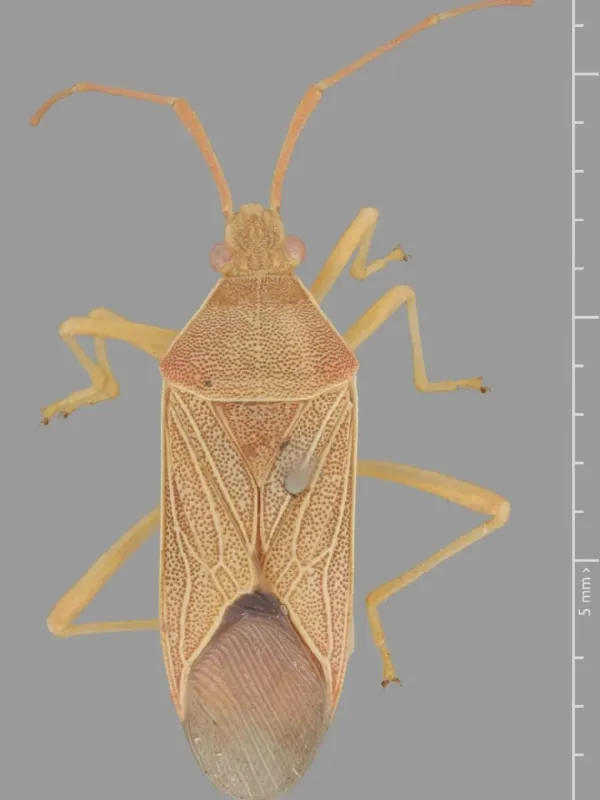
The coconut bug (Pseudotheraptus devastans) belongs to the Coreidae family, commonly known as leaf-footed bugs. Adults measure between 12-14 mm in length and exhibit a color range from light tan to reddish-brown.
The insect is characterized by its slender, elongated body and long antennae, which can reach up to half the length of its body. This distinct morphology allows it to navigate foliage effectively in tropical environments.
The nymphal stages of the bug undergo gradual development, resembling miniature versions of the adults. Lacking fully developed wings during early instars, they rely on movement within the plant canopy to access food.
The lifecycle is continuous in tropical regions, with females depositing eggs singly on young leaf tissue or fruit surfaces. This reproductive strategy ensures that offspring have immediate access to nutrients upon hatching.
High population densities can be reached rapidly under warm and humid conditions, which frequently leads to outbreaks in commercial plantations of perennial tropical crops.
What it damages
Pseudotheraptus devastans is a significant polyphagous pest, known for its destructive impact on key economic crops such as cocoa, coconut, coffee, and cashew. It primarily targets the reproductive parts of these plants.
By using its piercing-sucking mouthparts, the bug feeds on buds, flowers, and young fruit. During feeding, it injects salivary enzymes into the plant tissues, which cause localized necrosis and subsequent fruit drop.
In cocoa production, damage manifests as dark depressions and deformities on the pods, significantly reducing quality and yield. Secondary infections can often enter through these feeding punctures, causing further decay.
Young shoots are also frequently attacked; the bugs inject toxins that cause the tips of the branches to blacken and die back. This stunted growth disrupts the plant's ability to produce new foliage and future fruit-bearing wood.
The economic impact of this pest is profound, as even moderate infestations can lead to substantial crop loss by destroying the reproductive potential of the tree before harvest.
Signs of infestation
The most common sign of infestation is the premature shedding of blossoms and small, underdeveloped fruit. Beneath the trees, one can often find a carpet of fallen pods or nuts that show small puncture marks.
Young leaves exhibit curling, chlorosis, and wilting, which indicates that the bugs are feeding on the succulent terminal shoots. The affected areas on the stems often show small cracks or exudations of sap.
Adults are most active during the early morning and late afternoon. They are cryptic insects that can blend in with the bark or undersides of leaves, making them difficult to spot during routine visual inspections.
In coconut plantations, signs include the darkening and shriveling of young coconuts, which often drop to the ground long before maturity. This leads to a severe decline in total nut production and copra quality.
- Widespread fruit and flower abscission.
- Deformed and necrotic shoot tips.
- Dark sunken spots on cocoa pods.
- Yellowing and curling of young tender leaves.
Control measures
Effective management begins with strict orchard sanitation. Removing weeds that act as alternative hosts for the bug during off-seasons is critical to reducing the carry-over of pest populations.
Chemical control involves the application of contact or systemic insecticides. These are most effective when applied during the critical stages of flowering and early fruit development to protect vulnerable reproductive tissues.
Biological control methods, such as utilizing predatory weaver ants (Oecophylla species), have shown great promise in suppressing bug populations naturally, providing a sustainable alternative to chemical sprays.
Integrated Pest Management (IPM) programs rely on the constant monitoring of pest populations using visual inspections and pheromone traps to trigger intervention only when necessary, minimizing the impact on non-target species.
Maintaining healthy tree vigor through proper pruning and fertilization helps the trees withstand minor feeding pressure, forming a vital component of a comprehensive defensive strategy against the coconut bug.
Taxonomy
- Latin name
- Pseudotheraptus devastans
- Order
- Hemiptera (bugs, aphids, leafhoppers)
- Family
- Coreidae
- EPPO code
- PSDTDE
Discussion
No discussions yet — be the first.