
Leaf-footed bugs
Acanthocephala
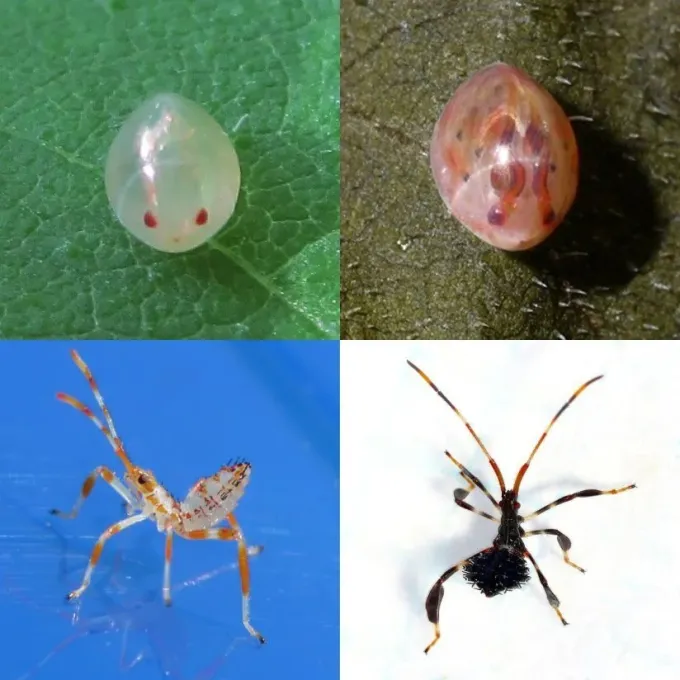
Description
How to identify
Leaf-footed bugs of the Acanthocephala genus belong to the family Coreidae and are recognized by the distinct leaf-like expansions on their hind tibiae.
These insects are typically large, with elongated, brownish, or black bodies that often feature a rough, textured exoskeleton.
As members of the Hemiptera order, they possess specialized piercing-sucking mouthparts known as a rostrum, which they use to feed on plant tissues.
Their morphological adaptations allow them to move easily through foliage, where they spend most of their life cycle searching for host plants.
When disturbed, these bugs can emit a pungent odor from specialized scent glands, a common defense mechanism among many true bug species.
What it damages
Leaf-footed bugs feed on a wide variety of host plants, including fruit trees, legumes, various vegetables, and numerous ornamental species.
By extracting sap from developing shoots, buds, and fruit, they cause significant physiological stress to the plant and hinder normal growth.
Feeding damage on young fruit often leads to pitting, scarring, and deformities, which significantly reduce the marketability of the crop.
The punctures made during feeding create entry points for opportunistic fungal and bacterial pathogens, leading to fruit rot and tissue decay.
In severe infestations, the cumulative effect of fluid loss and pathogen entry can cause stunted growth or even the death of young seedlings.
When it appears
The activity of leaf-footed bugs is highly temperature-dependent, with adults emerging from overwintering sites as temperatures rise in the spring.
Females lay eggs in clusters on the undersides of leaves, ensuring that nymphs have immediate access to food sources upon hatching.
Nymphs go through several developmental instars, gradually increasing in size and developing wing pads before reaching the adult stage.
The number of generations per season varies based on regional climate, with warmer areas supporting more rapid and frequent reproductive cycles.
As photoperiods shorten in the autumn, adults seek shelter in debris, leaf litter, or crevices in bark to enter diapause for the winter.
Signs of infestation
The primary indication of an infestation is the visual presence of adult bugs or nymphs gathering in groups on the stems of host plants.
Affected leaves often display pale, chlorotic spotting, which progresses to localized necrotic areas as the cell damage increases.
Fruit deformity is a critical warning sign, particularly in crops like tomatoes or stone fruits where small punctures cause uneven development.
The presence of dark, watery excrement on leaves and stems provides clear evidence of ongoing feeding activity by the bug population.
Premature abscission (dropping) of buds and small fruits is a major indicator that the plant is under high pressure from sap-sucking pests.
Control measures
Managing leaf-footed bug populations requires an integrated approach that combines cultural practices with targeted chemical applications.
Cultural control is highly effective; keeping fields free of weeds and destroying crop residues reduces available overwintering and feeding sites.
Biological control involves maintaining a favorable environment for natural predators, such as tachinid flies and generalist insect hunters.
When infestations exceed economic thresholds, the application of registered insecticides is recommended, ensuring optimal coverage of foliage.
- Monitor fields frequently during the early stages of plant development.
- Hand-pick and destroy bugs if the infestation is localized on small plots.
- Use protective covers or fine-mesh netting to exclude bugs from sensitive crops.
Taxonomy
- Latin name
- Acanthocephala
- Order
- Hemiptera (bugs, aphids, leafhoppers)
- Family
- Coreidae
- EPPO code
- ACAOSP
Discussion
No discussions yet — be the first.