
Spring Peeper
Pseudacris crucifer
Description
How to identify
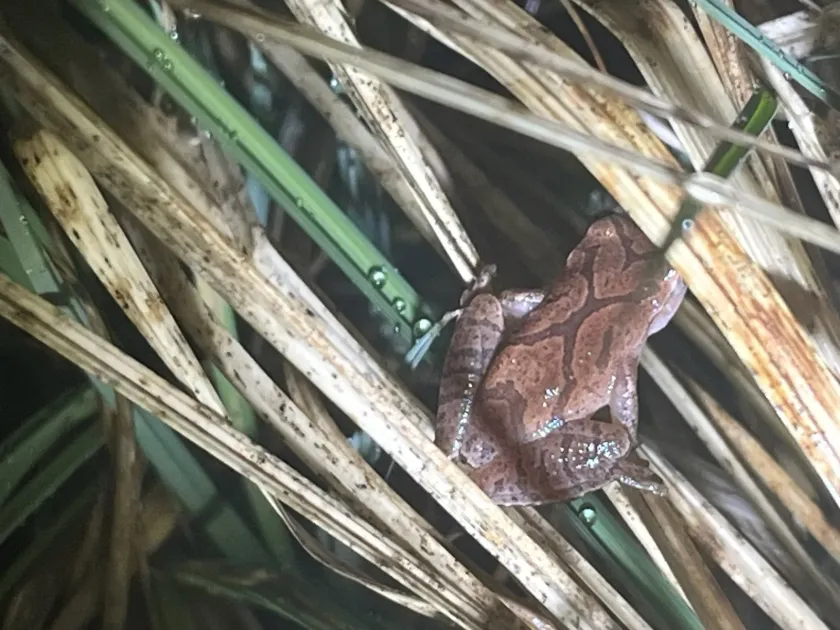
The Spring Peeper (Pseudacris crucifer) is a small chorus frog belonging to the Hylidae family of the order Anura.
These frogs are typically very small, measuring between 2 and 3.5 centimeters in total body length.
The name originates from the distinct dark X-shaped cross marking found on the dorsal side of the frog.
Their skin color ranges from tan to brown, providing excellent camouflage against tree bark and leaf litter.
Like other tree frogs, they possess specialized adhesive toe pads that allow them to climb smooth surfaces and plant stalks easily.
What it damages
The Spring Peeper is not considered an agricultural pest; in fact, it is an ecologically beneficial species.
Their diet consists entirely of small insects, ants, spiders, and other invertebrates found within the agricultural landscape.
They act as natural predators, helping to keep populations of various garden insects in check without human intervention.
Mechanical damage to plants is negligible and generally only occurs if multiple individuals gather in high densities inside greenhouses.
Farmers should view them as allies in integrated pest management rather than a threat to their crop yields.
When it appears
Activity begins in early spring, often coinciding with the first thaw when the frogs emerge to migrate toward breeding ponds.
The breeding season lasts through the spring, characterized by the loud, high-pitched whistling calls of the males.
During the summer months, they shift to a more terrestrial lifestyle, moving into gardens, fields, and wooded areas to forage.
As temperatures drop in the autumn, the frogs look for suitable hibernation spots to survive the winter freeze.
They overwinter in natural shelters, such as rock crevices, rotting logs, or buried under moist soil layers.
Signs of infestation
The most common sign of their presence is the high-pitched, piercing "peep" call during the breeding season.
Finding the individuals themselves is often difficult due to their impressive ability to blend into the surrounding environment.
In managed agricultural structures, their presence might be indicated by the sight of frogs on leaves or near irrigation systems.
There are no diagnostic feeding injuries, such as leaf notches or tissue consumption, associated with this species.
Their presence is a positive indicator of a stable local environment and sufficient biodiversity in the area.
Control measures
No control measures are necessary, as the Spring Peeper poses no threat to the commercial production of plants.
If they become a nuisance in greenhouses, physical exclusion methods like fine-mesh screening are the safest approach.
Chemical control is never advised, as it can cause significant harm to local wildlife and disrupt the natural predator-prey dynamics.
Management of moisture levels and the elimination of standing water inside greenhouses can naturally discourage their presence.
Promoting a balanced ecosystem is the most effective way to manage any potential issues related to amphibian migration into crop areas.
Taxonomy
- Latin name
- Pseudacris crucifer
- Family
- Hylidae
- EPPO code
- PDACCR
Discussion
No discussions yet — be the first.