
Chorus frog
Pseudacris
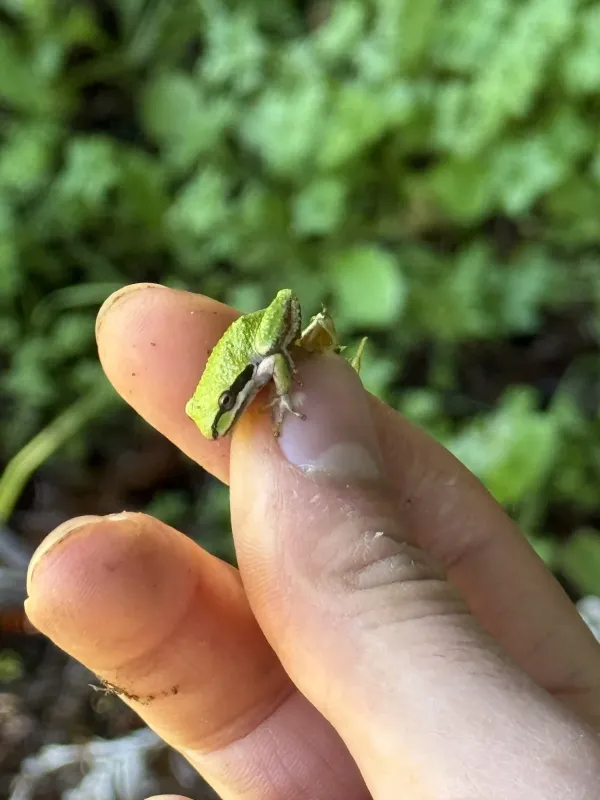
Description
How to identify
The Pseudacris genus, commonly known as chorus frogs, belongs to the Hylidae family and represents a group of small, ground-dwelling or climbing amphibians.
These frogs are characterized by their small size, striped patterns, and adhesive toe pads, which help them navigate through various types of vegetation.
They are primarily insectivorous, meaning their diet consists of small arthropods, flies, and other tiny invertebrates found in the environment.
They are highly sensitive to environmental quality, serving as bioindicators for the health of local agricultural ecosystems.
It is important to emphasize that they do not possess any physical or biological traits that would allow them to act as agricultural pests.
What it damages
There is no evidence that chorus frogs cause any damage to crops, as they are strict predators of insects rather than plant feeders.
They do not consume stems, leaves, seeds, or fruits, making them completely harmless to agricultural produce.
By consuming various insect larvae and adults, they actually provide a valuable ecosystem service by reducing the population of potential crop pests.
Farmers can observe them among crops during damp weather without worrying about the integrity of their plants.
Their presence should be welcomed as it contributes to the natural regulation of pest insect populations within the fields.
When it appears
The activity cycle of Pseudacris is largely determined by moisture availability and temperature throughout the growing season.
Spring is the peak activity period as it marks the breeding season, usually occurring in or near wetlands or temporary water bodies.
During the warmer and drier months of summer, they often retreat to moist soil or dense vegetation to avoid dehydration.
Autumn brings a decline in visible activity as individuals prepare for hibernation in protected underground sites.
The winter period is spent in dormancy until rising spring temperatures signal the start of a new reproductive cycle.
Control measures
No control measures are needed for the chorus frog, as they are considered beneficial organisms in agricultural landscapes.
Sustainable farming practices, such as integrated pest management (IPM), support the survival of these frogs.
Reducing the reliance on broad-spectrum pesticides helps maintain amphibian populations which play a role in natural biological control.
Preserving natural buffer zones and grassy margins around fields provides essential habitat for these beneficial animals.
Efforts should be directed toward identifying and managing actual agricultural pests instead of disturbing non-pest fauna.
Taxonomy
- Latin name
- Pseudacris
- Family
- Hylidae
- EPPO code
- PDACSP
Discussion
No discussions yet — be the first.