
Northern cricket frog
Acris crepitans
Description
How to identify
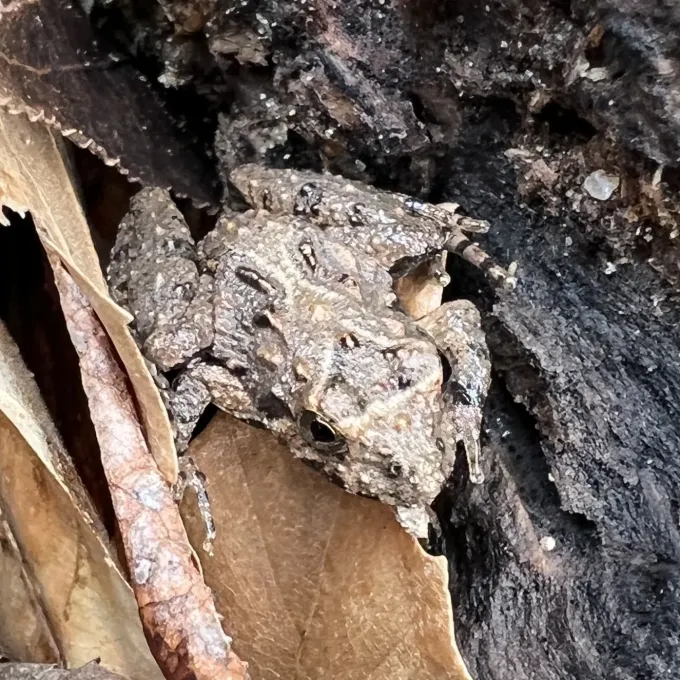
The Northern cricket frog (Acris crepitans) is a small species of amphibian belonging to the Hylidae family, order Anura.
These frogs are characterized by their small size, typically ranging from 19 to 38 mm in length.
They exhibit a distinctive triangle-shaped patch on the top of their heads and possess rough, warty skin.
Coloration is highly variable, often featuring shades of gray, brown, or olive with patterns that aid in camouflage.
They are primarily identified by their unique call, which sounds remarkably like pebbles being clicked together.
What it damages
While not a direct herbivore, the Northern cricket frog poses challenges in specialized agricultural production environments.
Its main impact involves the unintentional presence of frogs in harvested produce, which can affect quality standards.
High population densities in irrigated fields can interfere with irrigation hardware and automated monitoring systems.
By consuming beneficial predatory insects, they may indirectly contribute to higher pest pressure on vulnerable crops.
Their accumulation in drainage systems can lead to sanitation issues, requiring additional sorting and cleaning processes at harvest.
When it appears
The activity cycle is tightly coupled with local humidity levels and temperature cycles throughout the growing season.
Breeding typically occurs from late spring through summer, during which the frogs migrate to water sources near cropland.
Peak presence in fields usually coincides with the period of greatest vegetative growth and intensive irrigation.
As temperatures decline in late autumn, the frogs enter a state of dormancy, seeking shelter in soil or leaf litter.
The duration of their active season is largely determined by the availability of moisture in the soil and climate conditions.
Signs of infestation
The most reliable sign of a local population is the persistent clicking call during the breeding season.
Visual identification is possible during early morning hours or irrigation cycles when frogs move across the soil surface.
Mucus residue found on low-lying leaves of crops serves as a secondary indicator of their presence within a plot.
Observing increased activity in drainage ditches and irrigation channels often precedes their movement into the main field.
A decline in the density of small soil-dwelling insects may suggest the presence of a thriving frog population in the area.
Control measures
Effective management focuses on limiting the accumulation of stagnant water within the agricultural footprint.
Improving field drainage prevents the creation of small, temporary breeding ponds that attract the species.
Maintaining clear pathways around the fields discourages the frogs from establishing themselves within the crop rows.
Precision irrigation techniques can help maintain necessary soil moisture without creating excessive surface pools.
Integrated pest management strategies should consider the role of amphibians in the food web to maintain ecological balance.
Taxonomy
- Latin name
- Acris crepitans
- Family
- Hylidae
- EPPO code
- AKRICR
Discussion
No discussions yet — be the first.