
Beet webworm
Psara
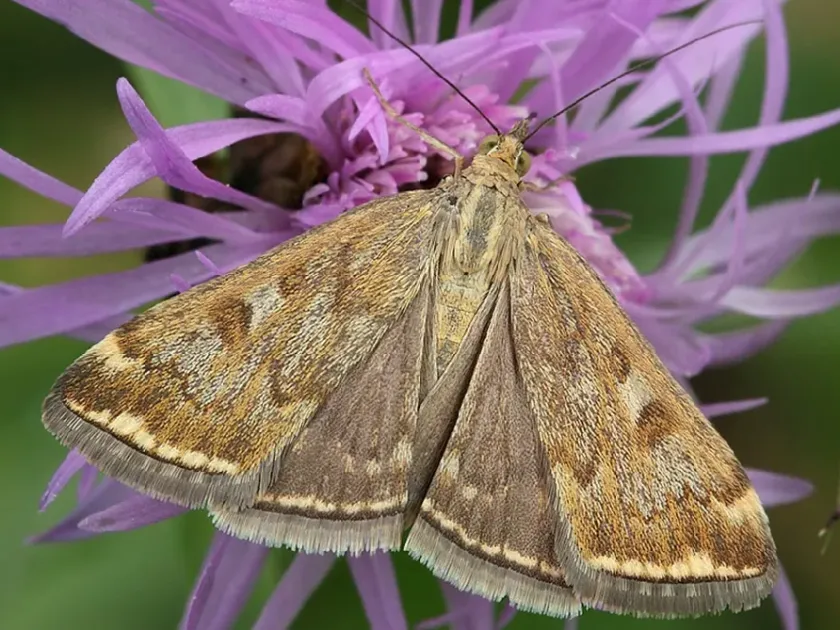
Description
How to identify
The beet webworm (scientific name Psara, also known as Loxostege sticticalis) is a significant moth pest from the Crambidae family, widely recognized for its destructive potential in agriculture.
Adult moths have a wingspan of approximately 26 mm, featuring brownish-grey wings adorned with characteristic dark spots and lighter bands, which provide effective camouflage on vegetation.
The larvae, or caterpillars, progress through five to six larval stages, transitioning from a pale greenish hue in early stages to a dark, greyish-brown or black color with a pale dorsal stripe in later stages.
These pests overwinter as pupae within durable, silk-lined cocoons, which are typically buried vertically in the topsoil layer, waiting for optimal spring temperatures to emerge.
Entomological studies emphasize that the population density of this pest is highly influenced by climate patterns, often resulting in massive outbreaks during warm and dry growing seasons.
What it damages
As a polyphagous species, the beet webworm can infest over 200 different plant species, demonstrating a high level of adaptability to various crop environments.
Primary host plants that suffer the most damage include sugar beets, sunflowers, corn, soybeans, and several types of legumes and vegetables grown on a commercial scale.
Early-stage larvae primarily feed on the undersides of leaves, consuming the leaf tissue while leaving the epidermis intact, which results in a skeletal appearance of the foliage.
As the larvae mature, their feeding intensity increases dramatically, leading to the complete defoliation of plants, which severely hinders photosynthesis and significantly reduces crop yield.
Due to their highly gregarious and migratory behavior, infestations can spread across large fields in a very short period, causing catastrophic losses if not managed promptly.
When it appears
The emergence of the first generation of adults generally occurs in late May or early June, depending on local temperature conditions and soil moisture levels.
Female moths deposit their eggs in small clusters on the underside of leaves, and a single female is capable of laying hundreds of eggs during her brief adult life span.
Larval development typically lasts between two to four weeks, during which they feed voraciously, after which they burrow into the soil to pupate and complete their lifecycle.
Depending on the geographical region and climate, the beet webworm can produce one to three generations per year, making seasonal timing for control efforts essential.
Environmental conditions such as high humidity and moderate temperatures often promote rapid population growth, necessitating frequent field scouting during peak summer months.
Signs of infestation
A key indicator of a beet webworm infestation is the presence of silk webbing on the host plants, which the larvae use to construct protective shelters during the day.
The presence of fecal pellets, which appear as small, dark granules on the leaves or the ground beneath the plants, is a clear sign that active feeding is currently occurring.
Visible thinning of foliage and irregular holes on leaf surfaces are common symptoms that growers should look for during routine inspections of vulnerable fields.
Monitoring the adult population using pheromone or light traps is a standard procedure to detect the onset of an infestation before the larvae reach destructive levels.
If suspicious clusters of small, wax-like eggs are found on the underside of leaves during field patrols, immediate management steps should be initiated to prevent larval emergence.
Control measures
An effective integrated pest management (IPM) strategy for Psara combines mechanical, biological, and chemical methods to suppress population numbers.
- Deep autumn plowing to expose and destroy overwintering pupae in the soil.
- Elimination of nectar-rich weeds in and around fields to remove food sources for adult moths.
- Release of biological control agents, such as Trichogramma wasps, to parasitize moth eggs.
- Application of selective insecticides when larvae are in their early instars and most vulnerable.
- Constant field monitoring to ensure that chemical treatments are applied only when economic injury levels are exceeded.
Timing is critical when using insecticides; treatments are most effective against young larvae before they build protective webs or migrate to neighboring fields.
Since the moths are highly mobile, coordinated regional management practices are often required to prevent the re-infestation of treated areas by populations from surrounding non-treated lands.
Taxonomy
- Latin name
- Psara
- Order
- Lepidoptera (butterflies)
- Family
- Crambidae
- EPPO code
- PSARSP
Discussion
No discussions yet — be the first.