
Coffee webworm
Prophantis smaragdina
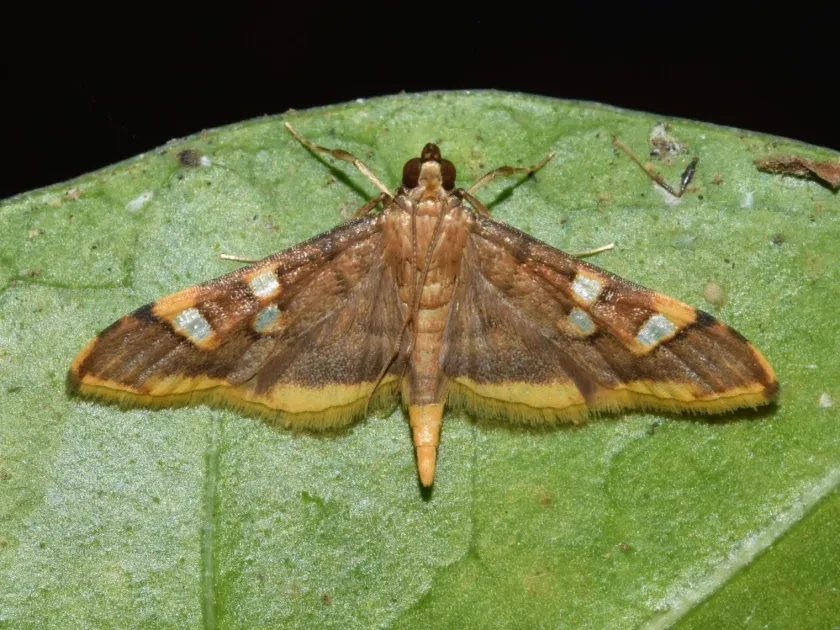
Description
How to identify
The coffee webworm (Prophantis smaragdina) belongs to the Pyralidae family within the order Lepidoptera. It is a significant pest known for damaging coffee plantations by targeting the reproductive parts of the plant.
The adult moth is relatively small, with a wingspan that typically allows it to camouflage effectively against the bark and foliage of coffee trees. Its lifecycle consists of egg, larval, pupal, and adult stages.
As a specialist feeder, the insect is primarily adapted to the environmental conditions of coffee-growing regions. The biology of the species is characterized by high reproductive rates during favorable seasons.
Identifying the pest requires careful inspection of the flowering clusters. The larvae are the primary cause of concern, as they feed on tissues that are vital for berry formation.
Scientific monitoring, often involving pheromone-based tools, helps agricultural experts track the population density and predict potential outbreaks before they cause widespread damage.
What it damages
The coffee webworm is primarily a threat to Coffea arabica and other commercially important coffee varieties. The larvae penetrate the flower buds and young berries to feed.
This internal feeding pattern leads to the premature shedding of blossoms. Consequently, the tree fails to develop healthy fruits, directly leading to lower harvest yields for farmers.
Beyond physical damage to flowers, the entry points created by the larvae provide an opening for secondary infections. Fungal pathogens often take advantage of these wounds, further weakening the tree.
When infestation levels are high, the impact on total plantation productivity is severe. Because the larvae remain hidden inside the fruit, they are protected from many environmental factors and predators.
Wild relatives of the coffee plant can serve as reservoir hosts for the pest, maintaining populations during the off-season and allowing for re-infestation of cultivated crops.
Signs of infestation
The most common indicator of a coffee webworm infestation is the presence of webbed blossoms. Larvae often spin fine silk to connect buds together, creating a protective enclosure for feeding.
Withered or blackened flower clusters are clear signs that the pest has begun its cycle of destruction. A closer examination of these buds usually reveals small exit or entry holes.
Droppings left by the larvae on the leaves below the clusters indicate active feeding. These dark pellets are a reliable sign for growers to conduct more thorough scouting of the tree canopy.
Stunted or deformed berries are another symptom, resulting from the internal damage caused during the early stages of fruit development. Such fruits rarely reach maturity.
In the evening, adult moths may be seen flying around the canopy, particularly after the onset of the rainy season, which marks the peak activity window for the species.
Control measures
Integrated Pest Management (IPM) is the most effective approach to controlling the coffee webworm. This involves combining biological, cultural, and chemical methods to minimize damage.
Biological control agents, such as specific parasitoids and bacteria, can significantly reduce larval populations. This method is environmentally friendly and helps maintain the natural balance of the plantation.
Cultural practices include regular pruning to remove infested branches and improve airflow within the canopy. By reducing humidity levels, growers create a less favorable environment for the webworm.
When chemical intervention is necessary, the use of systemic insecticides should be timed to coincide with the larval emergence phase. Always ensure that applications comply with local safety standards.
- Remove and destroy infested plant material to break the pest lifecycle.
- Use light traps to monitor and reduce adult moth populations.
- Maintain proper field sanitation to discourage the establishment of the pest.
Taxonomy
- Latin name
- Prophantis smaragdina
- Order
- Lepidoptera (butterflies)
- Family
- Crambidae
- EPPO code
- PRPHSM
Discussion
No discussions yet — be the first.