
Polytus
Polytus
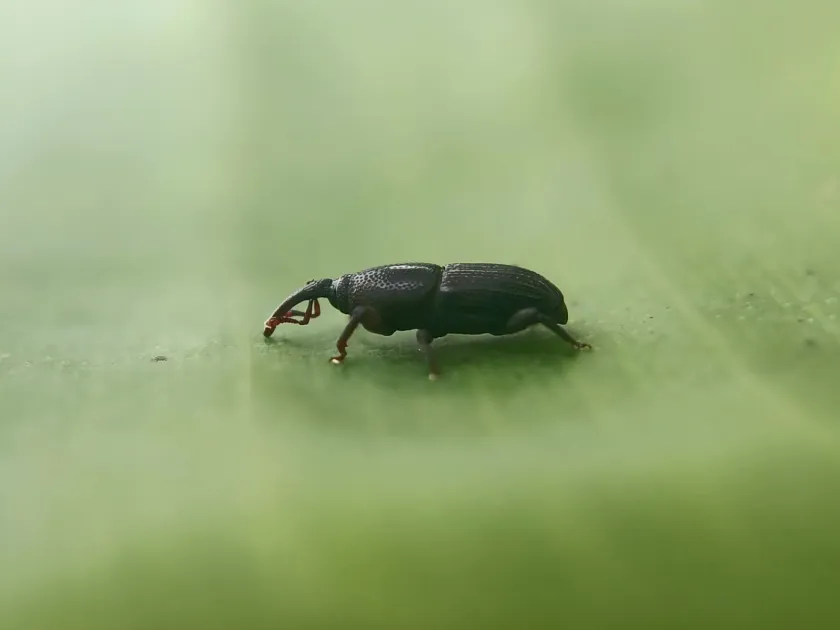
Description
How to identify
The genus Polytus belongs to the order Coleoptera and the family Curculionidae. These are small insects morphologically adapted to a concealed lifestyle within plant tissues.
They are characterized by an elongated body, typical for weevils, with a well-developed rostrum. Their coloration is usually dark and cryptic, making them difficult to detect during field inspections.
Systematically, these pests occupy specific niches, often parasitizing monocotyledonous plants. Identifying the species usually requires microscopic analysis of the pronotum and leg structures.
The biology of this species is closely linked to humidity levels and the density of plant material. Adults exhibit strong phototaxis, allowing them to disperse actively across fields during favorable periods.
The life cycle involves complete metamorphosis: egg, larva, pupa, and adult. The larval stage causes the most significant damage to crops due to its concealed feeding behavior.
What it damages
The primary food source for Polytus are members of the Poaceae family. Crops such as wheat, barley, and rice are the most susceptible to infestation.
The pest damages both reproductive and vegetative plant organs. Larvae penetrate inside the stems or kernels, consuming the internal content, which leads to plant death or severe stunting.
Beyond direct tissue destruction, the insect's activity facilitates the entry of secondary pathogens, such as fungi and bacteria, which further reduce total harvest yields.
In storage facilities, this pest is a significant threat to grain stocks, reducing both the mass and the germination rate of the seeds.
The level of damage is highly dependent on agroclimatic conditions; in arid years, the impact on plant physiology is generally less pronounced than during humid seasons.
When it appears
Activity begins in the spring when soil temperatures reach favorable levels for adults to emerge from their overwintering sites.
The highest intensity of feeding and reproduction occurs during the tillering and stem elongation stages of cereal crops, when the population can reach critical thresholds.
The summer generation is linked to grain maturation, where larvae complete their development cycle before seeking locations for diapause.
Overwintering sites typically include plant debris, surface soil layers, or crevices in agricultural buildings where the pests can survive until the following season.
Temperature fluctuations during off-seasons play a crucial role in population survival, as mild winters contribute to higher pest counts in the subsequent season.
Signs of infestation
The first sign of infestation is the appearance of wilting or prematurely yellowing shoots, which indicates internal stem damage caused by larvae.
Upon inspecting grains, one may find small exit holes made by adults, alongside the presence of fine powder, which serves as a byproduct of their feeding.
- Yellowing of the apical leaves.
- Reduced crop density.
- Internal cavities in plant tissues.
- Stunted growth and delayed development.
- Detection of adult insects using light traps.
Visual field monitoring during critical growth stages is essential for detecting outbreaks early and initiating appropriate protective measures.
Control measures
Effective protection is based on strict crop rotation, which breaks the pest's life cycle and reduces the overall infestation pressure on the field.
Deep autumn plowing is a vital agronomic practice that destroys the overwintering sites of both adults and larvae within plant residues.
Chemical control involves the application of systemic insecticides that can penetrate plant tissues to target concealed larvae effectively.
The use of pheromone traps allows for precise timing of insect emergence, enabling more efficient planning of crop protection applications.
Maintaining proper humidity and temperature controls in grain storage is a necessary condition to prevent the mass proliferation of Polytus in warehouse settings.
Taxonomy
- Latin name
- Polytus
- Order
- Coleoptera (beetles)
- Family
- Dryophthoridae
- EPPO code
- PLYTSP
Discussion
No discussions yet — be the first.