
Podosesia aureocincta
Podosesia aureocincta
Description
How to identify
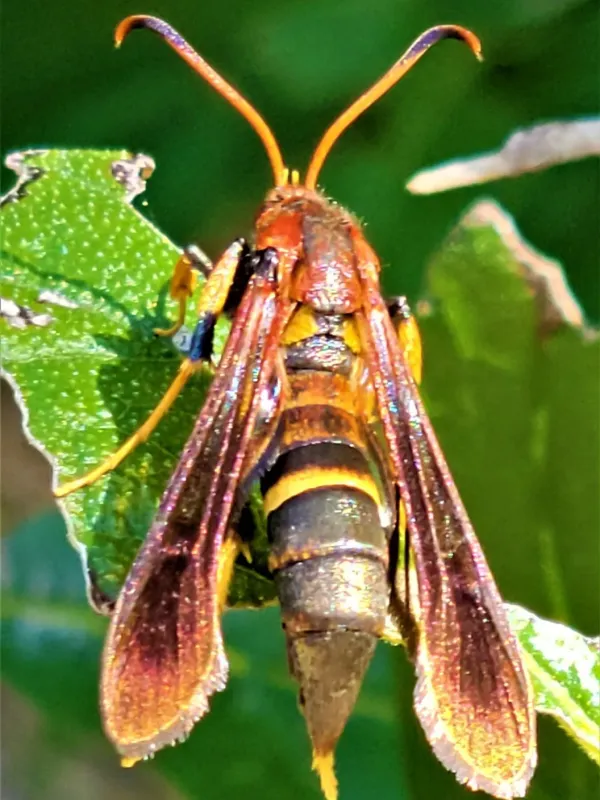
The clearwing moth (Podosesia aureocincta) belongs to the family Sesiidae, known for their remarkable mimicry of stinging Hymenoptera like wasps or hornets. Adults feature transparent wings with dark margins and a distinct yellow band across the abdomen.
The slender body of the adult is covered with hair-like scales, enhancing the visual resemblance to wasps. With a wingspan of approximately 30-35 mm, this mimicry serves as a primary defensive strategy against visual predators during daylight hours.
Larvae are whitish-yellow with brown heads, characterized by a cryptic lifestyle. They live and feed internally within the wood, which makes detection challenging until significant damage has occurred.
The life cycle typically spans one to two years depending on environmental conditions. Pupation occurs within the tunnels carved by the larvae, with the pupa partially emerging from the exit hole prior to adult emergence.
Females deposit eggs singly or in small groups on bark crevices, pruning scars, or mechanical wounds, underscoring the importance of proper tree maintenance and sanitation practices.
What it damages
This pest targets various woody plants and shrubs, particularly members of the Rosaceae family. Fruit trees such as apples and pears are common hosts, as well as several ornamental species.
The larvae are responsible for the damage, as they bore deep galleries into trunks and larger branches. This feeding behavior disrupts the vascular system, effectively hindering the transport of water and nutrients.
Damaged trees become highly susceptible to secondary infections and fungal diseases. Necrosis at the larval feeding sites can eventually lead to the dieback of major branches or the total loss of the tree.
Young trees and saplings are at the greatest risk, as the internal damage to the cambium and xylem can easily overwhelm their physiological defenses and stunt overall growth.
The economic impact of this infestation is significant, leading to reduced yield and structural instability in the affected wood, ultimately shortening the productive lifespan of the orchard.
Signs of infestation
The primary indicator of an infestation is the presence of frass (larval excrement) resembling sawdust or wood shavings at the base of the tree or within cracks in the bark.
Small, oval-shaped exit holes on the surface of the bark are clear signs that adults have emerged. Identifying these holes during routine orchard inspections is vital for timely intervention.
Symptoms also manifest as stunted shoot growth and yellowing leaves during mid-summer, resulting from the compromised vascular function caused by internal larval tunneling.
Removing loose or necrotic bark often reveals the presence of tunnels filled with frass, indicating deep-seated infestation that requires immediate surgical removal of the affected tissue.
During the flight period, which typically coincides with late spring or early summer, adults can be spotted in sunny conditions, indicating the timing for potential egg-laying activity.
Control measures
Sanitation is the cornerstone of management: prune and destroy infested branches promptly. Apply wound dressings to all cuts to prevent further egg-laying opportunities for the moths.
Whitewashing tree trunks serves as a deterrent to egg-laying females. Additionally, routine bark grooming helps remove sheltered spots where larvae or pupae might otherwise thrive.
Pheromone traps are highly effective for monitoring adult activity. By tracking the flight period, growers can time insecticide applications precisely to catch newly hatched larvae before they bore deep into the wood.
Systemic insecticides, when applied correctly during the peak hatching period, can effectively penetrate plant tissues to eliminate young larvae residing just beneath the bark surface.
- Maintain optimal tree vigor through balanced fertilization and hydration.
- Avoid physical damage to the trunk during mechanical field operations.
- Encourage local bird populations and beneficial insects to prey on moths.
Taxonomy
- Latin name
- Podosesia aureocincta
- Order
- Lepidoptera (butterflies)
- Family
- Sesiidae
- EPPO code
- PODSAU
Discussion
No discussions yet — be the first.