
Podosesia
Podosesia
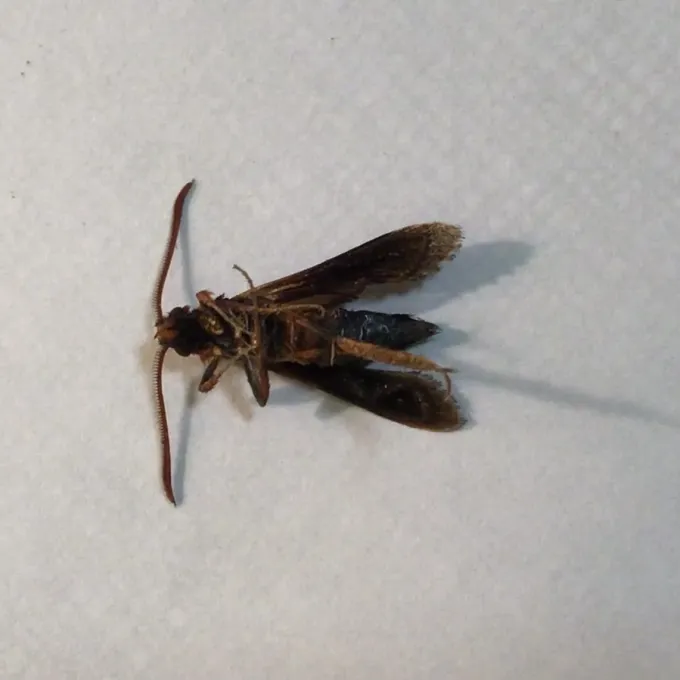
Description
How to identify
Podosesia is a genus of clearwing moths belonging to the family Sesiidae. These insects are well-known for their Batesian mimicry, evolving to resemble wasps and hornets to deter potential predators.
The adult moths have narrow, partially transparent wings and dark bodies with yellow or orange banding, which helps them blend in with common stinging insects found in gardens.
The larvae are typical wood-boring caterpillars, cream-colored with a brown head, specifically adapted for tunneling through the inner bark and sapwood of host trees.
The life cycle typically spans one year, though it can take longer depending on environmental temperatures and host tree health. They overwinter as larvae deep inside the wood.
Pupation occurs inside the larval galleries. Before the moth emerges, the pupa uses its specialized abdominal hooks to push itself partially out of the exit hole, allowing the adult to emerge safely.
What it damages
Podosesia species primarily target trees and shrubs within the Oleaceae family, with Fraxinus (ash) and Syringa (lilac) being the most susceptible hosts.
The damage is caused exclusively by the larval stage, which constructs extensive galleries that disrupt the cambium layer and the tree's vascular system.
Severe infestations can lead to the girdling of stems or trunks, effectively cutting off the nutrient flow and causing the death of the upper canopy or the entire plant.
In nursery settings, Podosesia can be devastating, causing stunted growth and structural weakness that renders young saplings unsuitable for sale or landscape use.
Established trees may survive for several years, but cumulative structural damage often leaves them prone to mechanical failure, especially during high winds.
Signs of infestation
Visible signs of infestation include small, circular exit holes in the bark of the trunk or larger branches, often accompanied by frass accumulation near the base of the tree.
Sap flow or "bleeding" from entry holes is a common symptom as the tree attempts to defend itself against the boring activity of the larvae.
Exuviae (empty pupal casings) protruding from the bark surface are a definitive sign that a new generation of moths has successfully emerged.
Crown dieback is a frequent indicator; leaves may appear sparse, yellowed, or wilted long before the tree actually dies from the infestation.
Localized areas of cracked, loose, or sunken bark often indicate the location of extensive internal larval tunnels beneath the surface.
Control measures
Sanitation is a critical component of control; removing and destroying infested wood or heavily damaged trees is essential to reduce the local population density.
Pheromone traps are highly effective for monitoring flight patterns and timing insecticide applications to coincide with the period when neonate larvae are most vulnerable.
Systemic insecticides or trunk sprays applied to the bark can protect high-value landscape trees from colonization during the peak flight season of adult moths.
Maintaining vigorous tree health through adequate irrigation and fertilization helps the plant withstand minor infestations and recover from damage more effectively.
- Apply entomopathogenic nematodes to entry holes for biological control.
- Schedule regular inspections during late spring and early summer.
- Avoid wounding trees during maintenance as this can attract egg-laying females.
Taxonomy
- Latin name
- Podosesia
- Order
- Lepidoptera (butterflies)
- Family
- Sesiidae
- EPPO code
- PODSSP
Discussion
No discussions yet — be the first.