
Asparagus fly
Plioreocepta poeciloptera
Description
How to identify
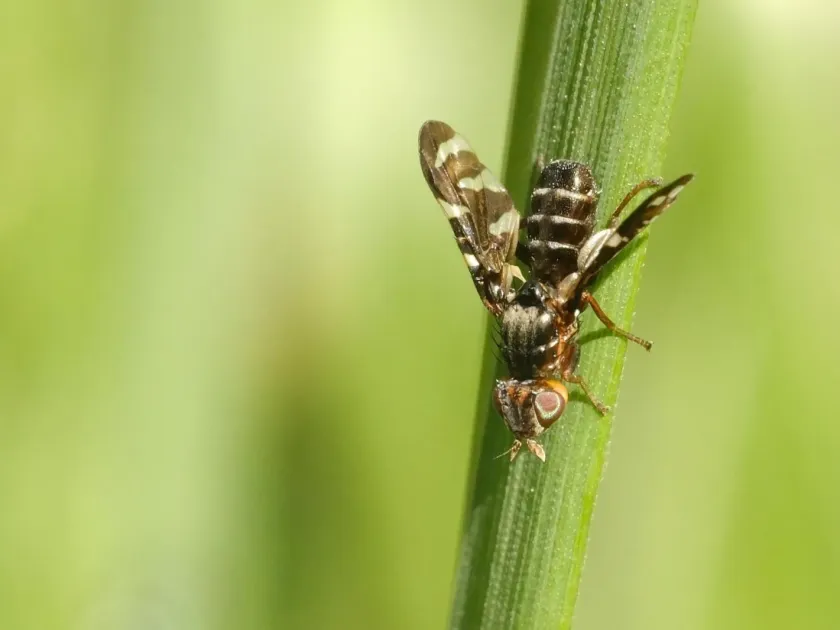
The asparagus fly (Plioreocepta poeciloptera) is a dipteran insect belonging to the Tephritidae family. The adult fly is approximately 7–9 mm long and is easily recognized by the distinct dark patterns on its wings.
The life cycle of the pest involves complete metamorphosis, consisting of egg, larva, pupa, and adult stages. The larvae are cream-colored, legless maggots that are highly specialized for feeding on asparagus tissue.
The pest overwinters primarily in the pupal stage, staying buried in the soil or hiding within the remnants of dry asparagus stalks from the previous season.
Adult flies emerge in the spring, coinciding with the emergence of the first edible asparagus shoots, which serves as the primary food source for the next generation.
Environmental conditions, particularly temperature and humidity, significantly influence the speed of larval development, with warmer conditions leading to faster maturation cycles.
What it damages
The asparagus fly is a major threat to Asparagus officinalis crops. It targets both the tender young shoots harvested for food and the mature ferns that sustain the plant's root system.
The larvae tunnel deep into the stems, disrupting nutrient transport and causing physical deformation. This tunneling makes the affected spears completely unmarketable.
Secondary infections often take hold in the damaged tissues. Fungi and bacteria enter through the holes created by the larvae, leading to tissue rot and further weakening the plant.
Continuous infestations deplete the plant's carbohydrate reserves in the crown, which causes a steady decline in yield over subsequent harvest seasons.
In high-density fields, the damage can become widespread, leading to severe financial losses if management strategies are not implemented promptly.
Signs of infestation
One of the most characteristic signs of infestation is the curling of the shoot tip, often referred to as a "shepherd's crook," which occurs as the shoot grows unevenly.
Small, dark puncture marks are visible on the skin of the spears, indicating where the female fly has deposited her eggs within the plant tissue.
Upon closer inspection or splitting an affected stalk, you will find internal galleries filled with larval debris, confirming the presence of the pest.
Infected spears often show premature yellowing and drooping, especially during hot or dry weather conditions when the damaged tissue loses its ability to retain water.
The presence of adult flies hovering over the field during the early morning or late afternoon indicates an active infestation that requires immediate attention.
Control measures
Sanitation is the most effective preventative measure. All crop debris, including old stalks and ferns, must be removed and destroyed by burning or deep burial to eliminate overwintering sites.
Tilling the soil in the late fall or early spring helps disturb the pupae in the soil, significantly reducing the population of flies that emerge the following season.
Insecticide applications should be timed to target the adult flies before they have a chance to lay eggs, strictly adhering to pre-harvest intervals for safety.
Monitoring the field with yellow sticky traps provides essential data on fly activity, helping growers make informed decisions about when to apply protective measures.
- Regular field scouting for deformed shoots.
- Removal and destruction of infested stems during the season.
- Strategic rotation of fields to reduce pest buildup.
Taxonomy
- Latin name
- Plioreocepta poeciloptera
- Order
- Diptera (flies)
- Family
- Tephritidae
- EPPO code
- PLPRPO
Discussion
No discussions yet — be the first.