
Plataspis
Plataspis
Description
How to identify
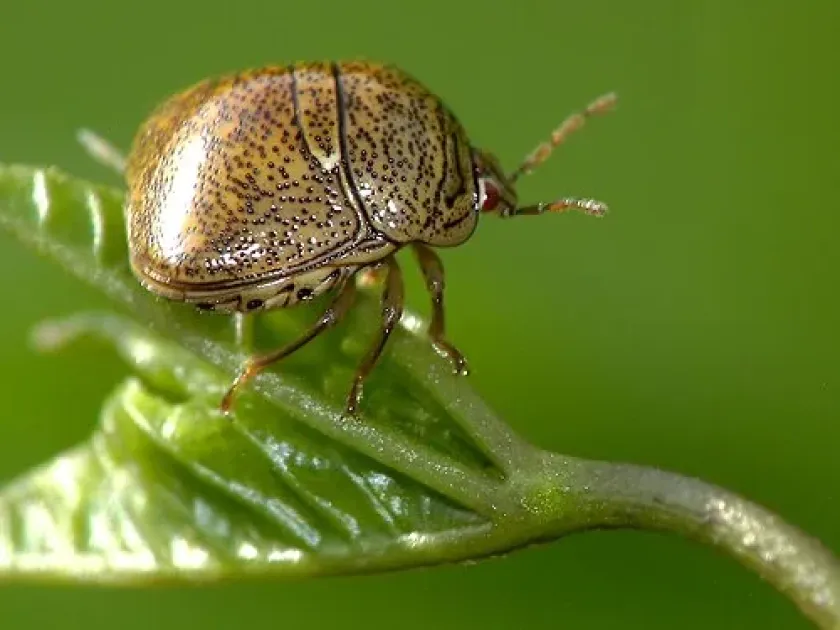
Plataspis is a genus of insects belonging to the family Plataspidae, commonly referred to as shield bugs or burrower bugs. These insects are easily recognized by their highly flattened, circular or broadly oval body shape, which is perfectly adapted for life in tight spaces.
The scutellum, or shield, is a defining characteristic of this genus, as it is exceptionally large and covers the entire abdomen and folded wings, giving the insect a very compact, armored appearance.
Adults often display dark, shiny, or metallic coloration, which provides excellent camouflage against stems and leaves. Their small, retracted heads and five-segmented antennae serve as diagnostic features for field identification.
Nymphs of Plataspis undergo several developmental stages, resembling smaller, wingless versions of the adults. Their color patterns can change as they mature, helping them blend into their specific host plant environments.
Eggs are typically laid in distinct, organized masses on the underside of leaves. Finding these egg clusters during routine crop scouting is vital for early detection of potential infestation outbreaks.
What it damages
Plataspis species primarily feed on various legume crops, including soybeans, cowpeas, and beans. They are known to cause significant yield losses by piercing plant tissues with their needle-like mouthparts.
The pest specifically targets reproductive organs such as flower buds and young pods. Feeding on these sensitive areas often leads to flower drop and aborted pods, directly reducing the total seed yield.
Beyond legumes, these bugs can survive on diverse wild host plants, which act as reservoirs and allow populations to build up before migrating into high-value agricultural fields.
As they feed, they inject saliva into the plant tissues, which can cause localized lesions, yellowing, and stunted growth. The damage essentially diverts the plant's resources away from seed development.
Furthermore, the physical punctures left by the insects create entry points for opportunistic pathogens, including fungi and bacteria, which can further degrade the quality of the harvest.
When it appears
The activity cycle of Plataspis is heavily influenced by seasonal temperature fluctuations. Adults typically emerge from their overwintering sites during the first warm spells of spring.
Depending on the climatic zone, the insect can produce multiple generations per year. Rapid population growth often coincides with the flowering stage of host crops, when nutrient availability is at its peak.
During hot summer days, these bugs are most active, moving between plants to optimize their feeding locations. High temperatures generally accelerate their developmental rate from egg to adult.
As autumn approaches and temperatures drop, the bugs enter a state of diapause. They seek shelter in leaf litter, dried weeds, or under the bark of trees to survive the winter period.
Monitoring seasonal patterns is crucial, as the timing of control measures must be synchronized with the most vulnerable larval stages to ensure maximum efficacy.
Signs of infestation
Early signs of infestation include the wilting and yellowing of terminal buds and young leaves, often misinterpreted as nutritional deficiencies or mild drought stress.
A closer inspection of the plant architecture often reveals clusters of the flattened bugs congregating in the axils of leaves or along the stems, where they are protected from direct sunlight.
Small, necrotic spots or darkened punctures on the surface of pods are clear indicators of Plataspis feeding. These marks are often surrounded by localized tissue degradation.
The accumulation of frass (insect excrement) as tiny dark dots on the leaves beneath the colonies is a reliable visual cue that the bugs are actively feeding in the vicinity.
Significant premature shedding of pods is a late-stage indicator that the infestation has reached a level where intervention is required to save the remaining portion of the crop.
Control measures
Managing Plataspis requires an integrated approach that focuses on preventative agricultural practices combined with timely chemical or biological interventions.
Crop rotation remains one of the most effective strategies to disrupt the lifecycle of the pest, as it limits the availability of host plants in the immediate area.
- Sanitation by removing weed hosts from field margins.
- Application of selective insecticides when population counts exceed established economic thresholds.
- Using biological control agents such as predatory insects or entomopathogenic fungi where applicable.
Effective chemical control requires hitting the nymphs before they reach the adult stage, as adults have harder, more resistant exoskeletons.
Systematic scouting with yellow sticky traps or visual inspection during the critical pod-setting stage allows farmers to make data-driven decisions for efficient crop protection.
Taxonomy
- Latin name
- Plataspis
- Order
- Hemiptera (bugs, aphids, leafhoppers)
- Family
- Plataspidae
- EPPO code
- PLPASP
Discussion
No discussions yet — be the first.