
Globular stink bug
Brachyplatys subaeneus
Description
How to identify
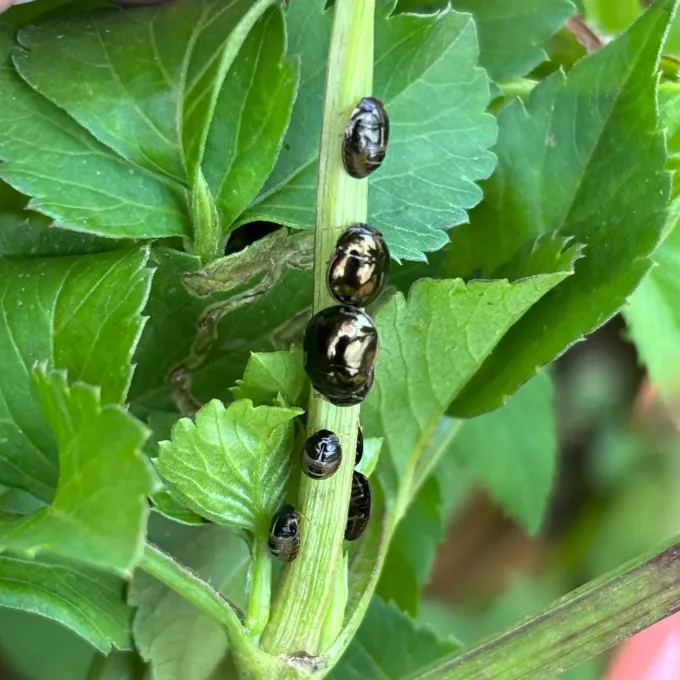
The globular stink bug, known scientifically as Brachyplatys subaeneus, is a member of the Plataspidae family within the order Hemiptera. It is easily recognized by its distinctively rounded and flattened body shape.
Adult bugs typically measure between 4 to 6 millimeters in length and possess a dark brown to black coloration, often displaying a subtle metallic sheen.
Nymphs, the immature stages of the bug, exhibit a similar shape to the adults but are smaller and have a lighter pigmentation during their early instars.
The insect is equipped with piercing-sucking mouthparts, which are perfectly adapted to extract plant fluids from the vascular tissues of host plants.
This species is highly gregarious, often found in large clusters on host plants, which facilitates rapid colonization and damage in favorable environmental conditions.
What it damages
This pest primarily attacks leguminous crops, with a notable preference for soybeans and beans. It is also known to infest various wild legumes in the surrounding ecosystem.
Both adults and nymphs feed by sucking sap from stems, foliage, and especially the developing pods and seeds, which causes the most significant agricultural loss.
Heavy infestations lead to stunted plant growth, leaf chlorosis, and the premature shedding of blossoms and young pods due to severe sap loss.
The seeds within the pods often become shriveled and discolored, resulting in reduced quality and lower commercial yield for the farmer.
Furthermore, feeding punctures created by the bugs provide entry points for secondary pathogens, such as fungi and bacteria, leading to tissue necrosis.
When it appears
The life cycle and activity of Brachyplatys subaeneus are heavily influenced by temperature, with peak activity occurring during warm summer months.
Adults overwinter in protected areas, including soil debris, leaf litter, or crevices in bark, emerging as soon as spring temperatures provide suitable conditions.
The pest typically produces multiple generations throughout the growing season, which leads to exponential population growth during the mid-summer period.
High population densities often coincide with the reproductive stage of leguminous crops, as the nutrient-rich developing seeds serve as an optimal food source.
As autumn approaches and temperatures drop, the bugs migrate toward overwintering sites, where they enter a state of diapause until the following spring.
Signs of infestation
Detection is often achieved by identifying clusters of small, dark, rounded bugs on the stems and the undersides of the leaves of host plants.
Visible feeding damage includes a speckled appearance on the foliage, which is caused by the localized depletion of sap from the plant tissue.
Pods showing signs of infestation may appear deformed, flattened, or exhibit small dark spots at the puncture sites where the bugs have been feeding.
Plants affected by a high concentration of these insects often show symptoms of premature senescence and reduced vigor compared to uninfested crops.
A foul-smelling secretion is often emitted by the bugs when they are disturbed, which serves as a secondary indicator of their presence in the field.
Control measures
Effective management relies on a combination of chemical control and cultural practices to maintain populations below the economic injury level.
Chemical applications using systemic or contact insecticides are typically implemented during the early growth stages of nymphs to prevent large-scale damage.
Cultural control strategies include removing host weeds near fields and performing thorough tillage after harvest to disturb overwintering sites in the soil.
Integrated Pest Management (IPM) should prioritize regular field scouting to monitor pest density and determine the necessity of insecticide applications.
- Maintaining crop rotation to break the pest's reproductive cycle.
- Encouraging natural predators and parasitoids that prey on eggs and nymphs.
- Ensuring proper spatial isolation from previously infested fields.
Taxonomy
- Latin name
- Brachyplatys subaeneus
- Order
- Hemiptera (bugs, aphids, leafhoppers)
- Family
- Plataspidae
- EPPO code
- BRAPSU
Discussion
No discussions yet — be the first.