
Phytocoptes
Phytocoptes
Description
How to identify
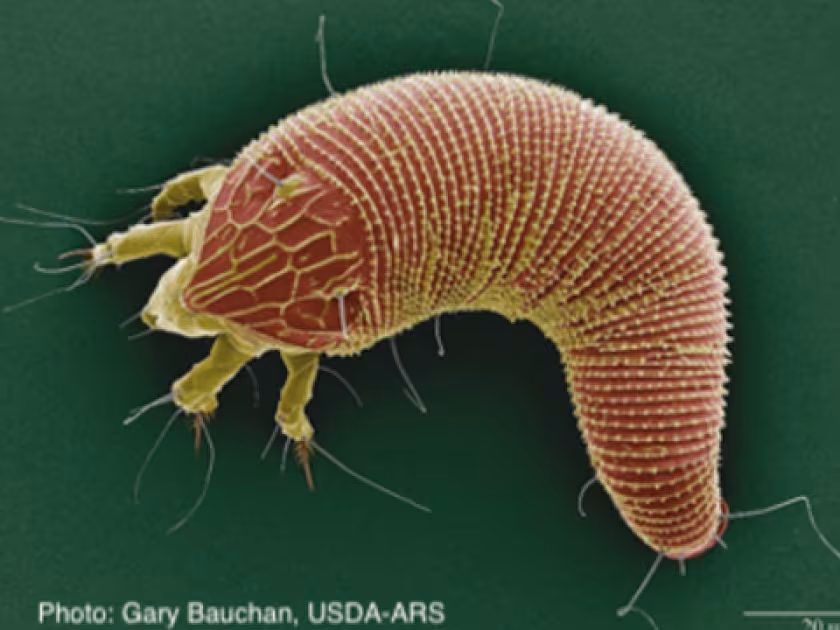
Phytocoptes is a genus of microscopic mites belonging to the Eriophyidae family, order Acariformes. These pests are extremely small, usually measuring between 0.15 and 0.25 mm in length, making them invisible to the naked eye.
The body of the mite is vermiform (worm-like) and cylindrical, typically pale or yellowish-white. A key diagnostic feature is the presence of only two pairs of legs, which is typical for all members of the Eriophyid family.
These mites live a highly concealed life, predominantly inhabiting the interior of leaf buds, plant tissues, or the crevices of young shoots. This hidden lifestyle makes early detection of an infestation quite challenging.
The life cycle includes stages of egg, nymph, and adult. Due to their rapid reproductive rate, multiple generations can occur within a single growing season, allowing populations to build up quickly under favorable conditions.
They overwinter primarily as adults inside buds or within bark crevices. As soon as temperatures rise in the spring, the mites become active, emerging to feed on newly developing plant tissue and to lay their eggs.
What it damages
Phytocoptes mites attack a variety of plants, including hazelnut (Corylus), various fruit trees, and several berry-producing shrubs. They primarily target the growing points of the host plants.
The damage is mostly concentrated within the buds, where mites feed on the sap of developing leaf and flower primordia. This feeding process often prevents the bud from opening, causing it to wither or become stunted.
Heavy infestations can lead to significant yield reduction because affected buds may die or produce weak, non-productive shoots. This directly impacts the overall health and fruit-bearing capacity of the plant.
In addition to bud damage, these mites can cause the formation of galls or deformities on leaves, which interfere with normal physiological processes like photosynthesis and lead to premature leaf drop.
Stressed by the mite feeding, the affected plant becomes more susceptible to environmental factors, such as winter frost, and secondary infections by various fungal and bacterial pathogens.
Signs of infestation
The most common sign of infestation is the swelling and enlargement of buds, which remain closed and deformed, often taking on a globular or distorted appearance throughout the growing season.
Leaves may show visible signs of curling, crinkling, or chlorotic spots. In some cases, shoots may appear shortened or twisted, which is a clear indicator of systemic damage caused by feeding mites.
The presence of galls, which are abnormal growths of plant tissue, serves as a distinct marker for certain species of Phytocoptes. These galls provide the mites with both shelter and high-quality food.
Visual confirmation can be achieved using a magnifying glass or a microscope, by dissecting the swollen buds to find the mites themselves, their eggs, or the empty exuviae (cast-off skins).
Early spring is the best time to observe these signs, as the difference between healthy, normal buds and mite-infested, distorted buds becomes most apparent as the plant begins its active growth phase.
Control measures
The first line of defense is ensuring the use of clean, mite-free nursery stock. Inspecting new plants thoroughly before introduction to the garden is crucial to prevent the spread of the pest.
Sanitation practices, such as the pruning and immediate destruction (burning or deep burial) of infested buds and shoots, are essential to reduce the mite population during the dormant period.
Chemical control using specific acaricides is effective if applied during the critical windows of mite migration, when individuals move from old buds to new foliage. Timing is key to successful chemical management.
Sulfur-based treatments are often recommended, as they provide effective mite suppression while also acting against certain fungal pathogens, offering a double benefit for plant protection.
Biological control agents, particularly predatory mites from the Phytoseiidae family, can help maintain mite populations below the economic injury level, fostering a more balanced garden ecosystem.
Taxonomy
- Latin name
- Phytocoptes
- Order
- Mites
- Family
- Eriophyidae
- EPPO code
- PHTCSP
Discussion
No discussions yet — be the first.