
Plum leaf gall mite
Phyllocoptes pruni
Description
How to identify
The plum leaf gall mite (Phyllocoptes pruni) is a microscopic pest belonging to the family Eriophyidae. Measuring approximately 0.2 mm in length, these creatures are virtually invisible to the naked eye.
Their bodies are worm-like and elongated, tapering towards the rear. They possess two pairs of legs situated near the front of the body, which is a characteristic feature of this family.
Fertilized females overwinter under the bud scales of plum trees. As the temperature rises and sap flows in the spring, they migrate to the developing leaf tissue to feed and lay eggs.
The life cycle is rapid, allowing for multiple generations throughout a single season. This allows the population to reach damaging levels quickly during the peak of summer.
Spread between trees is primarily facilitated by wind currents. Additionally, infested nursery stock is a common vector for introducing the mite into new orchard plantings.
What it damages
The mite primarily targets plum species (Prunus domestica), but it is also known to infest other stone fruits. It feeds by piercing the epidermal cells of young leaves to extract sap.
The feeding process triggers an abnormal hormonal response in the plant, leading to the formation of galls. These structures provide protection for the mites while disrupting normal leaf function.
Severe infestations cause extensive leaf damage, leading to premature defoliation. This inhibits the tree's ability to undergo photosynthesis and store energy reserves for winter dormancy.
Fruit yields are often adversely affected. Trees suffer from reduced vigor, and the size and quality of the plums are typically diminished compared to healthy, non-infested trees.
Young trees in nurseries are particularly vulnerable to these mites, as significant infestations can stunt growth and ruin the marketability of the saplings.
Signs of infestation
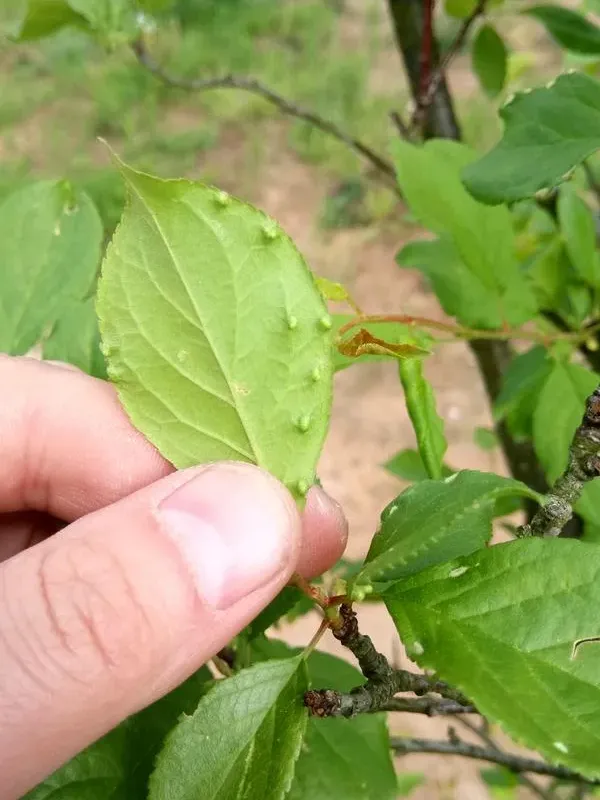
The most distinctive symptom is the appearance of small, raised galls on the leaf surface. These growths can vary in shape and are often colored bright pink, red, or light green.
As the mite population grows, the galls may merge, causing the leaf to become severely distorted, curled, or crinkled. The overall appearance of the foliage becomes bumpy and unhealthy.
In cases of heavy infestation, nearly all leaves on a shoot may be covered in galls, severely reducing the total leaf surface area available for sunlight capture.
Diagnosis can be confirmed by examining the underside of the leaf or cutting open a gall using a magnifying glass; you will often find a whitish, powdery mass of mites and debris inside.
It is important to distinguish mite damage from viral infections. Unlike viral symptoms, mite damage is characterized by distinct, protruding physical growths on the leaf blades.
Control measures
Cultural control is a foundational step in management. Pruning and destroying heavily infested branches during the dormant season helps significantly reduce the population of overwintering females.
Chemical control should be timed to coincide with the mite's migration from bud scales to new foliage. Applying authorized acaricides during the early spring is the most effective approach.
Utilizing sulfur-based products is a common and effective method for controlling mite outbreaks. Sulfur acts as a contact miticide and is generally safer for beneficial insect populations.
Rotating chemical classes is essential to prevent the development of resistance. Always ensure thorough spray coverage, as mites often hide in hard-to-reach areas of the foliage.
Orchard health is crucial for resilience. Proper fertilization and irrigation schedules ensure that trees remain strong enough to withstand mite pressure and recover from damage more effectively.
Taxonomy
- Latin name
- Phyllocoptes pruni
- Order
- Mites
- Family
- Eriophyidae
- EPPO code
- PHYCPR
Discussion
No discussions yet — be the first.