
Brazilian wandering spider
Phoneutria rufibarbis
Description
How to identify
The Brazilian wandering spider (Phoneutria rufibarbis) belongs to the family Ctenidae. It is a large, venomous spider native to South American tropical regions, known for its wandering lifestyle.
This species is characterized by a lack of web-building, preferring to hunt prey actively. They often seek shelter in dark, humid places, which makes banana bunches their preferred hiding spot during export.
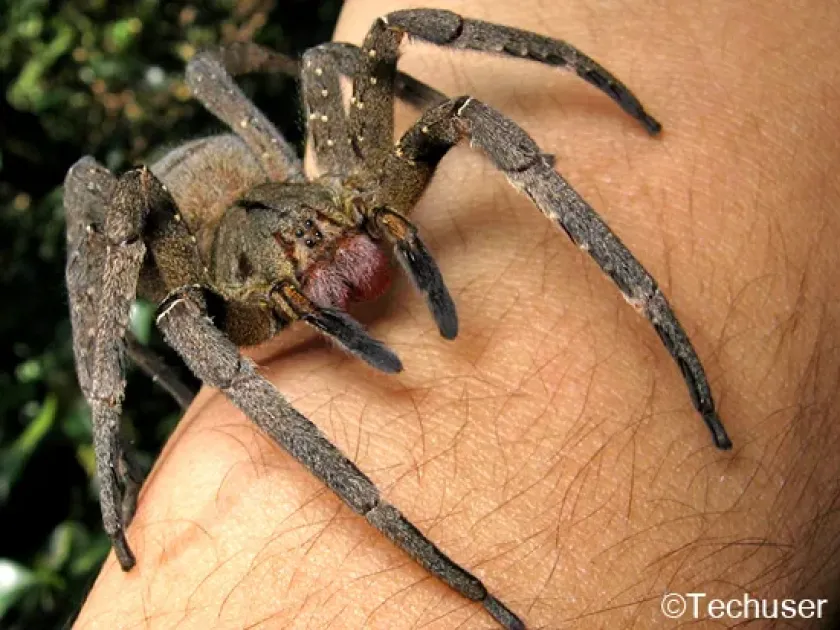
Visually, they are brown or grey with distinct leg markings and a robust body structure. When threatened, they often display a defensive stance, raising their front legs in a threatening manner.
Taxonomically, they are part of the Phoneutria genus, which contains some of the world's most medically significant spider species due to their powerful neurotoxic venom.
In agricultural contexts, they are not pests of the plant itself, but rather hazardous stowaways that interfere with the international trade of tropical fruit products.
What it damages
Although they do not consume crops, their presence in export shipments causes significant economic damage to the agricultural sector due to strict quarantine regulations.
Discovering even a single spider in a shipping container can lead to the quarantine of the entire shipment, resulting in product destruction and significant logistical delays.
The primary concern is human safety. Workers handling fruit imports are at risk of painful and potentially dangerous bites, which requires mandatory medical and safety protocols at all facilities.
Supply chain reliability is undermined by these pests, as importers may terminate contracts with suppliers that do not implement effective pest exclusion strategies at the source.
The damage is therefore measured in terms of financial loss, quarantine-related inventory waste, and the direct health risk posed to warehouse staff and end-consumers.
Signs of infestation
Visual identification of live specimens hidden between banana fingers or within the leaf clusters of the produce is the most common sign of infestation.
The discovery of egg sacs or abandoned molted exoskeletons inside shipping crates indicates that the spiders are successfully surviving the duration of the international transit.
The presence of fine, erratic silk strands connecting different parts of the fruit cluster indicates that the spider has established a temporary refuge within the shipping container.
Fecal spots on the fruit surfaces, left by spiders that have been trapped in the container for an extended period, can also be observed during strict quality control inspections.
An unusual reaction or sudden flight of other insects or small animals within a storage area can sometimes point to the presence of a predator like the Brazilian wandering spider.
Control measures
The most effective strategy is the implementation of rigorous phytosanitary measures, including fumigation and controlled atmosphere treatment, at the point of origin during the packing process.
Facility managers should implement high-intensity lighting and manual inspection protocols for all incoming tropical fruit containers to ensure no stowaways are present before storage.
Regular sanitation of warehouse perimeters and the elimination of debris are necessary to prevent spiders that may have escaped the shipping containers from establishing a temporary home.
Training staff in safe handling techniques and providing appropriate personal protective equipment (PPE) for those working in high-risk zones is an essential component of workplace safety.
- Deploying monitoring traps in receiving and packing bays to capture stray individuals.
- Maintaining strict temperature control to reduce the activity levels of tropical spider species.
- Developing and practicing rapid response procedures for accidental spider sightings.
Taxonomy
- Latin name
- Phoneutria rufibarbis
- Family
- Ctenidae
- EPPO code
- PHONRU
Discussion
No discussions yet — be the first.