
Brazilian wandering spider
Phoneutria nigriventer
Description
How to identify
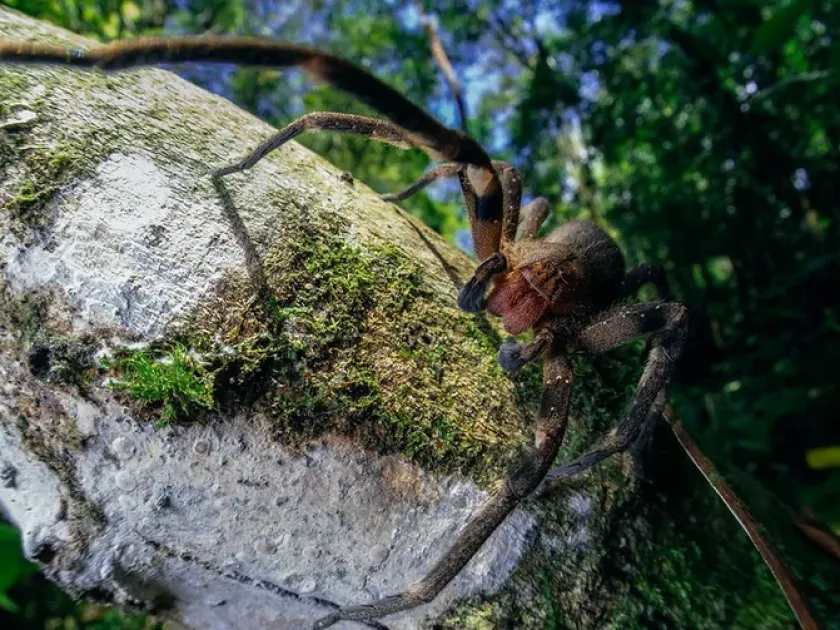
The Brazilian wandering spider (Phoneutria nigriventer) belongs to the Ctenidae family. It is a large, highly venomous arachnid, well-known for its aggressive defense mechanisms.
This spider is characterized by its significant size, with a leg span reaching up to 15 centimeters. The body is densely covered with hair, typically appearing in shades of brown, gray, or black.
Unlike web-building spiders, the wandering spider does not construct a permanent nest or trap. It is a nocturnal hunter that roams the forest floor and agricultural fields in search of prey.
The spider is easily identified by its iconic defensive display: lifting its front legs high into the air and swaying side to side while showing its dark-colored fangs.
While primarily a predator of insects, its tendency to hide in dark, moist environments makes it a common inhabitant of banana groves and other dense crop canopies.
What it damages
The Brazilian wandering spider is not a phytophagous pest; it does not consume plants or cause direct damage to agricultural yields. Its impact is primarily operational and safety-related.
The primary concern is the accidental infiltration of spiders into commercial produce, such as banana bunches, which can lead to international phytosanitary rejections and economic losses.
The species represents a severe health hazard to plantation workers. A bite causes intense pain, inflammation, and potential systemic neurotoxicity, necessitating immediate medical attention.
International shipments contaminated with live spiders may face strict regulations and quarantine procedures, forcing companies to implement expensive inspection protocols.
The presence of this species in work areas creates significant liabilities for agricultural businesses, requiring strict adherence to health and safety standards to protect the workforce.
When it appears
Spider activity is largely dictated by environmental moisture and temperature. In tropical climates, they are active year-round, though behavior peaks during specific phases.
The rainy season significantly increases the movement of these spiders. Rising ground moisture encourages them to climb into vegetation or hidden spaces within human-made structures.
Harvesting periods often overlap with high-activity cycles, increasing the likelihood of contact between farm workers and spiders hiding within the crop foliage.
The life cycle stages influence the density of the population. Juvenile spiders are often more abundant in the lower canopy, while adults prefer sheltered locations during the heat of the day.
Nighttime represents the peak foraging period. During the day, they remain largely stationary, seeking refuge in leaf litter, debris, or packed product crates, making them difficult to detect.
Control measures
Control strategies for the Brazilian wandering spider focus on risk management and physical exclusion rather than broad-spectrum chemical eradication.
Maintaining clean plantation floors by removing debris, discarded leaves, and weeds is essential to eliminate daytime resting sites and reduce spider density in working zones.
Personal protective equipment (PPE), including thick, puncture-resistant gloves and long sleeves, is mandatory for all workers engaged in manual harvesting or foliage maintenance.
Advanced packing facility inspections, including manual or camera-assisted sorting, are vital to prevent live spiders from entering the global supply chain via export crates.
Comprehensive training programs for staff on identifying spider habitats and administering emergency first-aid are critical components of maintaining a safe working environment.
Taxonomy
- Latin name
- Phoneutria nigriventer
- Family
- Ctenidae
- EPPO code
- CTEUNI
Discussion
No discussions yet — be the first.