
Brazilian wandering spider
Phoneutria fera
Description
How to identify
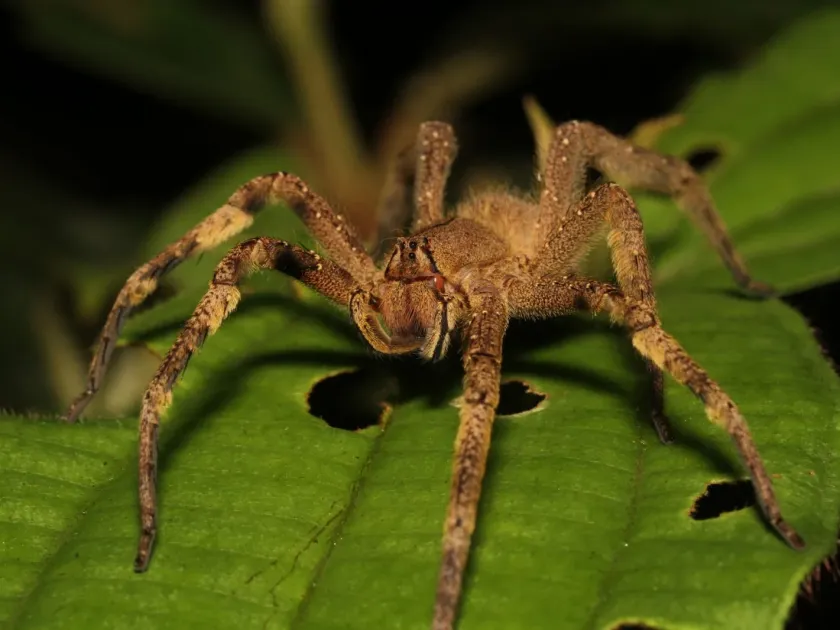
The Brazilian wandering spider (Phoneutria fera) belongs to the Ctenidae family. It is a large, aggressive spider with a leg span of up to 15 centimeters.
The spider features dense hair and displays a distinct defensive posture, lifting its front legs to intimidate threats when disturbed.
It does not build webs but is known for its nomadic behavior, which leads it to shelter in dark, protected spaces, including harvested crops.
Due to its elusive nature, identifying the spider in cargo requires specialized knowledge and careful inspection of imported tropical fruit shipments.
As a non-phytophagous species, its classification as a pest is based on its presence in commercial agricultural products rather than consumption of plants.
What it damages
The spider acts as a significant contaminant in banana trade, posing a severe health risk to plantation workers and logistics personnel.
Economic damage is primarily driven by quarantine requirements, as discoveries of live specimens can lead to the rejection of entire shipping containers.
While the spider does not consume banana tissue, its presence complicates manual labor during harvesting and packing processes.
The reputation of suppliers can be negatively impacted if incidents involving these spiders occur frequently at the destination ports.
Ensuring the absence of this species is a top priority for international food safety standards to prevent the spread of dangerous organisms.
When it appears
The spiders' activity levels are influenced by seasonal climate patterns in their native South American regions, coinciding with fruit harvest cycles.
Increased humidity and temperature promote higher mobility, which leads to a greater probability of spiders wandering into boxes during the packing phase.
In international trade, the species can survive for extended periods inside refrigerated containers, maintaining its activity throughout the year.
The breeding cycle of the species can lead to population spikes, which occasionally result in more frequent accidental exports of egg sacs or juvenile spiders.
Continuous monitoring is required because the spiders do not hibernate and remain active as long as they have stable environmental conditions.
Signs of infestation
The primary sign of infestation is the discovery of adult spiders or their egg sacs tucked within banana bunches during the receiving process.
Damaged shipping boxes and traces of silk webbing are common indicators that a spider has established a temporary shelter during transport.
Visual inspection of the product surface may reveal fecal spots, which are characteristic of the spiders' presence in confined spaces.
Agitated behavior of the spider upon opening the packing container serves as a critical warning for personnel to handle the cargo with extreme caution.
Workers should be trained to look for irregularities in the packing material or structural changes in the fruit bunches that suggest shelter creation.
Control measures
Phytosanitary inspection at the point of origin is the most effective measure to prevent the export of these dangerous arachnids.
Mechanical cleaning processes, including high-pressure air cleaning, help remove spiders hidden deep within fruit clusters prior to boxing.
Fumigation protocols specific to the shipping containers must be strictly followed to eliminate any accidental passengers before long-distance transport.
Personal protective equipment (PPE) is essential for workers to mitigate the risk of bites during the handling of imported produce.
- Mandatory visual screening of all export shipments.
- Training staff in safe cargo handling and emergency first aid.
- Use of pest control traps in banana processing and storage facilities.
Taxonomy
- Latin name
- Phoneutria fera
- Family
- Ctenidae
- EPPO code
- CTEUFE
Discussion
No discussions yet — be the first.