
Wandering spider
Ctenus
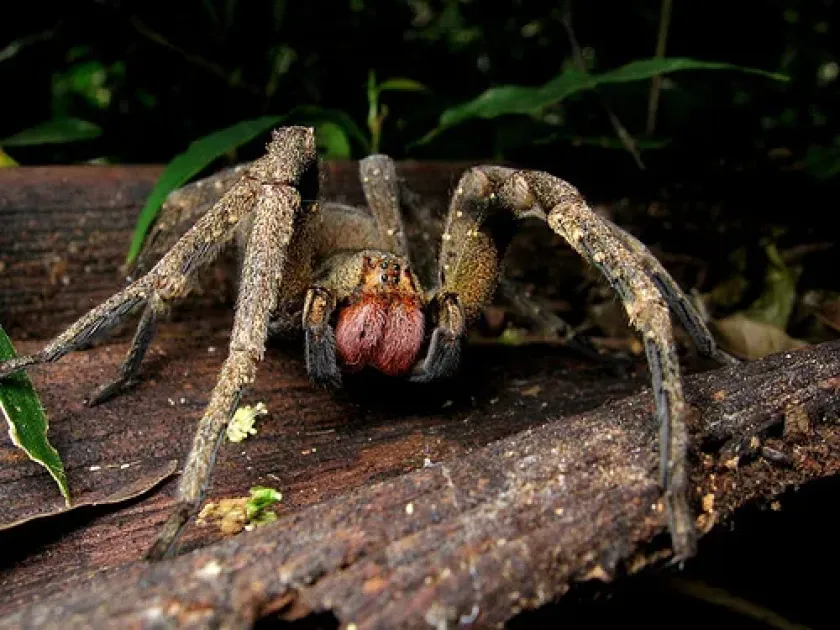
Description
How to identify
Wandering spiders, belonging to the Ctenidae family, are active hunters known for not spinning webs to catch prey. They possess a robust body structure covered in dense hairs and strong legs equipped with well-developed claws for agility.
Their lifestyle is predominantly nocturnal, and they are recognized for their remarkable speed and movement patterns. Adult individuals can grow quite large, and their eyes are organized in three rows, providing excellent vision in low-light conditions.
Taxonomically, they are classified under the order Araneae, family Ctenidae. Unlike web-building spiders, these organisms are highly mobile, frequently shifting their locations across soil surfaces or vegetation, which makes them dynamic in their habitat usage.
For agronomists, it is crucial to recognize that these spiders are often opportunistic visitors in agroecosystems, migrating from nearby forests or uncultivated zones. Their presence, while generally not destructive to plants, can cause logistical concerns.
Their coloration typically ranges from gray to brown, providing effective camouflage against soil or plant debris. This physical adaptation allows them to remain hidden during daylight hours, minimizing their exposure to potential threats.
What it damages
Wandering spiders are primarily predators of insects and do not consume plant tissues, roots, or fruits. Therefore, they are not categorized as direct phytophagous pests that damage crop integrity or yield quality.
However, their presence can be problematic due to indirect impacts, such as preying on beneficial insects that act as natural biological control agents. A significant population of these spiders can disrupt the balance of integrated pest management (IPM) programs.
A major agricultural concern involves their presence in export commodities, such as tropical fruits or fresh-cut flowers. Finding a wandering spider in a shipment can lead to severe quarantine restrictions, inspection delays, and additional costs.
Furthermore, in rare instances, their presence in animal feed or farm facilities can be a safety issue. If these spiders are accidentally ingested by livestock, it can cause adverse health effects, requiring strict monitoring in agricultural storage areas.
The economic impact of these spiders is mainly related to sanitation and international trade regulations. They do not cause the wilting, chlorosis, or physical deformation often seen with sap-sucking or foliage-eating agricultural pests.
When it appears
The activity of wandering spiders is strongly influenced by ambient temperature and humidity levels. They are most active during the warmer spring and summer months when metabolic rates are highest, facilitating their hunting behavior.
Because they are nocturnal, their peak activity occurs at night, making this the best time for visual scouting using flashlights. During the day, they remain stationary in shaded areas, under debris, or within dense foliage.
Migration cycles are tied to the availability of prey and favorable environmental conditions. They often move into irrigated fields or greenhouses where high humidity is maintained, which supports their survival throughout the growing season.
Overwintering occurs as adults or juveniles in protected habitats, such as soil crevices, under leaf litter, or inside agricultural storage facilities. These structures are the primary locations where they concentrate before the planting season.
Depending on the climatic zone, they may undergo multiple generations per year. In stable environments like greenhouses, their life cycle can continue year-round, necessitating consistent sanitary monitoring to keep population levels low.
Signs of infestation
The most effective way to identify their presence is through nighttime visual scouting. Observing the crop or soil surface with a bright flashlight after dusk often reveals their movement.
Indirect evidence includes the presence of exuviae (cast-off skins) left in sheltered areas under plants. Finding these remains indicates that the area is being used as a resting site during the day.
In greenhouses, staff may encounter wandering spiders during routine maintenance tasks. They are often spotted near the base of plants or in moist zones where they congregate to hunt for prey like small insects or other arachnids.
In logistics and storage facilities, spider presence is often discovered during the packing process. Their tendency to hide in crevices makes them excellent hitchhikers on pallets, crates, or within commodity packaging.
- Nighttime visual surveys using lights.
- Discovery of exuviae (molted skins).
- Encounters during manual harvesting or plant maintenance.
- Spiders found in crates or shipment packaging.
Control measures
Control strategies for wandering spiders should focus on habitat modification rather than relying solely on chemical pesticides. Minimizing shelter and food sources is the most sustainable approach to management.
Removing plant debris, fallen leaves, and weeds from fields and greenhouse perimeters eliminates the daytime refuges these spiders rely on. A clean environment is naturally less hospitable to them.
In storage areas, maintaining rigorous sanitary standards is essential. Removing food waste that attracts prey insects will naturally decrease the spider population, as their presence is tied to the availability of prey.
Chemical control should only be considered if they pose a significant threat to export certification or human safety. Broad-spectrum insecticides used for other pests will generally reduce their numbers as a secondary effect.
For export-focused agriculture, preventative measures such as screened entry points for warehouses and rigorous inspection of packing materials are vital. Proper logistics and sanitation ensure that spiders do not compromise the commercial value of the crop.
Taxonomy
- Latin name
- Ctenus
- Family
- Ctenidae
- EPPO code
- CTEUSP
Discussion
No discussions yet — be the first.