
Sandflies
Phlebotomus
Description
How to identify
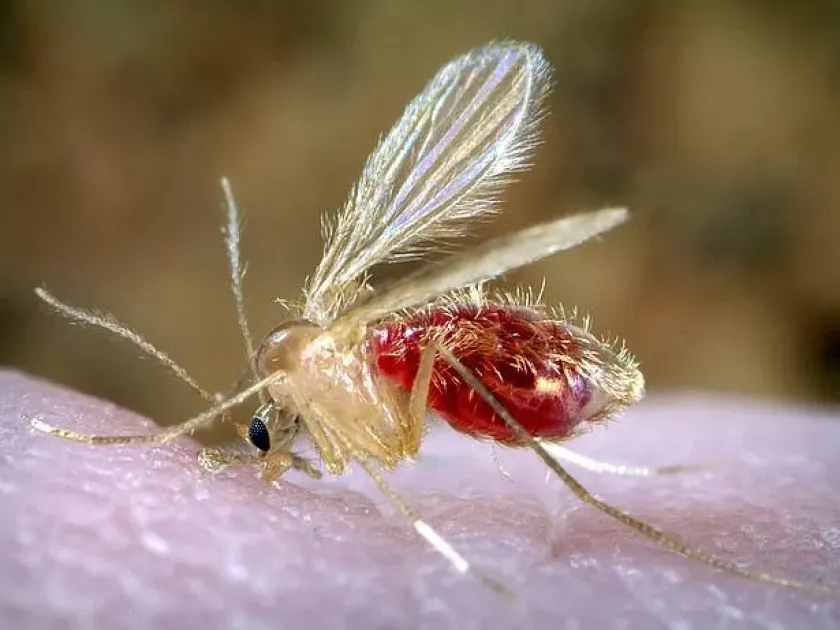
Sandflies (genus Phlebotomus) are tiny blood-sucking insects belonging to the family Psychodidae, characterized by their small size and dense hair covering.
Adult insects have a distinct moth-like appearance with long, slender legs and lanceolate wings, allowing them to perform short, hopping flights.
Although they are not plant pests in the traditional sense of consuming leaves or roots, they are frequently encountered in agricultural landscapes where organic matter accumulates.
The life cycle consists of egg, larva, pupa, and adult stages, with larvae developing in moist, decaying organic material hidden from direct sunlight.
Proper identification is crucial, as their presence is often an indicator of inadequate site sanitation and excessive humidity in storage or production areas.
What it damages
Sandflies do not cause direct mechanical damage to crops, as they do not feed on plant tissues or lay eggs within stems or leaves.
Their primary significance in an agricultural context is their role as vectors for pathogens that may pose health risks to farm staff and livestock.
Heavy infestations can create unsanitary conditions in packing houses or greenhouses, where excreta or dead insects may contaminate the produce.
Additionally, their biting behavior can significantly disrupt labor activities, especially during evening field operations or harvesting cycles.
Therefore, managing sandfly populations is primarily a matter of occupational health and maintenance of sanitary standards within the agricultural operation.
When it appears
The activity period of sandflies is closely linked to climate conditions, typically beginning in late spring when temperatures stabilize above 15°C.
The peak population density usually occurs during the warmest and most humid months of summer, coinciding with favorable conditions for larval development.
They are primarily nocturnal or crepuscular insects, meaning they are most active during dusk and throughout the night, often avoiding the heat of the day.
As autumn approaches and temperatures drop, the adult activity declines, and the insects seek protected microhabitats to undergo diapause.
Local microclimates within the farm, such as damp basements or shaded organic piles, can extend their activity period by providing stable conditions.
Control measures
Effective management strategies focus on habitat modification to eliminate breeding sites for larvae around the agricultural premises.
- Removal of decaying vegetation, leaf litter, and organic waste.
- Improving drainage to reduce soil moisture levels.
- Implementation of targeted indoor insecticide treatments.
- Regular cleaning of storage facilities to remove accumulated debris.
Maintaining proper ventilation in greenhouses is essential, as lower humidity levels discourage the survival and development of both larvae and adults.
Monitoring using light traps can help assess population density and the effectiveness of sanitary measures implemented across the production area.
Taxonomy
- Latin name
- Phlebotomus
- Order
- Diptera (flies)
- Family
- Psychodidae
- EPPO code
- PHLESP
Discussion
No discussions yet — be the first.