
Chrysanthemum leaf miner fly
Philophylla fossata
Description
How to identify
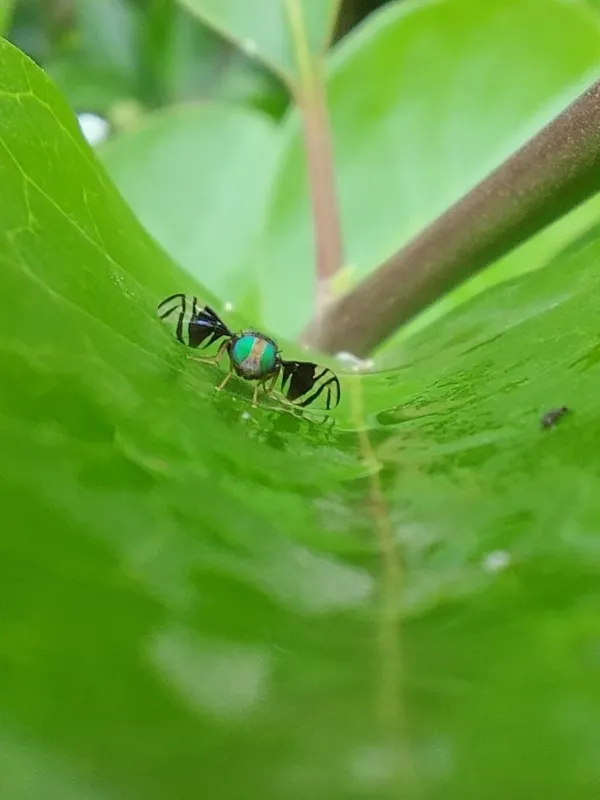
The chrysanthemum leaf miner Philophylla fossata is an insect belonging to the order Diptera and the family Tephritidae. The adult is a small fly characterized by a unique wing pattern, typically featuring dark bands or spots.
Adult flies usually measure between 3 to 5 millimeters in length, with body colors ranging from yellowish-brown to dark brown. They possess large eyes and well-developed mouthparts, adapted for feeding on plant nectar and secretions.
The larvae are typically maggot-like, legless, and headless in the conventional sense. They reside entirely within the leaf tissue, which shields them from environmental hazards and direct chemical contact.
The lifecycle includes complete metamorphosis: egg, larva, pupa, and adult. Pupation often occurs within the leaf mines or in the topsoil layer, where they successfully overwinter in a state of diapause.
This species prefers warm, humid environments. The timing of adult activity is closely linked to the vegetation stages of their host plants, ensuring optimal conditions for egg-laying and larval development.
What it damages
The primary hosts are plants from the Asteraceae family, particularly various chrysanthemum cultivars. Wild-growing composite plants may also serve as secondary hosts or population reservoirs.
The larvae are internal feeders, creating winding tunnels known as mines within the leaf blades. By consuming the leaf parenchyma, they disrupt the plant's photosynthetic capacity significantly.
Severe infestations lead to premature yellowing, withering, and necrosis of the foliage. In high-density populations, the aesthetic value of the plants is greatly reduced, often causing stunted growth.
The damage extends beyond leaf tissue destruction; it compromises the plant's overall vitality. Open wounds from larval activity serve as entry points for secondary fungal and bacterial pathogens.
Young plants and seedlings are particularly vulnerable, as substantial leaf damage early in the growing season can lead to structural deformation and poor blooming performance.
Signs of infestation
The most prominent sign of infestation is the appearance of winding, whitish, or brownish lines on the leaves, known as mines. These are easily observed on the upper leaf surface.
Over time, these mines may expand into larger blotch-like patches. Within the mines, dark granular particles, which are the larval excrement, are often visible upon close inspection.
Heavily infested leaves eventually lose turgidity, curl, and drop prematurely. By holding the leaf up to a light source, the larva can often be detected inside the damaged mine.
Wilting of shoot tips during the peak growing season can also indicate the presence of this pest, especially if larvae migrate into the stems in search of nourishment.
Observing adult flies on leaves or flowers during early morning hours serves as a strong indicator that the breeding season has begun and that egg-laying is occurring.
Control measures
Cultural control methods involve the regular removal and destruction of infested foliage to eliminate larvae before they pupate. Maintaining distance from wild Asteraceae weeds is also recommended.
Deep cultivation of the soil in autumn can help expose pupae to winter temperatures or predators, reducing the overwintering population successfully.
Biological control options include the use of natural enemies, such as parasitic wasps, which can naturally regulate the fly population in greenhouse or garden settings.
Chemical control requires the application of systemic insecticides. Because larvae are protected inside the leaf, systemic products are necessary to reach the pests through the plant sap.
- Use yellow sticky traps to monitor adult activity and timing for interventions.
- Apply systemic insecticides during the peak flight period of adult flies.
- Practice crop rotation and thorough removal of all infected plant debris.
Taxonomy
- Latin name
- Philophylla fossata
- Order
- Diptera (flies)
- Family
- Tephritidae
- EPPO code
- PHIPFO
Discussion
No discussions yet — be the first.