
Mallow moth
Pexicopia malvella
Description
How to identify
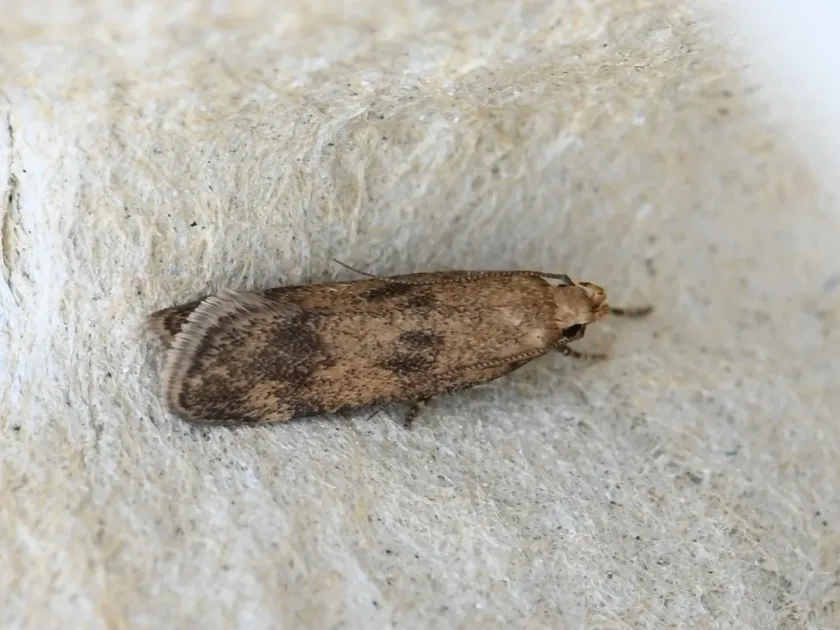
The mallow moth (Pexicopia malvella) is a small moth belonging to the family Gelechiidae. Adult moths typically have a wingspan of 15–18 mm and possess cryptic, grayish-brown coloration that helps them blend into their natural environment.
The larvae, or caterpillars, go through several instars, eventually reaching a length of approximately 15 mm. They typically have a creamy-white or pinkish body with a dark brown head, which is a common diagnostic feature for this species within the Gelechiidae family.
The life cycle follows complete metamorphosis: egg, larva, pupa, and adult. The insect's biology is tightly linked to the phenology of plants in the Malvaceae family, upon which the larvae feed exclusively.
As a member of the order Lepidoptera, this species thrives where mallow plants (Malva) and their relatives, such as Althaea and Lavatera, are grown. It is considered a specialized pest of these decorative and medicinal plants.
Adult moths are nocturnal and crepuscular, making them difficult to spot during the day. Monitoring efforts are therefore usually focused on identifying the presence of larvae in the reproductive structures of the host plants.
What it damages
The mallow moth is a specialized pest that feeds on members of the Malvaceae family. Its primary hosts include hollyhocks (Alcea rosea), marsh-mallows (Althaea), and lavateras, causing significant concern in nurseries and gardens.
Larvae feed primarily on the reproductive organs, including buds, flowers, and developing seeds inside the seed capsules. By boring into the buds, they prevent normal flowering, leading to deformed blossoms or total bud abortion.
In seed production, the damage can be devastating, as the larvae consume the majority of seeds within the seed pods. This results in significant yield loss and affects the viability of the harvested seed lot.
Ornamental plantings suffer from a loss of aesthetic value when buds fail to open or appear stunted and covered in silk. This makes the affected plants unsuitable for landscape use and public garden displays.
In addition to direct tissue consumption, the feeding tunnels created by the larvae provide entry points for secondary bacterial and fungal pathogens. These infections often lead to rotting and the rapid deterioration of the plant's floral parts.
When it appears
Adult moths typically emerge in late spring, coinciding with the beginning of the budding phase of host plants. Mating occurs shortly after emergence, followed by egg-laying directly onto the developing buds.
Larval activity spans the entire flowering season. Depending on regional climatic conditions, there can be one or two generations per year, with the second generation often causing the most cumulative damage to late-blooming varieties.
Pupation occurs either within the seed capsules or in the soil near the base of the host plant. The pupae enter a state of diapause to survive the winter, waiting for the return of favorable temperatures in the following spring.
Peak damage generally occurs in mid-summer. Gardeners and growers must be particularly vigilant during this timeframe to identify the onset of an infestation before the larvae move deeper into the plant tissue.
Climate factors such as early warm spells can trigger earlier emergence of the moths. Monitoring of local weather patterns is recommended to accurately time any necessary preventative or reactive control measures.
Signs of infestation
The most prominent sign of a mallow moth infestation is the presence of fine silk webbing around the buds. This webbing often binds the petals together, preventing the flower from opening properly.
Close inspection of the buds often reveals small entry holes bored by the young larvae. Tiny, dark-colored granular excrement pellets are frequently visible near these entry points on the outer petals or sepals.
Buds that appear stunted, discolored, or that wilt prematurely are clear indicators of larval presence. Inside such buds, one can typically find the caterpillar actively feeding on the internal reproductive organs.
After the flowering period, damaged seed pods may appear shriveled or exhibit circular exit holes. These holes signify that the larvae have completed their development and have exited the capsule to pupate.
- Silk webbing on buds.
- Small entry/exit holes in buds or seed pods.
- Dark granular frass on the plant.
- Premature flower bud drop.
- Hollowed-out or destroyed seeds inside pods.
Control measures
The most effective mechanical control is the manual removal and destruction of infested buds. By collecting these buds before the larvae pupate, the population can be significantly reduced for the following season.
Autumn soil cultivation or deep digging around the host plants helps destroy overwintering pupae in the soil. Clearing away and destroying plant debris is also essential to eliminate hiding spots for the pest.
Biological control using Bacillus thuringiensis (Bt) sprays can be highly effective against early-instar larvae. This method is preferred as it is selective and poses minimal risk to beneficial pollinators and other insects.
Chemical control should be used judiciously and ideally before the flowering stage to protect pollinators. Choose systemic or contact insecticides that are labeled for use on ornamental Malvaceae species.
Maintaining a weed-free area by removing wild mallow species in the vicinity of the garden is crucial. These wild hosts often serve as primary reservoirs that facilitate the spread of the moth to cultivated crops.
Taxonomy
- Latin name
- Pexicopia malvella
- Order
- Lepidoptera (butterflies)
- Family
- Gelechiidae
- EPPO code
- PLAYMA
Discussion
No discussions yet — be the first.