
Rock-wallabies
Petrogale
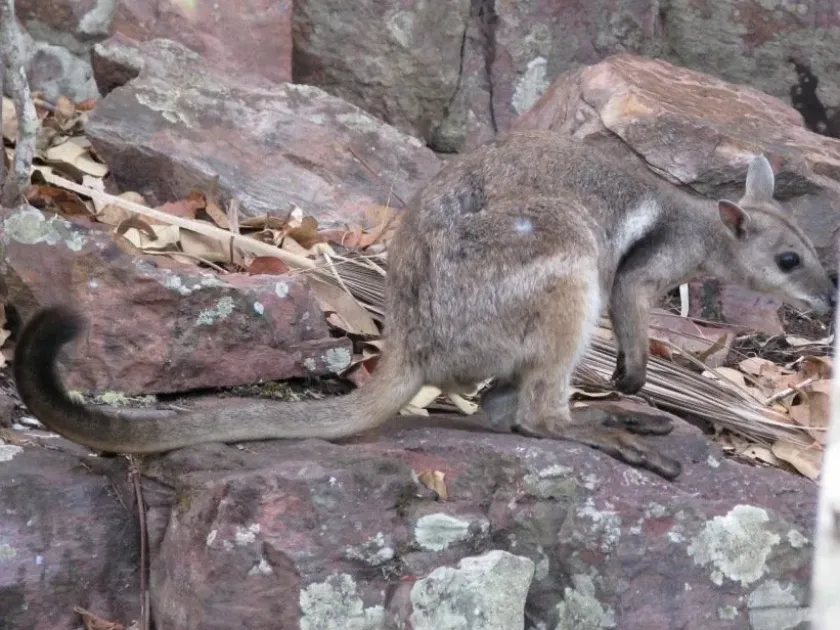
Description
How to identify
Rock-wallabies (genus Petrogale) are small to medium-sized marsupials belonging to the Macropodidae family. They are uniquely adapted to mountainous and rocky environments, featuring specialized padded feet that provide excellent grip on steep, uneven surfaces.
They exhibit a compact body structure and a long, muscular tail that serves as a counterbalance during their agile leaps. An adult typically weighs between 3 and 9 kilograms, with a total length of approximately 50 to 60 centimeters.
Reproductive success is high, as these wallabies can breed throughout the year. Population density can fluctuate significantly depending on the availability of food sources and the presence of suitable rocky shelters nearby.
They are primarily nocturnal animals, spending their daylight hours hiding in deep rock crevices, caves, or thickets. This behavioral pattern makes them difficult to observe and manage effectively in open agricultural fields.
Rock-wallabies are gregarious and often travel in groups. Their ability to navigate difficult terrain allows them to reach agricultural lands that are inaccessible to many other herbivores, posing a persistent threat to crops.
What it damages
The primary damage caused by rock-wallabies involves the consumption of young shoots, forage crops, and vegetable seedlings. They often forage on the edges of fields bordering rocky outcrops, which are their natural habitats.
Agricultural crops frequently impacted include wheat, canola, and alfalfa. During periods of drought, when natural grazing grounds become depleted, their raids on cultivated land intensify, leading to significant yield losses.
Mechanical damage is a major concern alongside direct consumption. As wallabies move across fields in groups, they trample seedlings and compact the soil, which can severely hinder the growth and recovery of the plants.
Contamination of harvested products or grazing pastures by fecal matter is an additional issue, posing hygiene risks and reducing the market quality of the produce or the safety of livestock forage.
Continued browsing pressure around the perimeter of agricultural areas causes long-term degradation of the vegetation cover, which can destabilize the soil and increase susceptibility to erosion.
Control measures
Installing high-tensile mesh fencing is the most effective way to prevent rock-wallabies from entering crops. Fences should be designed with an overhang to prevent the animals from climbing or jumping over the barrier.
Acoustic deterrents and light-based systems can provide short-term relief. However, rock-wallabies are known for their intelligence and ability to habituate to non-harmful stimuli, requiring the rotation or modification of deterrent methods.
Effective farm management involves clearing dense vegetation and debris from areas adjacent to fields. Reducing the number of potential hiding spots makes the area less attractive for wallabies to use as a base for foraging.
Chemical repellents that produce strong odors or taste sensations have been tested in some regions. While they can offer temporary protection, they require frequent reapplication, especially after rainfall or heavy dew.
An integrated wildlife management plan, which includes physical exclusion and habitat modification, remains the standard approach to minimize agricultural damage while respecting local wildlife regulations.
Taxonomy
- Latin name
- Petrogale
- Family
- Macropodidae
- EPPO code
- PETGSP
Discussion
No discussions yet — be the first.