
Red-necked wallaby
Macropus rufogriseus
Description
How to identify
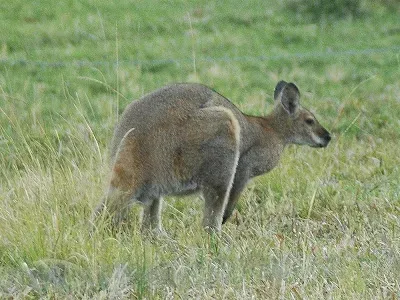
The red-necked wallaby (Macropus rufogriseus) belongs to the Macropodidae family and is a medium-sized marsupial species. It is characterized by its distinctive reddish-grey coat and powerful hind legs adapted for jumping.
Adults typically weigh between 10 and 20 kilograms. Being primarily nocturnal or crepuscular, they remain hidden during the day, which often complicates immediate detection by farmers.
These animals exhibit high mobility and adaptability, allowing them to thrive in various habitats, including the edges of agricultural landscapes and pastures.
The breeding cycle of this species is continuous, leading to consistent pressure on crops throughout the year, especially when favorable feeding grounds are nearby.
As they are social animals, they often forage in groups, which significantly increases the scale of damage caused to field crops in a single night.
What it damages
Red-necked wallabies cause extensive damage to cereal crops, including wheat and barley, by grazing on young shoots and later during the grain filling stage.
Pasture lands suffer degradation due to overgrazing, which limits the available biomass for livestock and reduces the overall productivity of the farmland.
Vegetable gardens and plantations are often targeted, where wallabies feed on leaves, stems, and roots, causing significant economic losses to horticultural operations.
Young fruit trees and vineyards are particularly vulnerable as these animals strip bark and consume tender shoots, potentially killing young specimens.
- Reduced grain yields through foliage consumption.
- Physical damage to soil and plants from heavy movement.
- Destruction of vegetable crop yields.
- Damage to bark and structural integrity of fruit trees.
Signs of infestation
The presence of large, distinct footprints on loose or damp soil is the most reliable sign of wallaby activity in the area.
Pellet-shaped droppings scattered along established tracks through the crops serve as a clear indicator of their regular routes and frequent presence.
Visible grazing patterns with uneven, ragged edges on plant leaves and stems differentiate wallaby damage from the cleaner cuts made by other pests.
Clearly defined trails or paths through tall crops, connecting forested areas to the foraging site, demonstrate the consistency of their nocturnal visits.
Direct sightings during dawn or dusk at the edges of fields provide definitive confirmation of their infestation on the property.
Control measures
Installing high-quality wire mesh fencing, at least 1.5 meters high and buried slightly into the ground, remains the primary barrier against wallaby incursions.
Using sensor-activated repellents, such as motion-triggered lights or ultrasonic noise emitters, can effectively discourage them from approaching field borders.
Applying specialized repellent sprays to the perimeter of crops can make the foliage unpalatable, successfully deterring wallabies from feeding on the treated plants.
Landscape management, including maintaining cleared buffer zones between woodlands and fields, helps minimize the animal's sense of security near crops.
Integrated pest management strategies should also consider regional regulations and professional consultation for controlling population densities in highly affected areas.
Taxonomy
- Latin name
- Macropus rufogriseus
- Family
- Macropodidae
- EPPO code
- MAKPRU
Discussion
No discussions yet — be the first.