
Red kangaroo
Macropus rufus
Description
How to identify
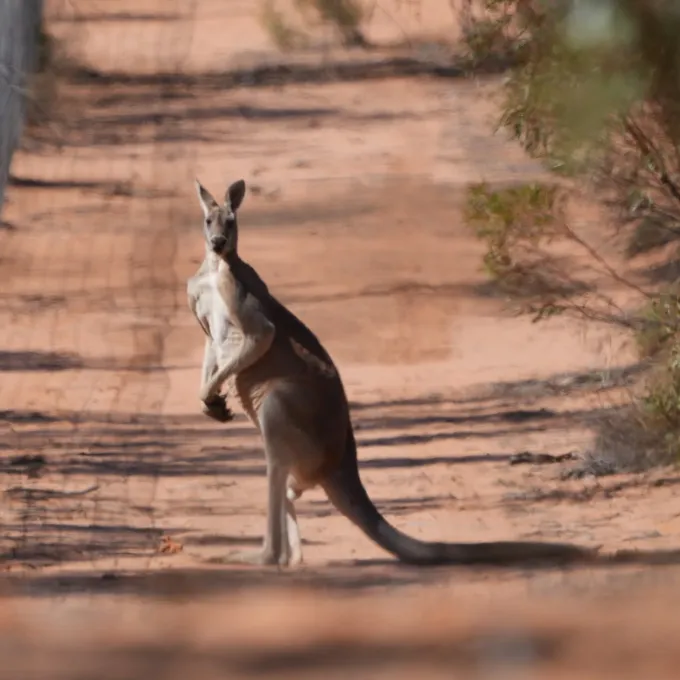
The red kangaroo (Macropus rufus) is the largest of all kangaroo species, belonging to the family Macropodidae. Adult males can reach a weight of 90 kilograms and stand nearly 1.8 meters tall.
The species displays marked sexual dimorphism in color. Males are typically red-brick or ginger in color, while females are smaller and generally have a bluish-grey coat with brown undertones.
These animals are primarily crepuscular and nocturnal, spending the heat of the day resting in the shade of shrubs or trees to conserve energy and hydration in the harsh Australian climate.
Their biological reproductive cycle is highly adaptive, often featuring embryonic diapause, which allows them to pause the development of young during periods of severe drought or resource scarcity.
Equipped with powerful hind legs and a muscular tail, they are capable of leaping great distances, which allows them to move rapidly between resting sites and optimal feeding grounds.
What it damages
The red kangaroo is considered a significant agricultural pest, particularly due to its competitive grazing on pastures intended for livestock and direct destruction of grain crops like wheat and barley.
During dry seasons, when natural forage is scarce, kangaroos often concentrate in agricultural areas where they feed on green shoots and young crops, leading to significant yield reduction.
Beyond the direct consumption of biomass, the movement of kangaroo mobs through fields causes extensive mechanical damage, trampling crops and compacting the soil, which hinders plant growth.
The presence of these animals in pasture areas also impacts livestock productivity, as they compete for high-quality forage and may act as vectors for various parasitic and infectious diseases.
Financial losses for farmers include not only the loss of crop value but also the increased costs associated with supplemental feeding for livestock and infrastructure repairs.
Signs of infestation
Clear evidence of red kangaroo activity includes large, distinct footprints left on damp soil, showing the marks of the hind feet and the tail dragging between jumps.
The presence of fibrous, cylindrical droppings scattered across fields or pastures is a definitive biological indicator that kangaroos have been grazing in the vicinity.
Observing circular areas of trampled, flattened crops within a field, especially near edges or access paths, indicates intensive grazing or resting by a mob.
Damaged fencing, particularly torn or flattened wire netting, frequently occurs when kangaroos attempt to access irrigated crops or artificial water sources on farms.
Alert behavior or abnormal movement patterns among livestock can sometimes indicate the nocturnal presence of kangaroos in the same pasture.
Control measures
The most reliable control method is the installation of high-tensile, kangaroo-proof fencing, typically over 1.8 meters high, to prevent ingress into critical crop areas.
Acoustic and visual deterrents, such as motion-activated lights or sound generators, may provide temporary relief, though efficacy often declines as the animals acclimate.
Professional population management, including culling programs conducted in accordance with state or regional government permits, is often necessary in high-density areas.
Strategic farm management, such as maintaining buffers of non-attractive vegetation around sensitive crops, can help deter the animals from approaching the main fields.
- Installation of specialized fencing to exclude kangaroos.
- Regular population surveys to determine management needs.
- Usage of night-vision surveillance to monitor crop vulnerability.
Taxonomy
- Latin name
- Macropus rufus
- Family
- Macropodidae
- EPPO code
- MAKPRF
Discussion
No discussions yet — be the first.