
Castor moth
Pericallia ricini
Description
How to identify
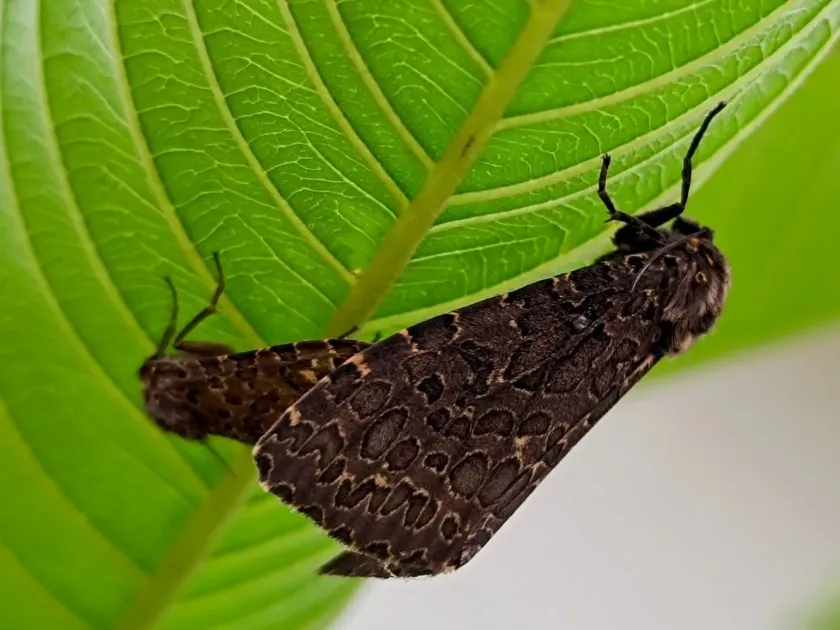
The castor moth is a species of moth within the Erebidae family, characterized by a wingspan ranging from 50 to 70 mm. Its forewings exhibit a brown, net-like pattern, while hindwings are bright yellow or orange with prominent black spots.
The larval stage is notable for its appearance, as the caterpillars are covered in dense, stiff hairs that can vary in color from dark brown to black, serving as a primary defense mechanism.
As nocturnal creatures, adult moths are rarely seen during daylight hours, preferring to remain hidden within dense vegetation or debris to avoid predators.
Pupation occurs within loosely woven silken cocoons, which are often found on the underside of leaves or tucked into the soil surface near the host plant.
The life cycle duration is highly temperature-dependent, allowing for multiple overlapping generations in tropical regions, which ensures the pest is active throughout the growing season.
What it damages
While named for its preference for castor bean plants, this pest is highly polyphagous and infests a diverse range of crops including cotton, citrus, coffee, and bananas.
Young caterpillars exhibit gregarious behavior and feed in clusters, consuming the epidermis of leaves, while older larvae disperse and feed individually on the leaf blades.
Severe infestations lead to massive defoliation, which severely stresses the host plant, restricts nutrient translocation, and leads to significant yield reduction in fruit and oilseed crops.
In addition to leaf consumption, heavy feeding can damage terminal buds and tender shoots, which disrupts the structural development of the crop.
The pest often moves into cultivated fields from surrounding weedy areas, establishing rapid colonization patterns that can devastate a farm if left unmonitored.
Signs of infestation
The presence of skeletonized leaf tissues in localized patches indicates that the first instar caterpillars are actively feeding on the crop.
Large irregular holes in the foliage and the visible absence of significant leaf portions are definitive indicators that older larvae are present on the plants.
Accumulated frass, appearing as small dark pellets on the leaves or the ground directly under the infested plant, provides a clear sign of high pest activity.
Leaf curling combined with fine, wispy silken webbing suggests that larvae are preparing for pupation or creating protected micro-habitats for daytime rest.
Finding the distinctive hairy larvae on stems or leaf petioles is the most reliable method for confirming a current active infestation in the field.
Control measures
Integrated Pest Management (IPM) strategies for the castor moth emphasize prevention through habitat management and the targeted use of biological controls.
Routine weeding and the removal of alternative host plants from field borders are essential to break the pest's reproductive cycle and minimize population buildup.
Biological control using microbial insecticides, particularly those containing Bacillus thuringiensis, is highly effective against young larvae while preserving beneficial predatory insect populations.
If economic thresholds are exceeded, targeted chemical applications are necessary, focusing on the undersides of leaves where caterpillars are most active.
- Regular crop scouting and monitoring.
- Removal and destruction of egg masses.
- Application of botanical pesticides (e.g., neem oil).
- Encouraging natural enemies such as parasitic wasps.
Taxonomy
- Latin name
- Pericallia ricini
- Order
- Lepidoptera (butterflies)
- Family
- Erebidae
- EPPO code
- PRLLRI
Discussion
No discussions yet — be the first.