
Pink bollworm
Pectinophora gossypiella
Description
How to identify
The pink bollworm (Pectinophora gossypiella) is a destructive pest of cotton, belonging to the order Lepidoptera and the family Gelechiidae. The adult is a small, nocturnal moth with a wingspan of approximately 15–20 mm, characterized by brown-grey wings with distinct dark markings.
The larvae, which cause the most damage, reach about 10–12 mm in length. They are easily identified by their reddish-pink body and brown head. The life cycle consists of four larval instars before they reach maturity and prepare for pupation.
Eggs are oval-shaped and extremely small, typically deposited by females on cotton squares (buds) or young bolls. As they mature, their color shifts from pearly white to a reddish-orange hue, making them difficult to spot against the cotton plant's surface.
Overwintering occurs in the pupal stage or as diapausing larvae within the soil or inside non-opened, dry cotton bolls. When conditions become favorable in the spring, the larvae pupate, and the new generation of adults begins to emerge.
Taxonomically, this species is considered a primary pest in the global cotton industry. Due to its potential for total crop destruction, it is strictly monitored as a quarantine pest in most cotton-growing regions worldwide.
What it damages
While cotton is its primary host, the pink bollworm also infests other Malvaceae family members, such as okra and hibiscus. These alternative hosts allow the pest population to survive when cotton is not currently in the field.
Larvae primarily attack the cotton bolls, boring inside to feed on the developing seeds. This consumption destroys the seed's viability and severely hampers the development of the fiber, leading to significant yield losses for farmers.
The feeding activity results in contaminated lint, as the larvae excrete waste inside the boll. This waste stains the fiber, giving it a pinkish or brownish appearance, which reduces the market grade and industrial quality of the cotton lint.
Mechanical damage caused by the larvae often provides entry points for secondary pathogens, such as fungi and bacteria. This frequently leads to boll rot, causing premature shedding of squares and bolls, which significantly impacts the harvest yield.
The cryptic nature of the larvae, which spend the majority of their life cycle protected inside the boll, makes them notoriously difficult to target with standard chemical sprays, necessitating sophisticated integrated management approaches.
When it appears
Adult moth activity typically commences in the spring when nighttime temperatures remain consistently above 20°C. Being nocturnal, these moths remain inactive during the day, hiding among foliage or beneath debris to avoid predation.
Depending on the climatic zone, the pest can complete between three to six generations per growing season. Rapid development allows populations to build up quickly during the flowering and fruit-setting phases of the cotton plant.
The reproductive potential is high; a single female can lay several hundred eggs during her short lifespan. This ability to multiply rapidly leads to severe infestations by mid-to-late season, which is critical for agricultural monitoring.
As the season progresses into autumn, decreasing temperatures and changes in photoperiod trigger some larvae to enter diapause. This dormant phase is an essential survival strategy for overwintering until the next planting season.
Effective monitoring relies on pheromone traps deployed early in the season. These traps help identify the emergence of the first moths, providing a precise signal for growers to begin their control operations.
Signs of infestation
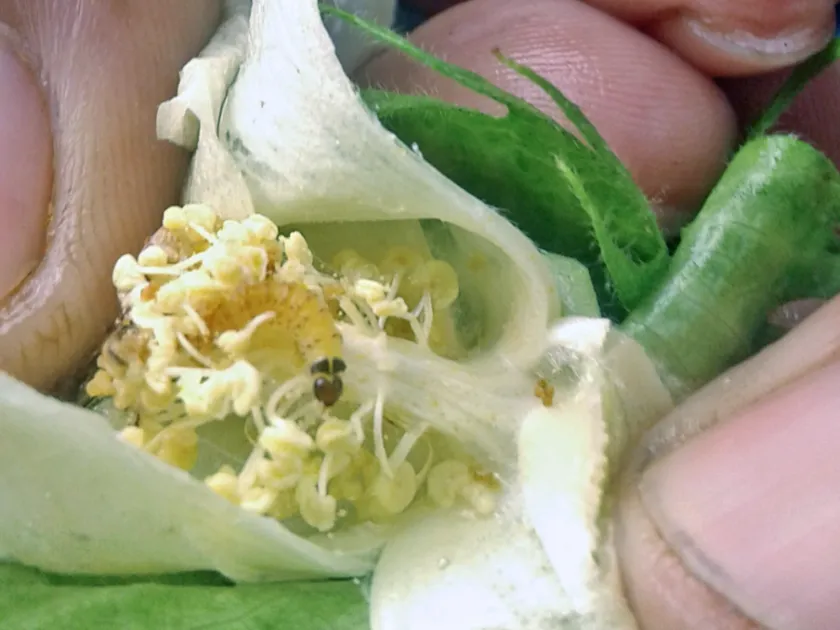
The most recognizable early sign of infestation is "rosetted blooms." The larvae bore into the squares and web the petals together, preventing the flower from opening correctly, which results in an appearance resembling a distorted rosebud.
- Entry holes on the outer surface of young cotton bolls.
- Premature boll opening or unexpected shedding of squares.
- Webbing and larval excrement found inside the bolls upon dissection.
- Pink or stained discoloration of the cotton lint within the boll.
- Deformed or significantly lighter bolls compared to healthy ones.
Dissecting suspected bolls is the most accurate way to confirm an infestation. Finding larvae feeding on the seeds confirms the presence of the pest, requiring immediate action to prevent the infestation from spreading further.
Fields with infestation often show irregular maturity and uneven boll opening. When these visual indicators appear, it is usually a sign that the pest population has already reached a significant level, necessitating urgent management.
Field scouting should be frequent during the fruiting period, with special attention paid to the lower canopy where the larvae tend to concentrate due to higher humidity levels and better protection from environmental exposure.
Control measures
Strict quarantine protocols are the first line of defense, including the regulation of movement for cotton seeds and equipment to prevent the introduction of the pest into non-infested regions or countries.
Cultural control is essential; this involves post-harvest destruction of crop residues through mechanical shredding and deep plowing to bury infested plant debris and pupae, effectively breaking the pest's life cycle in the soil.
Biological control methods include the release of beneficial insects, such as parasitoids, which target eggs and larvae. Microbial pesticides based on Bacillus thuringiensis have also proven to be highly effective and environmentally safe.
Chemical control must be applied strategically based on threshold levels derived from trap data. Rotating insecticides with different modes of action is vital to delay or prevent the onset of resistance in the pest population.
The widespread adoption of transgenic Bt cotton has revolutionized control of the pink bollworm. By producing specific toxins that target lepidopteran larvae, these varieties provide season-long protection with significantly reduced reliance on chemical sprays.
Taxonomy
- Latin name
- Pectinophora gossypiella
- Order
- Lepidoptera (butterflies)
- Family
- Gelechiidae
- EPPO code
- PECTGO
Discussion
No discussions yet — be the first.