
Eurasian Tree Sparrow
Passer montanus
Description
How to identify
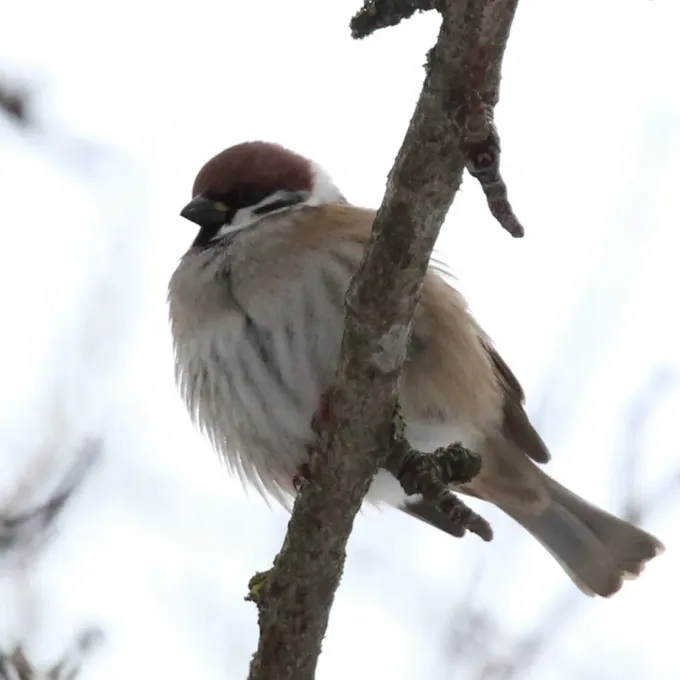
The Eurasian Tree Sparrow (Passer montanus) is a small bird belonging to the order Passeriformes and the family Passeridae. It is easily identified by its chestnut crown and distinct black patches on its white cheeks.
Unlike the House Sparrow, this species is more commonly found in rural landscapes. They are highly social and often nest in tree cavities, holes in buildings, or abandoned nests of other species.
These birds are known for their high reproductive rate, capable of producing up to three broods per season, which leads to rapid population growth in agricultural zones.
Adults reach about 14 cm in length. Both males and females have identical plumage, which makes them difficult to distinguish visually in a field environment.
While they are omnivorous during the breeding season, they show a strong preference for cereal grains as they mature, making them a recurring problem for farmers.
What it damages
The Eurasian Tree Sparrow causes significant damage to wheat, barley, rye, and oats. They are also known to consume seeds from sunflower heads and millet crops.
The primary damage occurs during the milky-wax stage of grain development, when birds peck the grains directly from the ears, reducing yield and grain quality.
Damage is typically concentrated along the edges of fields adjacent to hedgerows, bushes, or farm buildings that serve as shelters for the sparrow flocks.
In addition to direct consumption, birds cause mechanical damage by trampling crops and breaking stems, which can facilitate secondary fungal infections through damaged tissues.
Heavy infestation by large flocks can lead to yield losses ranging from 5% to 15% in affected zones, negatively impacting the total harvest volume.
When it appears
The peak period of damage occurs during the summer months, specifically June and July, when cereal crops are ripening and grains are soft and accessible.
After the breeding season, the birds aggregate into large, mobile flocks that systematically visit fields, increasing the intensity of the damage over a short period.
During the harvest season in late summer and autumn, flocks congregate on fields to feed on spilled grain or damaged stalks left behind by machinery.
In the winter, the populations tend to migrate toward grain stores, silos, and farmyards, where they can continue to consume or contaminate stored agricultural products.
The critical time for agronomists is the period from flowering to maturity, during which active monitoring and preventive actions are most effective.
Signs of infestation
The primary visual sign of infestation is empty ears of grain with the contents pecked out, while the glumes often remain intact, distinguishing this from insect feeding.
Sunflower crops show damage through pecked seeds and shredded flower heads, where the edges appear torn or uneven due to repetitive bird activity.
Persistent noise from large flocks and frequent flights from hedge-lines to the center of the field indicate that the birds have established a feeding routine.
Patches of trampled vegetation and the accumulation of bird droppings on the soil or leaves are clear indicators of high avian activity in those specific areas.
Overall thinning of the crop along the field boundaries is a reliable sign of long-term sparrow presence and feeding pressure.
Control measures
A key preventive strategy is the maintenance of hedge-lines and surrounding bushes; regular trimming reduces the availability of secure nesting sites near the fields.
Bioacoustic deterrents that broadcast distress calls or raptor sounds are highly effective in increasing the perception of danger, discouraging flocks from settling.
The use of visual deterrents such as reflective tapes, spinning mirrors, or inflatable predator decoys can help protect crops during daylight hours when birds are most active.
Shortening the harvest window through efficient management and planning helps to minimize the time that standing crops are exposed to bird predation.
For high-value seed crops, the installation of anti-bird netting is the most reliable way to provide a physical barrier against sparrow access.
Taxonomy
- Latin name
- Passer montanus
- Family
- Passeridae
- EPPO code
- PASSMO
Discussion
No discussions yet — be the first.