
Spanish sparrow
Passer hispaniolensis
Description
How to identify
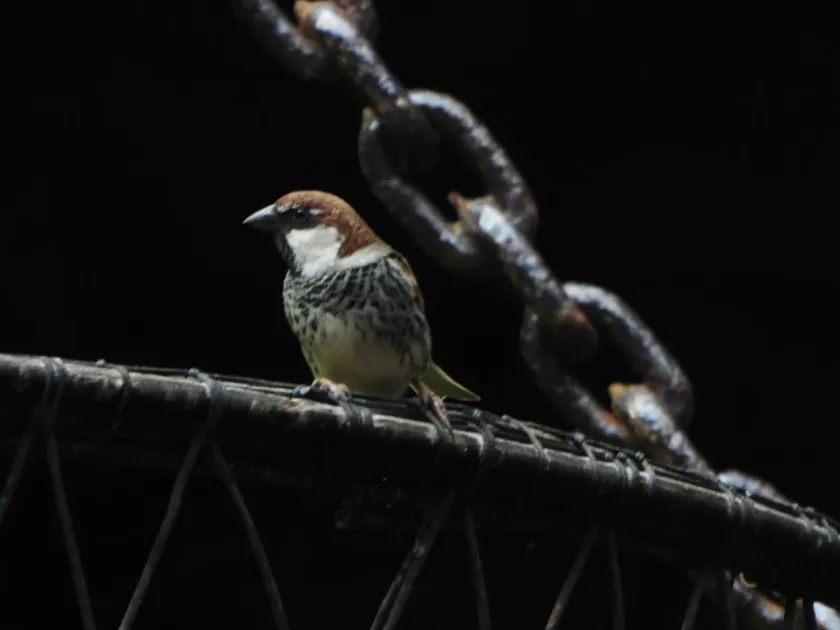
The Spanish sparrow, scientifically known as Passer hispaniolensis, is a small passerine bird belonging to the sparrow family. It is easily identified by the male's distinct black breast patch and chestnut-brown crown, distinguishing it from the house sparrow.
These birds are highly gregarious and typically nest in large, dense colonies. They often build their nests in trees, shrubs, or communal structures, which can house hundreds or even thousands of breeding pairs in close proximity.
Their distribution range spans from the Mediterranean region through North Africa to Central Asia. They are known for their high adaptability, allowing them to thrive in various environments, especially in agricultural zones where food sources are abundant.
The biological cycle of the Spanish sparrow is synchronized with the cereal growing season. Their rapid reproductive rate ensures that large populations are active exactly when crops are most vulnerable to damage.
They are opportunistic feeders that move in massive flocks. This collective behavior allows them to overwhelm fields, making them a significant challenge for farmers in various parts of their range.
What it damages
Spanish sparrows primarily target cereal crops, including wheat, barley, and oats, during the milk-to-dough stage of grain development. They consume significant amounts of grain directly from the ears.
Beyond consumption, the birds cause severe mechanical damage. When large flocks land on crops, they trample stalks, leading to lodging, which significantly reduces the efficiency of mechanical harvesting and decreases overall yield.
Sunflower crops are also frequently damaged. The sparrows peck at the heads, feeding on the developing seeds. This damage exposes the sunflower head to moisture and secondary infections, such as mold and fungi.
The economic impact can be devastating for farms located near their nesting colonies. In severe cases, a single colony can destroy a substantial portion of a harvest within a very short timeframe.
- Wheat, barley, and oats.
- Sunflowers and maize.
- Sorghum and millet.
- Other small-grain cereals.
When it appears
The peak activity and damage occur during the summer months, particularly when the grain begins to ripen. This coincides with the period when fledgling birds are active and feeding requirements are at their highest.
The threat persists through the late summer and early autumn as flocks gather post-breeding to forage on late-harvested crops, such as late-planted corn or sorghum, before moving to their wintering grounds.
Signs of infestation
The most obvious signs of infestation include large, noisy flocks flying over fields during dawn and dusk. On the ground, one can observe trampled areas and broken stalks within the crop canopy.
The presence of large, dense nest colonies in nearby windbreaks or orchards is a strong indicator that the surrounding fields are at high risk of significant bird damage during the harvest period.
Control measures
Effective management includes the use of acoustic deterrents, such as bio-acoustic devices that play alarm calls. These should be programmed with random intervals to prevent the birds from becoming habituated to the sound.
Visual deterrents, including hawk kites, reflective ribbons, and decoy predators, provide temporary relief when deployed strategically throughout the field, especially during the ripening phase.
Agronomic practices are crucial, focusing on rapid harvesting and avoiding delays once the grain reaches maturity. Keeping fields and surrounding areas free of nesting cover, such as dense shrubs, can reduce colony success.
In high-value areas, netting or chemical repellent sprays on the perimeter of the crop can serve as a deterrent. However, these methods require regular maintenance and reapplication to remain effective.
Integrated Pest Management (IPM) strategies, which combine multiple deterrent types, offer the best chance of minimizing crop loss without causing excessive harm to the local ecosystem.
Taxonomy
- Latin name
- Passer hispaniolensis
- Family
- Passeridae
- EPPO code
- PASSHI
Discussion
No discussions yet — be the first.