
Great tit
Parus major
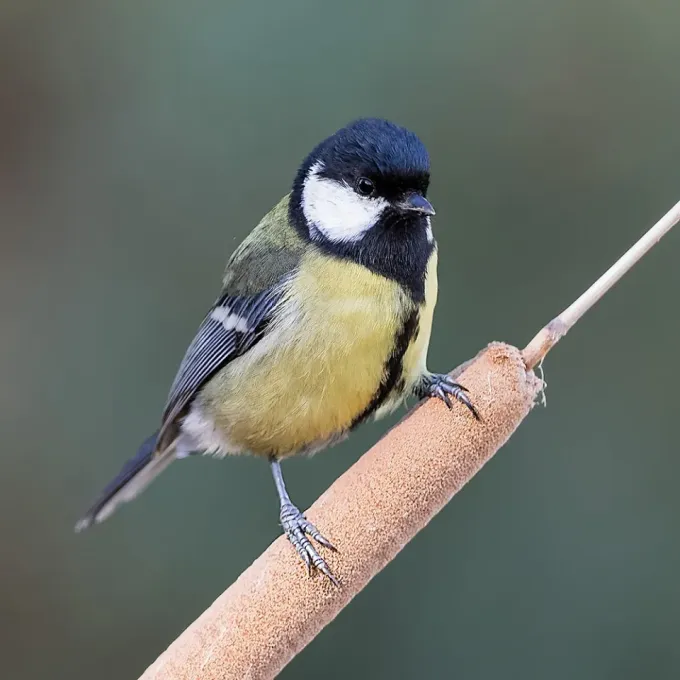
Description
How to identify
The Great Tit (Parus major) is a passerine bird belonging to the Paridae family. It is easily identified by its bright yellow breast with a distinct black vertical stripe and a black cap with white cheeks.
While often regarded as a beneficial insectivore in forestry and gardening, its feeding behavior changes significantly during late winter and early spring when insects are scarce.
The species exhibits high cognitive abilities and is extremely adaptable to human-altered environments, making it a common resident in orchards and home gardens.
Its biological cycle is closely tied to the availability of food sources, leading it to exploit plant materials such as buds and fruits when other proteins are not available.
Great tits are highly social birds that often forage in groups, which increases the impact of their feeding activities on local plant health and crop yield.
What it damages
The primary damage occurs in early spring when the birds consume generative buds of fruit trees, including apples, pears, and cherries, searching for nutrients.
By destroying these buds, the birds directly reduce the potential flowering surface, leading to significant yield losses before the growing season has even fully commenced.
During the summer, the birds may cause severe economic damage by pecking at ripening fruits to feed on the sweet flesh, rendering the produce unmarketable.
These puncture wounds serve as entry points for various fungal and bacterial pathogens, leading to secondary infections and rapid rot of the affected fruits.
Young shoots and tender leaves can also be damaged, particularly in young orchard plantings where the vegetation is less resilient to such mechanical injuries.
Signs of infestation
A clear indication of Great Tit activity is the presence of bud scales and debris scattered on the ground beneath the canopy of affected fruit trees.
Branches reveal characteristic hollowed-out buds that have been systematically opened, often leaving only the dry outer husk remaining on the twig.
Affected fruits exhibit small, deep, conical holes consistent with the shape of a bird's beak, which often lead to premature fruit drop or decay.
Frequent sightings of these birds moving through the canopy and investigating buds or fruits are indicative of an ongoing foraging issue in the orchard.
Presence of droppings on branches near the points of damage serves as another indicator of prolonged bird activity in specific sections of the orchard.
Control measures
Supplementary feeding of birds away from the garden during winter is a proven method to divert their attention from valuable fruit buds.
Visual deterrents such as shiny reflective tapes, holographic disks, or predator-mimicking kites can effectively reduce bird pressure on the garden area.
Physical exclusion methods, such as netting over fruit trees or vines, provide the most reliable protection against bird damage during the ripening season.
Ultrasonic bird repellers are useful for creating an auditory environment that discourages the birds from lingering near sensitive plant tissues.
Maintaining orchard hygiene by removing fallen fruit prevents the attraction of birds to the site during the peak harvest period, reducing future damage.
Taxonomy
- Latin name
- Parus major
- Family
- Paridae
- EPPO code
- PRUSMA
Discussion
No discussions yet — be the first.