
European fruit lecanium
Parthenolecanium persicae
Description
How to identify
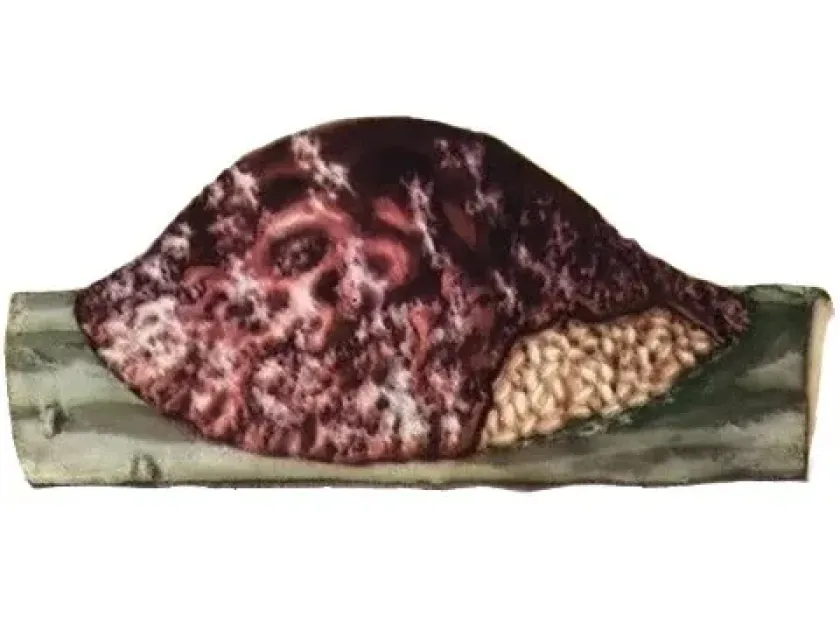
The European fruit lecanium (Parthenolecanium persicae) belongs to the Coccidae family. The adult female has a convex, brown, globular body that resembles a small pea or button on the plant bark.
As the female matures and lays eggs, her body wall hardens into a protective shell (test), which provides essential protection for the eggs inside.
The newly hatched nymphs, known as crawlers, are pale yellow, very small, and highly active, allowing them to disperse across the host plant or be carried by wind to new locations.
This species is characterized by parthenogenesis, meaning females can reproduce without mating, which often leads to rapid population surges in favorable environmental conditions.
Adult males are extremely rare; the life cycle is dominated by the female forms, which are the primary stage responsible for plant damage and population dispersal.
What it damages
This insect is a polyphagous pest, meaning it attacks a wide variety of plants, including stone fruits like peaches, plums, apricots, and cherries, as well as grapevines and various ornamentals.
By inserting their stylets into the plant tissues, these insects extract significant amounts of phloem sap, leading to the depletion of the host tree’s energy reserves.
Heavy infestations result in stunted growth, leaf chlorosis, and in extreme cases, the death of young branches or even entire small trees due to severe stress.
The honeydew excreted by the insects promotes the growth of sooty mold, which covers leaves and stems, further hindering photosynthesis and overall tree health.
Yield loss is a significant economic concern, as the weakened trees produce fewer and lower-quality fruits, making them less marketable and more susceptible to further stressors.
When it appears
The pest has a univoltine life cycle, completing one generation per year. Second-instar nymphs spend the winter tucked into crevices in the bark of twigs and small branches.
In early spring, when temperatures rise above 10°C, the nymphs emerge from their winter diapause, move to new growth, and begin active feeding on the sap.
Development into the adult stage occurs during late spring, followed by egg-laying which typically begins in June and continues for several weeks.
The crawler phase occurs during early summer, at which point the nymphs settle on the undersides of leaves to continue their development throughout the season.
As autumn approaches and leaves begin to senescence, the nymphs migrate back to the woody parts of the tree to find suitable sheltered spots for hibernation.
Signs of infestation
The most prominent sign is the presence of brown, raised, shell-like bumps on the bark of twigs, which are firm to the touch and indicate the presence of adult females.
Sticky honeydew on the foliage or trunk is a clear indicator of active feeding by scale insects, often attracting ants that protect the pests from predators.
A black, dusty covering on leaves and branches indicates the presence of sooty mold, a secondary complication that thrives on the sugary secretions of the lecanium.
Yellowing, curling, or premature dropping of leaves during the peak of summer are classic symptoms of severe sap depletion caused by a large population of scale.
In winter, scouting the branches for dormant nymphs reveals their presence as tiny, dark, flat scales attached firmly to the bark, signaling a need for pre-bud-break treatment.
Control measures
Integrated pest management starts with pruning and destroying heavily infested branches to reduce the initial population size before the growing season begins.
Biological control can be enhanced by protecting natural enemies, such as parasitic wasps and ladybird beetles, which are highly effective at regulating scale populations.
Dormant oil sprays are highly effective when applied in late winter or early spring to smother the overwintering nymphs before they become active.
Systemic insecticides are the preferred choice when targeting the crawler stage in early summer, as they penetrate the plant tissue and offer better protection than contact sprays.
- Apply horticultural oils during the dormant season.
- Monitor for crawler emergence in June and July.
- Maintain tree health through proper fertilization and irrigation.
- Use selective systemic insecticides when infestation thresholds are exceeded.
Taxonomy
- Latin name
- Parthenolecanium persicae
- Order
- Hemiptera (bugs, aphids, leafhoppers)
- Family
- Coccidae
- EPPO code
- LECAPE
Discussion
No discussions yet — be the first.