
Black scale
Parasaissetia nigra
Description
How to identify
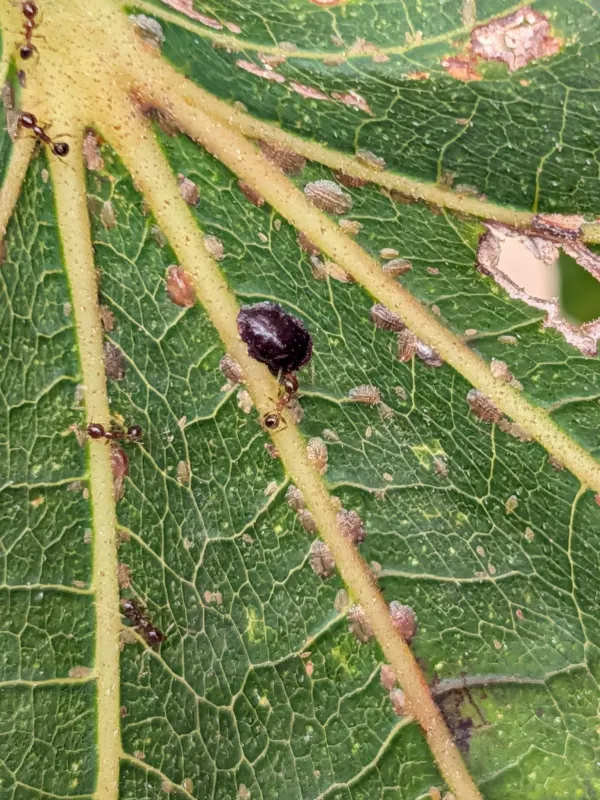
Black scale (Parasaissetia nigra) is a member of the Coccidae family, order Hemiptera. Adult females are characterized by a convex, leather-like body ranging in color from dark brown to black, often exhibiting a shiny, smooth surface.
The female body size typically measures between 3 and 5 mm. They are generally stationary during their reproductive stage, firmly attached to the plant tissues, which provides significant protection against environmental stressors.
Males of this species are rarely encountered and are not essential for the species' reproduction, as females reproduce primarily through parthenogenesis.
The species thrives in tropical and subtropical climates. In cooler regions, it is a significant pest primarily in greenhouses, botanical gardens, and indoor horticultural settings.
First-instar nymphs, known as "crawlers," are small, mobile, and translucent. They are the primary stage responsible for the dispersal of the pest to new areas of the plant or neighboring plants.
What it damages
Black scale attacks a diverse array of host plants, including economic crops like citrus and coffee, as well as numerous ornamental species such as hibiscus, ficus, and ferns.
The damage is caused by the extraction of phloem sap from leaves, petioles, and young stems. This feeding behavior drains the plant's resources and induces systemic stress.
Infested plants exhibit signs of stunted growth, yellowing of foliage, and premature leaf drop. In severe infestations, the cumulative damage can lead to the death of branches or the entire plant.
A secondary issue is the secretion of honeydew, a sticky substance that promotes the growth of sooty mold. This fungus coats leaves in a black layer, which significantly inhibits the photosynthetic process.
Economic losses arise from both the direct reduction in plant vigor and the degradation of the plant's aesthetic value, which is critical for the nursery and ornamental industries.
When it appears
In temperature-controlled environments like greenhouses, black scale can reproduce year-round. Given optimal temperatures above 20°C, the population can grow continuously.
The life cycle duration is typically between 60 and 90 days depending on the specific environmental conditions, allowing for several overlapping generations per year.
Peak activity and colonization often coincide with the warmer months or periods of high plant metabolic activity, which facilitates the rapid development of nymphs.
Infestation is most commonly introduced into a clean environment via infested plant material, nursery stock, or tools that have come into contact with colonized plants.
The absence of natural predators in closed, regulated systems allows the population to reach damaging levels very rapidly if monitoring and exclusion practices are neglected.
Signs of infestation
The most immediate indicator of an infestation is the presence of sticky honeydew on the foliage, followed by the appearance of dark, unsightly sooty mold growth.
Visual inspections reveal immobile, hard, black or dark brown scales attached to the undersides of leaves or along the midribs and stems of the host plant.
Plants often exhibit a general decline in health, including lack of luster, wilting, and decreased shoot elongation, which may occur even when water and light levels are sufficient.
Ant activity on plants is a strong warning sign, as ants are attracted to the honeydew produced by the scales and often protect the pests from natural enemies.
Searching for young crawlers on the surface of tender leaves using a magnifying lens is a proactive way to detect the beginning of a new infestation cycle.
Control measures
Effective management requires an integrated approach that focuses on exclusion, biological control, and the judicious use of selective chemical treatments.
- Implement strict quarantine protocols for all new plant material entering the facility.
- Use manual removal for light infestations by wiping leaves with a mild alcohol or soapy solution.
- Apply systemic insecticides, such as neonicotinoids, which are absorbed by the plant and kill the feeding scales.
- Utilize horticultural oils to smother the scales, which is especially effective against the crawler stage.
- Introduce natural enemies, such as parasitic wasps of the genus Metaphycus, to keep populations under biological control.
Controlling ant populations is vital, as their interference with natural predators can lead to a resurgence of the black scale population.
Regular monitoring and integrated pest management (IPM) practices are essential to ensure the long-term health of horticultural collections and prevent massive outbreaks.
Taxonomy
- Latin name
- Parasaissetia nigra
- Order
- Hemiptera (bugs, aphids, leafhoppers)
- Family
- Coccidae
- EPPO code
- SAISNI
Discussion
No discussions yet — be the first.