
Poplar clearwing
Paranthrene dolii
Description
How to identify
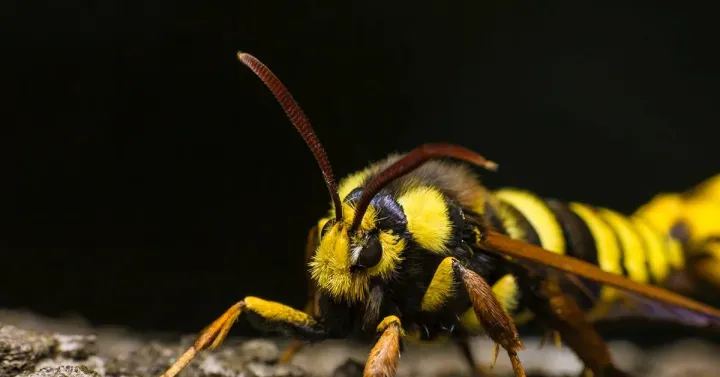
The poplar clearwing (Paranthrene dolii) is a moth belonging to the family Sesiidae. These insects are famous for their mimicry, as they look remarkably similar to hornets or wasps.
The wingspan typically ranges from 25 to 35 mm. Unlike many moths, their wings are largely transparent, with visible dark veins and colored borders, which helps them blend in with hymenopterans.
The larvae are pale, fleshy caterpillars that live exclusively inside the woody parts of their host plants. Their cryptic behavior makes them very difficult to spot until significant damage is done.
Adult moths are diurnal, preferring bright sunlight for flight and mating. Because they do not feed as adults, their lifespan is relatively short, focused entirely on reproduction.
To identify their presence effectively, researchers often utilize specific pheromone lures, which attract the males and allow for monitoring the activity of the clearwing population.
What it damages
The primary hosts for this species are poplar trees (Populus species). Infestations can cause severe structural damage to the trunks and main branches of these trees.
Larvae bore into the bark, cambium, and sapwood, creating galleries that disrupt nutrient and water transport. This results in dieback, stunted growth, and increased susceptibility to secondary infections.
In nurseries and young plantations, the poplar clearwing can be a devastating pest, often leading to the death of young saplings by girdling the stem completely.
The holes left by the larvae provide entry points for pathogens and wood-decay fungi. This interaction significantly accelerates the deterioration of the tree's internal structure.
The economic impact involves timber devaluation and the loss of aesthetic value in urban landscapes, necessitating costly removal and replacement of affected trees.
When it appears
The poplar clearwing generally completes its life cycle in two years. The adult flight period occurs during the summer months, typically between late May and July.
Females deposit eggs on the bark of host trees, focusing on areas with existing mechanical injuries or natural crevices. Eggs hatch within a few weeks, and larvae begin boring into the tree.
Larvae spend the majority of their two-year cycle feeding deep within the wood, where they remain protected from environmental extremes and most topical pesticide applications.
Pupation occurs in early summer inside the larval galleries. Before the adult emerges, the pupa moves toward the exit hole to allow the moth to exit safely into the air.
Regional climate variations, such as temperature fluctuations in spring, can influence the precise timing of adult emergence, which is critical for planning control measures.
Signs of infestation
One of the most obvious signs of infestation is the presence of brown, sawdust-like frass accumulating around entry and exit holes on the trunk of the tree.
Bark swelling or irregular callus formation often occurs as the tree attempts to seal off the damaged tissue, marking the location of the larval galleries underneath.
Noticeable yellowing, wilting, or premature dropping of leaves on specific branches is a strong indicator that the vascular system at the branch base has been compromised.
Empty pupal cases protruding from holes in the bark are clear evidence that the life cycle has been completed and a new generation of adults has already emerged.
Inspecting the trunk base and lower branches during the flight season can reveal the initial signs of attack, such as small entry tunnels or fresh frass piles.
Control measures
Cultural control is the first line of defense; keep trees vigorous through proper watering and fertilization, and prune out heavily infested branches to reduce local populations.
Chemical control with systemic insecticides is most effective when applied before the larvae burrow deep into the woody tissues, usually timed with egg-laying periods.
Pheromone mating disruption is an excellent non-toxic management strategy, particularly in plantations, as it prevents males from finding females and reduces the next generation.
Sanitation is crucial; remove and destroy infested wood or dying trees to eliminate potential reservoirs of the larvae and prevent further spread to healthy trees.
Encouraging natural predators such as woodpeckers and various parasitoid wasps can help maintain populations below an economically damaging threshold in forest settings.
Taxonomy
- Latin name
- Paranthrene dolii
- Order
- Lepidoptera (butterflies)
- Family
- Sesiidae
- EPPO code
- PARHDO
Discussion
No discussions yet — be the first.