
Hazel leaf roller
Parachronistis albiceps
Description
How to identify
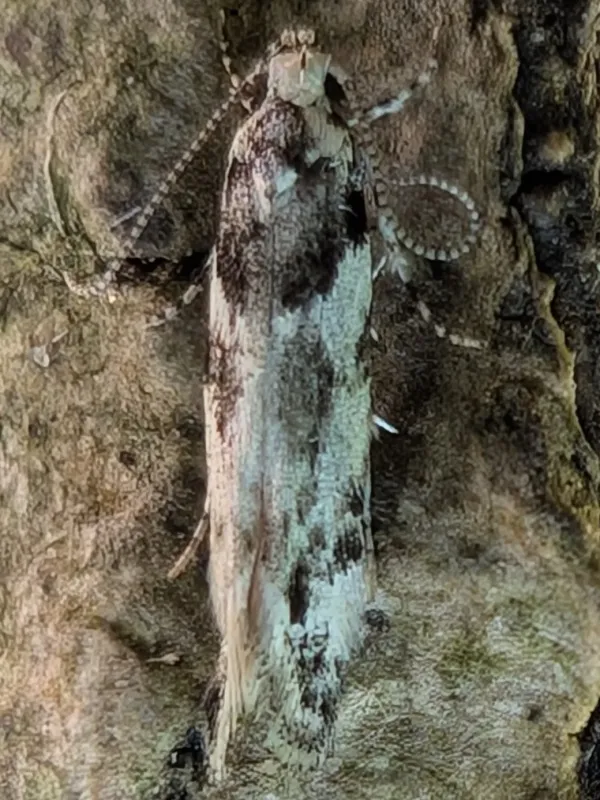
The hazel leaf roller (Parachronistis albiceps) is a species of moth belonging to the Gelechiidae family. The adult moth is small, with a wingspan of approximately 12–14 mm and a light gray appearance.
The larvae, or caterpillars, are the stage that causes damage. They grow up to 10 mm in length and are distinguished by a pale, yellowish-green body with a dark, prominent head capsule.
The biological cycle of this pest is synchronized with the phenology of hazelnut trees, ensuring that food availability matches the developmental stages of the larvae.
These insects overwinter as larvae in robust cocoons constructed in crevices of bark, branch forks, or attached to remnants of dried leaves on the tree.
Emergence from overwintering sites occurs early in spring as temperatures rise, allowing larvae to target the swelling buds of the host plant immediately.
What it damages
The primary hosts for this pest are common hazel (Corylus avellana) and cultivated hazelnut varieties, which can suffer substantial losses if infestations are not managed.
The larvae feed primarily on swelling buds during the early spring, hollowing them out completely and destroying the future vegetative and reproductive structures.
As the season progresses, the larvae move to the young foliage, where they roll leaves into tubes or cigar-like shapes, securing them with silk to create protective shelters.
Severe infestations lead to significant yield reduction, as the loss of floral buds directly affects the nut-bearing potential of the hazelnut bush.
Continuous feeding causes stunt growth, shoot deformation, and reduced photosynthetic capacity, weakening the overall health and vigor of the tree.
When it appears
Larval activity begins in early spring, typically when daily temperatures consistently exceed 10–12°C, aligning with the green tip stage of hazel development.
The feeding phase on buds lasts for approximately two to three weeks, after which the larvae transition to feeding on leaves until they are ready to pupate.
Pupation takes place within the rolled leaves or bark crevices during late spring and early summer, leading to the emergence of the adult moths.
Adult flight usually occurs throughout June and July, during which time mating takes place and eggs are deposited on the branches of host trees.
The life cycle concludes by late summer, with young larvae preparing to enter diapause and settling into their overwintering locations on the branches.
Signs of infestation
The most reliable sign of an infestation is the presence of dried, empty buds in early spring that fail to open and fall off at the slightest touch.
Rolled or folded leaves are a clear indicator of larval presence, as the caterpillars construct these nests to hide from predators and environmental stress.
Silk webbing found between the edges of leaves is a diagnostic sign of the hazel leaf roller, signaling the need for an orchard inspection.
Frass (larval excrement) found near the buds or inside the leaf rolls confirms active feeding and the current presence of the pest population.
Increased occurrences of stunted shoots and deformed growth patterns are secondary visual signs that the infestation may have reached a concerning level.
Control measures
Effective management begins with dormant season pruning, where infested branches are removed and destroyed to reduce the overwintering population.
Cleaning rough bark from older trunks can remove hidden cocoon sites, making the orchard less hospitable for the pest to survive the winter.
Chemical control via contact insecticides is most effective when applied at the onset of bud burst, targeting the larvae as they emerge from their cocoons.
Biological control agents, such as specific entomopathogenic fungi or bacteria, can be integrated into the management plan to provide sustainable suppression.
- Utilize pheromone traps to monitor adult flight periods accurately.
- Promote general tree health through balanced fertilization and hydration.
- Encourage the presence of natural predators like birds and parasitic wasps.
Taxonomy
- Latin name
- Parachronistis albiceps
- Order
- Lepidoptera (butterflies)
- Family
- Gelechiidae
- EPPO code
- PCHRAL
Discussion
No discussions yet — be the first.