
Emperor scorpion
Pandinus imperator
Description
How to identify
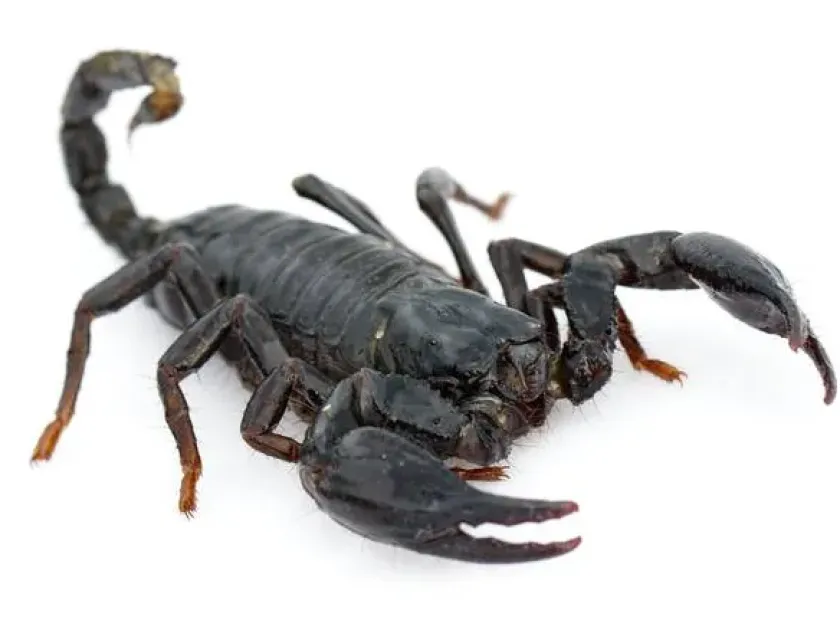
The Emperor scorpion (lat. Pandinus imperator) belongs to the Scorpionidae family and is widely recognized as one of the largest scorpion species. Its physical appearance is characterized by a robust body, large pincers, and a deep, glossy black coloration.
Morphologically, it possesses a segmented body protected by a thick cuticle. The species is native to tropical habitats, where it thrives in moist, dark environments, such as leaf litter and shallow burrows.
Regarding its biology, Pandinus imperator is a nocturnal predator. Unlike phytophagous pests that feed on plant matter, this species relies on hunting insects and other small invertebrates.
The life cycle is marked by prolonged maternal care, as the young nymphs stay with the mother until their first molt. This reproductive strategy ensures a higher survival rate in stable tropical ecosystems.
In an agricultural context, identifying this animal correctly is crucial to prevent unnecessary control measures, as it poses no threat to vegetation or crop integrity.
What it damages
The Emperor scorpion causes no damage to agricultural crops. Its physiology and digestive enzymes are specialized for a carnivorous diet, making it physically impossible for the species to feed on plant tissues.
There is no record of Pandinus imperator damaging roots, stems, leaves, or fruits. It acts solely as a generalist predator within the soil-dwelling fauna.
The presence of this scorpion on farmland does not lead to yield losses. Instead, it may contribute to the regulation of other soil-dwelling insect populations.
Agricultural professionals should note that this species does not possess the mouthparts required to penetrate plant cuticles or extract nutrients from crops.
Therefore, it should not be categorized alongside true agricultural pests like locusts, aphids, or beetles, as it does not compete with crops for survival.
Control measures
No control measures are required for the Emperor scorpion, as it is not a pest. Applying insecticides to target this species is highly discouraged due to its neutral role in the agro-ecosystem.
Integrated pest management (IPM) practices should focus on identifying actual threats to crop production rather than targeting harmless soil predators.
Safety during fieldwork is the only precaution necessary, as scorpions may sting in self-defense if handled or threatened by agricultural workers.
Maintaining a healthy population of diverse predators, including scorpions, can assist in maintaining ecological balance on a farm by naturally suppressing minor insect populations.
Effective agronomic management relies on accurate species identification to ensure that resources are allocated only to controlling organisms that actively damage crop yield.
Taxonomy
- Latin name
- Pandinus imperator
- Family
- Scorpionidae
- EPPO code
- PANNIM
Discussion
No discussions yet — be the first.