
Pandinus
Pandinus
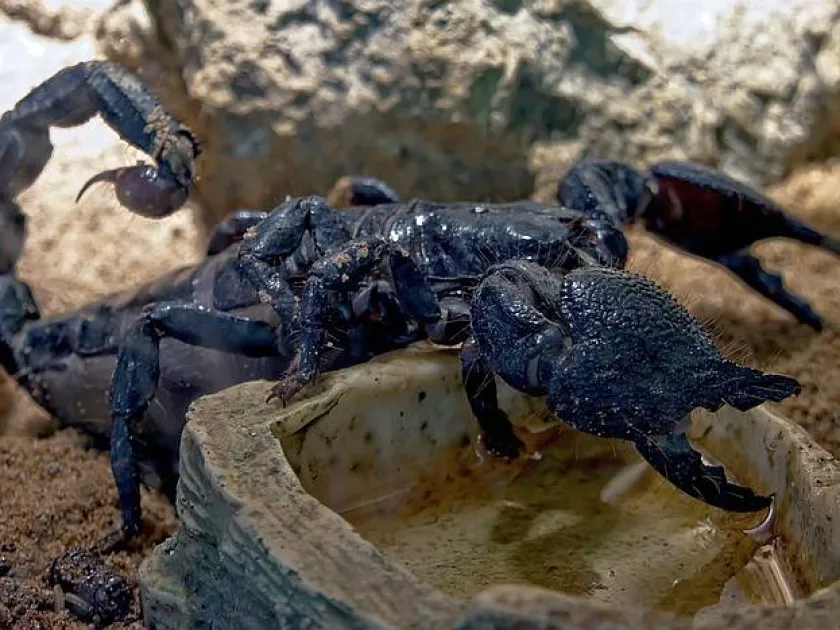
Description
How to identify
The genus Pandinus belongs to the order Scorpiones and the family Scorpionidae. These organisms are recognized as some of the largest scorpions in the world.
They are characterized by their robust pedipalps, heavy exoskeletons, and a sedentary lifestyle, typically inhabiting humid tropical environments and burrowing in soil.
Taxonomically, they are arachnids and are strictly carnivorous. They possess no biological mechanisms, such as mouthparts, adapted for consuming plant material.
Pandinus species are nocturnal and rely on their acute sense of vibration to detect prey, which consists primarily of insects and other small arthropods.
Their morphological structure clearly distinguishes them from true plant pests, as they lack any features associated with herbivorous feeding patterns.
What it damages
Pandinus scorpions do not cause damage to crops. They are not phytophagous and have no economic impact on agricultural production or plant health.
There are no recorded instances of these animals feeding on roots, stems, leaves, or fruits of any agricultural or horticultural plants.
Their role in an ecosystem is that of a predator, meaning they feed on organisms that might otherwise threaten the ecological balance of a given area.
Misclassification of this genus as a plant pest reflects a lack of entomological understanding regarding the dietary habits of scorpionids.
Agronomic assessments confirm that the presence of Pandinus in agricultural landscapes does not necessitate any intervention for crop protection purposes.
Control measures
No pest control measures are required for Pandinus, as they are not pests of crops and pose no threat to agricultural yield or plant quality.
The application of insecticides specifically targeting these organisms is discouraged, as it disrupts the biological control provided by native predator species.
Standard field management practices, such as clearing debris and proper soil preparation, are sufficient to deter scorpions from occupying specific agricultural areas.
Farmers are advised to focus efforts on managing genuine pests rather than targeting non-harmful members of the soil fauna like the Pandinus genus.
Maintaining a healthy, balanced agricultural ecosystem includes protecting predatory arthropods that contribute to natural pest suppression.
Taxonomy
- Latin name
- Pandinus
- Family
- Scorpionidae
- EPPO code
- PANNSP
Discussion
No discussions yet — be the first.