
Bengal scorpion
Heterometrus bengalensis
Description
How to identify
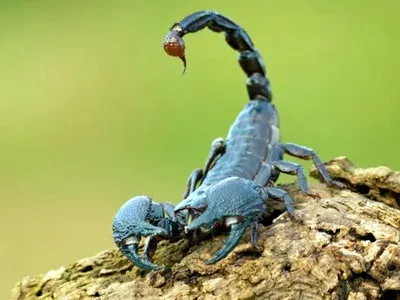
The Bengal scorpion (Heterometrus bengalensis) belongs to the Scorpionidae family. It is a large species, reaching lengths of 10–12 cm, characterized by powerful pedipalps (claws) and a dark, robust exoskeleton.
This species is strictly nocturnal and prefers humid microhabitats. They are commonly found under mulch, rocks, or in soil crevices located near agricultural fields, seeking protection from environmental stressors.
The biology of Heterometrus is closely tied to moisture availability. Their population density often spikes during monsoon seasons or in areas with intensive irrigation, where humidity levels remain consistently high.
Reproduction is characterized by live birth. The juveniles reside on the mother's back for the first stages of development, which significantly enhances their survival rate in harsh outdoor conditions.
These scorpions are long-lived and reach sexual maturity over several years. Understanding their life cycle is crucial for agronomists to distinguish them from other soil-dwelling organisms within the farm ecosystem.
What it damages
It is important to clarify that the Bengal scorpion is not a phytophagous pest. It does not feed on plant tissues, roots, stems, or leaves, and therefore does not cause direct yield loss through consumption.
The primary agricultural concern is the safety hazard posed to farm workers. High population densities in fields can impede manual labor, such as harvesting, weeding, or planting, due to the risk of painful stings.
Scorpions can indirectly damage infrastructure by chewing through irrigation hoses or plastic tubing in search of moisture, leading to water leaks and disrupted irrigation cycles in crops.
There is also an ecological impact as they are predatory, meaning they consume various soil invertebrates. This can lead to local shifts in the biodiversity of the soil food web.
In regions where these scorpions are abundant, their presence can lower operational efficiency because workers require increased caution and protective equipment during field maintenance.
Control measures
Sanitation is the most effective management strategy. Keeping fields, irrigation channels, and surrounding areas free of debris, leaf litter, and wood piles significantly reduces the available hiding spots.
Frequent soil cultivation or tilling helps destroy existing burrows and burrows' entrance structures, forcing the scorpions to migrate toward less hospitable areas away from the crops.
Chemical control via standard insecticides is rarely effective against scorpions due to their physiology. Relying on specialized pesticide applications is generally discouraged unless the infestation level is extreme.
The use of personal protective equipment (PPE), specifically heavy-duty boots and gloves, is strongly advised for all workers involved in field operations to prevent accidental stings.
- Clear debris and vegetation piles from the field perimeter.
- Adjust irrigation schedules to prevent localized water pooling.
- Maintain farm paths and storage areas in a dry and organized state.
Taxonomy
- Latin name
- Heterometrus bengalensis
- Family
- Scorpionidae
- EPPO code
- HTRMBE
Discussion
No discussions yet — be the first.