
Cellar glass snail
Oxychilus cellarius
Description
How to identify
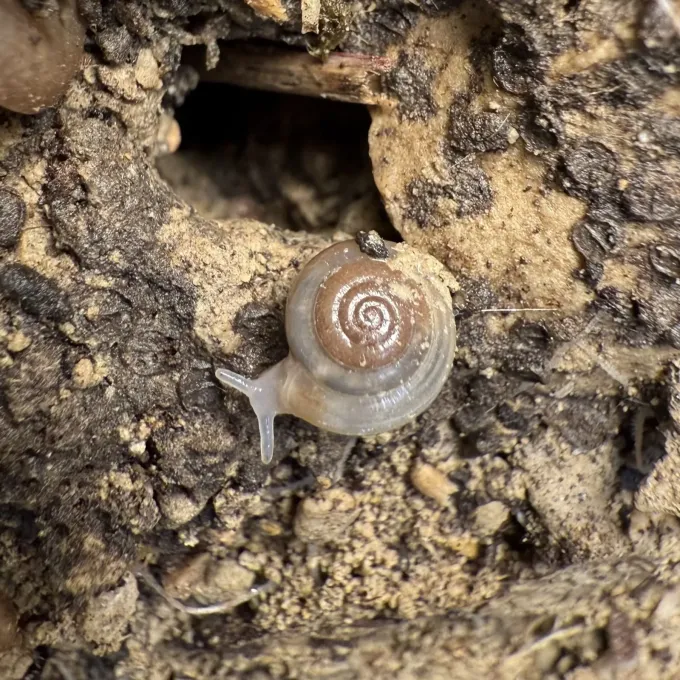
The cellar glass snail (Oxychilus cellarius) is a species of small land snail in the family Oxychilidae, order Stylommatophora. It is known for its distinctive appearance.
Its shell typically reaches a diameter of 10–12 mm. The shell is depressed, smooth, shiny, and translucent, often possessing an amber or yellowish-brown color.
The body of the snail is generally light grey or bluish. Because of its small size and preference for dark places, it is often difficult to detect during daylight hours.
This species thrives in high-humidity environments, which is why it is commonly found in damp cellars, basements, greenhouses, and underneath garden debris.
The life cycle involves egg-laying in moist soil or organic matter. The young snails develop quickly and are capable of reproducing within the same season under favorable conditions.
What it damages
While often considered a scavenger, this snail can become a significant pest in greenhouses, nurseries, and storage facilities, where it feeds on plant tissues.
They target young seedlings, consuming leaves and stems, which can lead to stunted growth or the complete loss of the planting material.
In root vegetable storage, they cause surface lesions on potatoes, carrots, and beets. These wounds degrade the crop's market quality and often lead to spoilage.
The snails serve as vectors for various pathogens, introducing fungi and bacteria into the healthy tissues of the plants or stored vegetables through their feeding wounds.
In ornamental gardens and nurseries, the snails damage the leaves of high-value plants, leading to aesthetic degradation and reduced commercial value.
Signs of infestation
The most common sign of infestation is the presence of silvery, dried mucus trails left on soil surfaces, plant leaves, or the walls of storage areas.
Ragged, irregular holes in the leaves, particularly in younger plants, are indicative of feeding damage that usually occurs during the night.
Inspection of stored produce may reveal small, open sores or cavities. If the snail is still present, it is often found nearby, hidden in damp crevices.
Wilting of plants without evidence of root rot or disease often points to nighttime feeding on the stem base or roots by these mollusks.
Finding small, clear, pearl-like eggs tucked under boards, stones, or damp compost heaps is a strong indicator of an established and breeding population.
Control measures
Cultural control measures are the most effective, starting with the reduction of humidity in greenhouses and proper ventilation in vegetable storage facilities.
Creating physical barriers using crushed eggshells, coarse sand, or wood ash around the base of plants can effectively hinder the movement of snails.
For chemical control, use molluscicides containing iron phosphate. These are generally safer for pets and wildlife compared to traditional metaldehyde-based baits.
Manual control involves hand-picking snails in the early evening or setting up beer traps, which attract them and prevent further crop damage.
Sanitation is essential: remove plant debris, old boards, and unnecessary clutter that provide the moist shelter these snails require to survive and reproduce.
Taxonomy
- Latin name
- Oxychilus cellarius
- Order
- Molluscs
- Family
- Zonitidae
- EPPO code
- OXYHCE
Discussion
No discussions yet — be the first.