
Garlic snail
Oxychilus alliarius
Description
How to identify
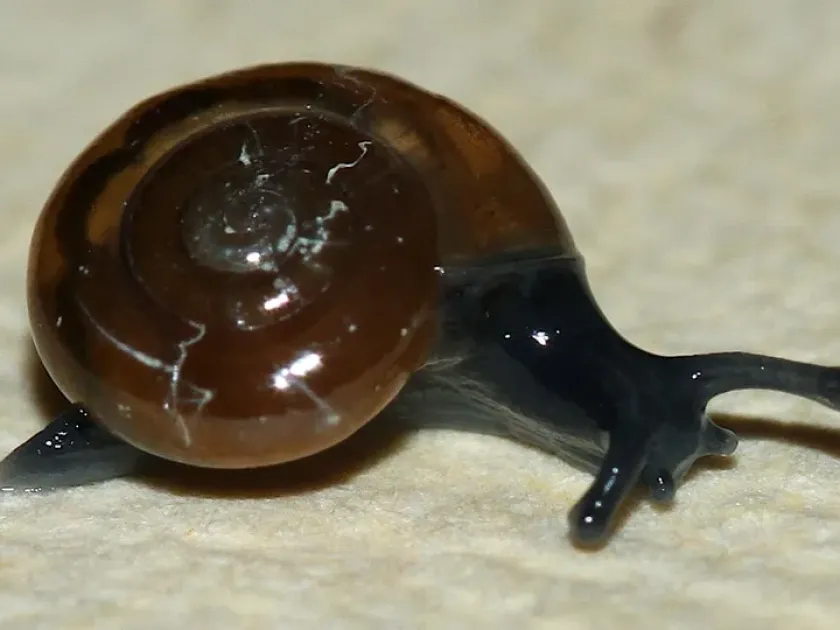
The garlic snail (Oxychilus alliarius) is a small terrestrial mollusk belonging to the Oxychilidae family and the Stylommatophora order. Its shell is typically 5–7 mm in diameter, characterized by a glossy appearance and a brownish horn color.
The species owes its name to a distinct, pungent garlic-like odor it releases when disturbed or threatened. This chemical defense serves as its primary identification feature for agronomists.
The soft body of the mollusk usually features a gray or bluish-gray coloration. The shell consists of approximately 4 to 4.5 whorls, forming a low, conical shape.
Unlike larger garden slugs, this snail prefers a secretive lifestyle, often dwelling deep within leaf litter, beneath stones, or inside damp, mulched areas.
For field identification, applying gentle pressure to a suspected specimen will reveal the characteristic odor, distinguishing it from other similar-looking small snails.
What it damages
While primarily a predator feeding on small insects and decomposing organic matter, the garlic snail can shift its diet to tender plant tissues when environmental conditions lead to overpopulation.
Vegetable crops, salad greens, and seedling flowers are the most vulnerable, especially in high-humidity greenhouse environments where the snails can thrive unchecked.
Damage typically manifests as small, irregular holes in the leaf blades. For young seedlings in the cotyledon stage, such feeding can lead to severe physiological stress or plant death.
Beyond direct physical consumption, the mollusk acts as a vector for various fungal and bacterial pathogens, as the feeding sites provide entry points for infections.
Although economic losses are often moderate, in nursery settings or intensive organic farming, these pests can significantly compromise crop yield and market appearance.
When it appears
The activity of the garlic snail is strictly dictated by moisture levels. Peaks in activity are typically observed during rainy spring and autumn months.
During the peak of summer, if dry conditions prevail, the snails retreat into deeper soil profiles or seek shaded, moist refuges to prevent desiccation.
Reproduction occurs mainly during warmer months. Eggs are deposited in small clutches within moist, dark soil pockets that offer protection from predators and environmental extremes.
Optimal physiological activity occurs between 15°C and 22°C. They are primarily nocturnal, emerging during the night or twilight to forage for food.
Overwintering occurs in the form of both adults and juveniles, which utilize soil cracks, dense plant debris, or compost heaps to survive low temperatures.
Signs of infestation
A primary indicator of a garlic snail infestation is the presence of characteristic "shot-hole" damage on the foliage of young or sensitive vegetable crops.
The observation of dried, silvery mucus trails on the soil surface, plant stems, or greenhouse benches is a clear sign of nocturnal mollusk presence.
To detect the presence of the population, one should inspect the underside of mulching materials such as landscape fabric, cardboard, or accumulated fallen leaves.
The sudden detection of a garlicky scent during irrigation or soil cultivation is a diagnostic marker of a dense local colony of these mollusks.
Finding an abundance of fragile, empty shells in the soil is another significant sign that the area serves as a breeding ground for this pest.
Control measures
Cultural control is the most effective approach, involving the removal of weeds and organic debris that serve as daytime refuges for the snails.
Physical barriers, including spreading crushed gravel, wood ash, or lime around plant beds, can create a hostile environment that limits mollusk migration to crops.
Trapping techniques using containers filled with beer or fermented sugary liquids are highly effective in smaller enclosed spaces like greenhouses.
Chemical control involving molluscicides based on metaldehyde may be necessary in high-infestation cases, provided they are applied according to safety regulations.
Biological control methods, such as fostering environments for natural predators like ground beetles, frogs, and hedgehogs, help maintain population stability in a natural garden ecosystem.
Taxonomy
- Latin name
- Oxychilus alliarius
- Order
- Molluscs
- Family
- Zonitidae
- EPPO code
- OXYHAL
Discussion
No discussions yet — be the first.