
Oxycenus maxwelli
Oxycenus maxwelli
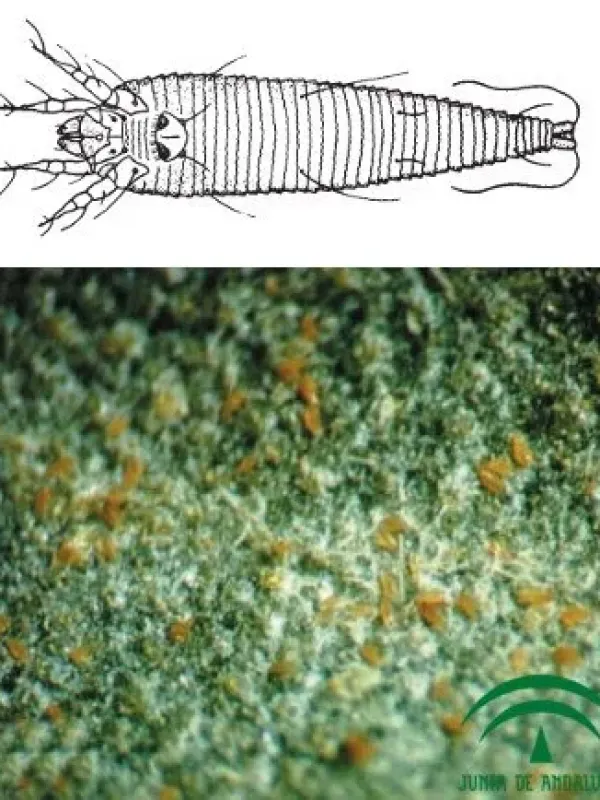
Description
How to identify
Oxycenus maxwelli is a species of microscopic mite belonging to the family Eriophyidae. They are extremely small and invisible to the naked eye.
These mites possess a distinctive vermiform (worm-like) body shape, which allows them to hide and feed efficiently between the needle scales of host plants.
Their color ranges from translucent to pale yellowish, making them exceptionally well-camouflaged against the foliage of their host plants, such as junipers.
The life cycle involves multiple generations per year, often resulting in rapid population growth during warm, dry weather conditions when plant growth is active.
Overwintering occurs primarily in the adult stage, where females seek shelter in bark crevices or protected areas of the tree canopy to survive winter temperatures.
What it damages
This mite is a specialized pest primarily targeting conifers, with a strong preference for various species and cultivars within the Cupressaceae family, especially junipers.
The mites feed by piercing the epidermal cells of the needles and extracting plant sap, which disrupts the plant's metabolic functions and photosynthesis.
Feeding damage typically occurs on the new growth, which severely stunts the development of the plant and diminishes its overall health and vitality.
Severe infestations lead to the browning and eventual death of individual needles or entire twigs, causing the plant to lose its aesthetic appeal and structural integrity.
Prolonged stress from mite feeding can make the plant significantly more vulnerable to drought, pathogens, and secondary pest attacks.
Signs of infestation
The most noticeable symptom of an Oxycenus maxwelli infestation is the yellowing (chlorosis) of needles, which eventually turns brown or dull gray.
Affected plants often show stunted new growth, and the foliage may appear sparse or distorted, giving the canopy a thin and sickly overall appearance.
The needles may become brittle and drop prematurely, leading to significant thinning of the crown in heavily infested juniper plants.
Microscopic examination of the needles, especially at the base where they attach to the stem, may reveal the presence of these tiny, elongated mites.
Signs often mimic symptoms of fungal diseases or nutrient deficiencies, so careful examination is required to distinguish mite damage from other stressors.
Control measures
Management of Oxycenus maxwelli relies heavily on the timely application of specific acaricides that target eriophyid mites effectively.
Regular monitoring of coniferous hedges and specimen trees is essential, particularly during late spring and early summer when mite activity is at its peak.
Systemic insecticides or specialized miticides should be applied thoroughly to cover the foliage, ensuring that even the inner parts of the canopy are treated.
Cultural practices, such as maintaining adequate soil moisture and avoiding drought stress, help plants recover faster and become more resilient to mite feeding.
It is recommended to rotate chemical products with different modes of action to prevent the development of resistance within the mite population.
Taxonomy
- Latin name
- Oxycenus maxwelli
- Order
- Mites
- Family
- Eriophyidae
- EPPO code
- OXYNMA
Discussion
No discussions yet — be the first.