
Saw-toothed grain beetle
Oryzaephilus
Description
How to identify
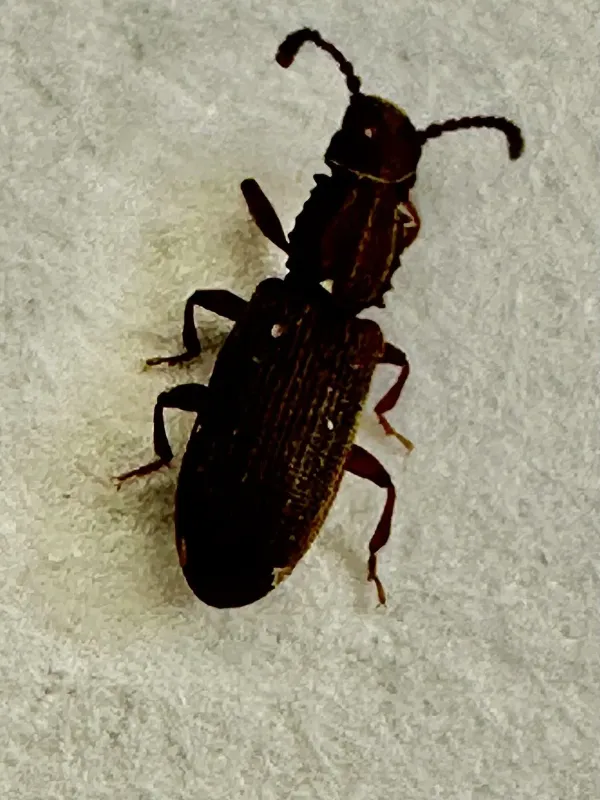
The saw-toothed grain beetle (Oryzaephilus surinamensis) is a small, flat insect belonging to the Silvanidae family, widely distributed across global grain storage facilities.
Adult beetles are approximately 3 mm long, featuring a dark brown, flattened body with distinct serrated (saw-toothed) projections along the sides of the thorax.
The larvae are slender, creamy-white in color, and have a small head with noticeable hairs along their body segments; they are very active and mobile.
The life cycle consists of egg, larva, pupa, and adult stages. The duration of development varies significantly depending on ambient temperature and moisture levels.
Adult beetles are known for their extreme longevity and ability to survive in relatively harsh conditions, which makes them difficult to eliminate from infested premises.
What it damages
This beetle is considered a major secondary pest of stored products, as it typically requires pre-existing damage to grain kernels to initiate infestation.
It infests a vast range of stored goods, including wheat, oats, barley, flour, cereals, pasta, nuts, dried fruits, and various processed food products.
While they are usually associated with previously damaged grain, in environments with high moisture, they can penetrate intact grain and proliferate rapidly.
The beetles cause "heating" of the grain mass, which increases humidity levels and encourages the growth of molds, significantly reducing the quality of the stored goods.
Economic damage is caused not only by direct consumption of the food source but also by significant contamination with larval cast skins, frass, and webbing.
Signs of infestation
The presence of the pest is most easily detected by seeing the small, active dark beetles moving through the product or crawling on surfaces near storage containers.
Infested flour or meal often appears lumpy and matted due to the presence of larval silk and excretions, often accompanied by a distinct stale or moldy odor.
Observation of small holes in packaging or the presence of fine powder (frass) around grain sacks is a clear indicator of a beetle infestation.
Larval skin remnants are frequently found in corners of warehouses or under bags, signifying a long-term presence of the insect population.
During warm weather, clusters of adults may be observed on walls, indicating an emerging population that has exceeded the capacity of current storage conditions.
Control measures
Sanitation is the most critical management tool; keeping storage areas clean, dry, and free of spilled grain minimizes the potential for infestation outbreaks.
Grain should be dried to a moisture content below 13% before being placed in storage to effectively inhibit the reproductive capacity of the saw-toothed grain beetle.
Fumigation with approved gases, such as phosphine, is the standard industry method for treating infested grain in silos or tightly sealed warehouses.
Empty storage facilities should be thoroughly cleaned and treated with residual insecticides to kill overwintering beetles before the new harvest is loaded.
- Use aeration systems to keep grain temperatures low, which hinders beetle activity.
- Implement a strict "first-in, first-out" inventory management system.
- Store susceptible products in cool, dry conditions or airtight containers.
Taxonomy
- Latin name
- Oryzaephilus
- Order
- Coleoptera (beetles)
- Family
- Silvanidae
- EPPO code
- ORYZSP
Discussion
No discussions yet — be the first.