
Orthotelia
Orthotelia
Description
How to identify
Orthotelia is a genus of moths belonging to the family Orthoteliidae. These small insects are often overlooked in field inspections due to their cryptic coloration and nocturnal activity.
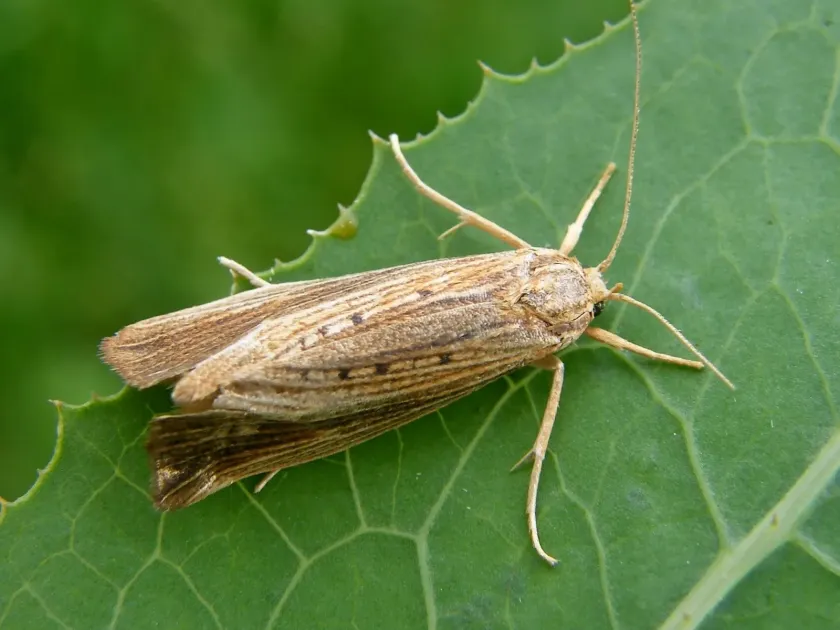
Adult moths typically have a wingspan ranging from 15 to 20 mm. Their wings often feature ocher or grayish-brown patterns, allowing them to blend seamlessly into dry plant debris or stems during the day.
The larvae, or caterpillars, are the primary life stage responsible for plant damage. They are typically light-colored with darker heads and possess a cylindrical body shape adapted for burrowing inside plant tissues.
The life cycle involves complete metamorphosis, including egg, larva, pupa, and adult. The pupal stage is often the overwintering phase, protected within tough cocoons tucked away in stems or soil debris.
Biological activity is highly influenced by environmental humidity and temperature, as these moths prefer stable microclimates where their host plants thrive.
What it damages
Orthotelia primarily infests plants in the Apiaceae family. While often found on wild species like cow parsnip, they can transition to cultivated crops such as celery, parsnips, and various medicinal herbs.
The larvae cause damage by boring into the stems of the host plant. This internal feeding disrupts the vascular system, effectively cutting off the supply of nutrients and water to the leaves and flowers.
Severe infestations lead to stunted growth, wilting, and in many cases, the total collapse of the plant stem. This is particularly destructive for young plants that have not yet reached maturity.
Reproductive growth is also heavily impacted, as the larvae feed on the developing inflorescences. This leads to poor seed set and reduced yield for farmers focused on seed production.
Besides direct mechanical damage, the entrance holes created by the larvae serve as entry points for various bacterial and fungal pathogens, potentially causing secondary rot in the plant tissues.
Signs of infestation
The most common sign of an Orthotelia infestation is the presence of fine, sawdust-like frass (excrement) deposited near the entry holes on the stems of the host plant.
Visual symptoms include yellowing and wilting of the upper leaves, even if the lower parts of the plant appear healthy. The plant may show signs of deformation in the stem area.
If you inspect the affected areas closely, you might notice small, circular holes bored into the stem. These are the primary points of entry where larvae began their internal feeding.
The affected plants often exhibit a drooping top growth, often called "flagging," which occurs because the plant can no longer maintain turgor pressure due to the stem damage.
Careful dissection of the hollowed stems will usually reveal the presence of the larva or the remnants of its feeding activity within the pith of the plant.
Control measures
Integrated pest management starts with cultural practices. Removing and burning infested plant material is crucial to breaking the lifecycle of the moth and reducing the next generation's population.
Deep plowing during autumn and spring helps expose the pupae to predators and adverse weather conditions, significantly reducing their survival rate before the flight season begins.
Monitoring the flight activity of adult moths using light traps or pheromone traps can help time the application of treatments to coincide with egg-laying and larval emergence.
For chemical control, systemic insecticides are the most effective because they can penetrate the plant tissues, reaching the larvae hidden deep within the stems.
- Maintain distance from wild patches of Apiaceae.
- Apply biological treatments early in the season.
- Regular field monitoring for early signs of stem boring.
Taxonomy
- Latin name
- Orthotelia
- Order
- Lepidoptera (butterflies)
- Family
- Glyphipterigidae
- EPPO code
- ORTESP
Discussion
No discussions yet — be the first.