
Glyphipterigidae
Glyphipterix
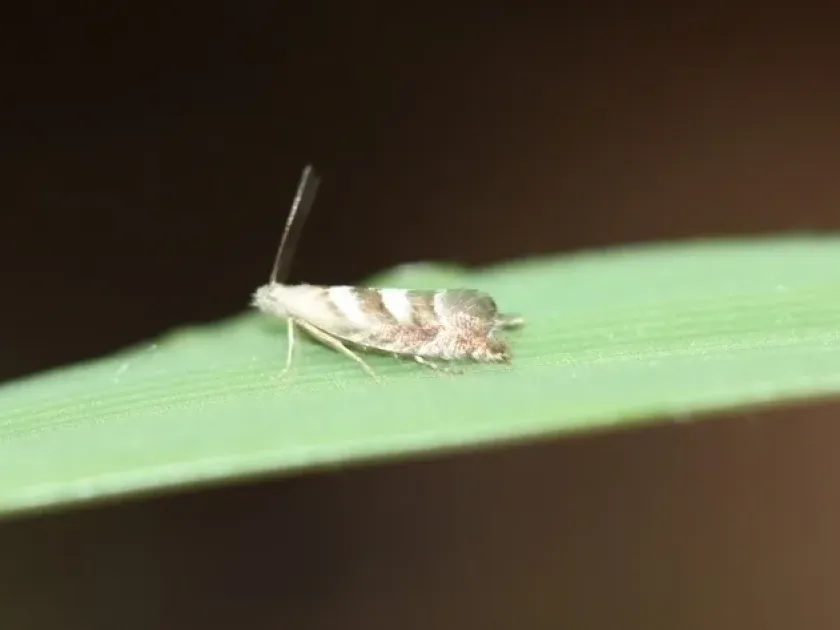
Description
How to identify
Glyphipterigidae is a family of small moths, often referred to as sedge moths, characterized by narrow, metallic-patterned wings and a distinct habit of flying during daylight hours.
Adult moths are generally small, with wingspans typically ranging between 10 and 15 millimeters, making them difficult to spot without close inspection.
The larvae are typically light-colored with cylindrical bodies, adapted for an endophagous lifestyle where they bore into stems or reproductive organs of their host plants.
Taxonomically, they belong to the order Lepidoptera, with the genus Glyphipterix being the most relevant to agriculture due to its impact on specific grass species.
The life cycle encompasses four metamorphic stages: egg, larva, pupa, and imago, with many species overwintering as pupae within plant debris or soil.
What it damages
The primary hosts for many Glyphipterix species are plants within the Poaceae family, which includes essential cereal crops such as wheat, barley, and rye.
Larvae cause damage by boring into the stems, which disrupts the transport of nutrients and water, often leading to the premature death of the plant's upper sections.
Beyond cereal crops, certain species are known to infest sedges and rushes, often expanding the pest population from surrounding wild vegetation into cultivated fields.
Economic damage is most severe when larvae target the reproductive structures of the host, preventing proper grain formation and filling.
In cases of high infestation, significant yield loss occurs, directly affecting the volume and quality of the final harvest.
When it appears
The flight period for adult Glyphipterigidae typically begins in late spring and continues into the summer, often peaking during the cereal crops' heading stage.
Monitoring for adult flight is crucial, as the timing of egg-laying determines the period when larvae will be vulnerable to protective measures.
Larval development typically coincides with the active growth phase of the host plant, ensuring a steady supply of nutrients for the growing insects.
Generation turnover is heavily influenced by local temperature patterns; warmer climates may allow for faster development or even additional generations within a single season.
The presence of overwintering stages in the soil means that the pest population remains persistent unless disrupted by field management practices.
Signs of infestation
A hallmark sign of infestation is the presence of whiteheads, where the grain head turns white and empty due to the stem being severed by larval feeding.
Entry points into the stem are usually visible as small holes, frequently accompanied by frass (larval excrement) accumulating on the surface of the plant.
Stunted growth or drooping of the top leaves is a common symptom in younger plants, signaling internal damage to the vascular tissues.
Internal inspection of the stem by cutting it longitudinally often reveals the larva or the tunnels created during its feeding activity.
General yellowing or necrosis of parts of the inflorescence can also indicate that a larva has compromised the plant's structural integrity.
Control measures
Effective management begins with cultural practices, such as deep plowing, which buries pupae and larvae, preventing them from completing their life cycle.
Crop rotation is an essential strategy to break the pest cycle, ensuring that the host plants are not consistently available to the same generation of moths.
Managing weeds in and around the fields is critical, as wild grasses often act as an alternative host that sustains the pest population throughout the year.
Chemical control, when necessary, should be applied based on economic thresholds and timed specifically to target newly hatched larvae before they bore into the stems.
- Utilizing pheromone traps for precise monitoring of moth flight.
- Removing and destroying crop residue immediately after harvest.
- Selecting varieties with higher tolerance to stem-boring insects.
Taxonomy
- Latin name
- Glyphipterix
- Order
- Lepidoptera (butterflies)
- Family
- Glyphipterigidae
- EPPO code
- GLYXSP
Discussion
No discussions yet — be the first.