
Cocksfoot moth
Glyphipterix simpliciella
Description
How to identify
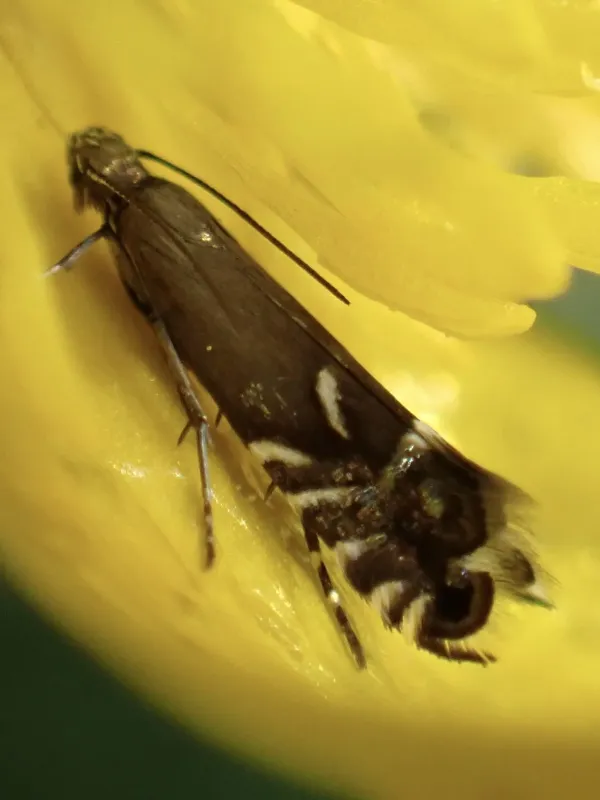
The Cocksfoot moth (Glyphipterix simpliciella) is a small moth belonging to the Glyphipterigidae family, primarily known as a specialist pest of orchard grass.
The adult moth is relatively small with a wingspan of approximately 8–10 mm. Its forewings display a dark brown appearance with distinct metallic silver markings.
Larvae, commonly referred to as caterpillars, are pale in color with dark head capsules. They remain hidden inside the host plant parts throughout their development.
This species typically completes one generation per year, with its life cycle closely synchronized with the growth stages of its host grass species.
The insect is widely distributed in regions where Dactylis glomerata (orchard grass) is grown, making it a target for monitoring in seed production areas.
What it damages
The larvae feed exclusively on the developing seeds of orchard grass (Dactylis glomerata), leading to significant economic losses in seed crops.
By consuming the internal contents of the seeds, the larvae destroy the seed embryo, rendering the crop unviable for subsequent agricultural use.
Heavy infestation leads to a reduction in both the quantity and the quality of harvested seed, often making it difficult to meet commercial certification standards.
The larvae damage the spikelets from within, which can lead to the wilting or discoloration of affected parts of the grass panicle before harvest time.
Because the feeding happens inside the seed head, damage is often underestimated until the seed is harvested or threshed, revealing lower yields.
When it appears
Adult moths are most active during the late spring and early summer months, coinciding with the flowering period of orchard grass.
Eggs are typically deposited on the flower heads, providing the newly hatched larvae with immediate access to their preferred food source.
The larval stage lasts for several weeks during the summer, during which they feed continuously and develop within the florets of the grass panicle.
As the season progresses toward autumn, the larvae complete their development and seek suitable locations for pupation, often moving into the soil.
The species survives the winter in the pupal stage, buried in the ground or hidden within debris, ready to emerge as adults the following spring.
Signs of infestation
One of the earliest signs of infestation is the appearance of tiny holes on the seed husks, which are entry points for the young larvae.
Webbing between individual spikelets is a common indicator of larval presence, as they use silk to stabilize the florets while they feed.
Premature browning or drying of the flower heads that should otherwise remain green and healthy is a strong indicator of localized pest activity.
Careful examination of the seed head may reveal frass (larval waste) inside the florets, which confirms the presence of an active infestation.
During the cleaning or grading process of the harvested seed, light or hollow seeds are often found, indicating that the moth has already completed its feeding.
Control measures
Deep plowing after the harvest is a fundamental cultural control measure, as it buries the pupae and prevents adult moths from emerging in the spring.
Timely harvesting of the seed crop can help reduce the duration of the larval feeding stage, effectively limiting the extent of the damage caused.
Insecticide applications are most effective when timed precisely with the flight period of the adult moths to prevent egg-laying on the crop.
Maintaining a clean field environment by removing crop residues and weeds helps to eliminate overwintering sites for the next generation of moths.
Monitoring using pheromone traps or sweep-net sampling allows farmers to track the moth population density and apply control measures only when necessary.
Taxonomy
- Latin name
- Glyphipterix simpliciella
- Order
- Lepidoptera (butterflies)
- Family
- Glyphipterigidae
- EPPO code
- GLYXSI
Discussion
No discussions yet — be the first.